
US military surveillance blimp on loan to CBP is lost at the southern border, wreckage found in Mexico
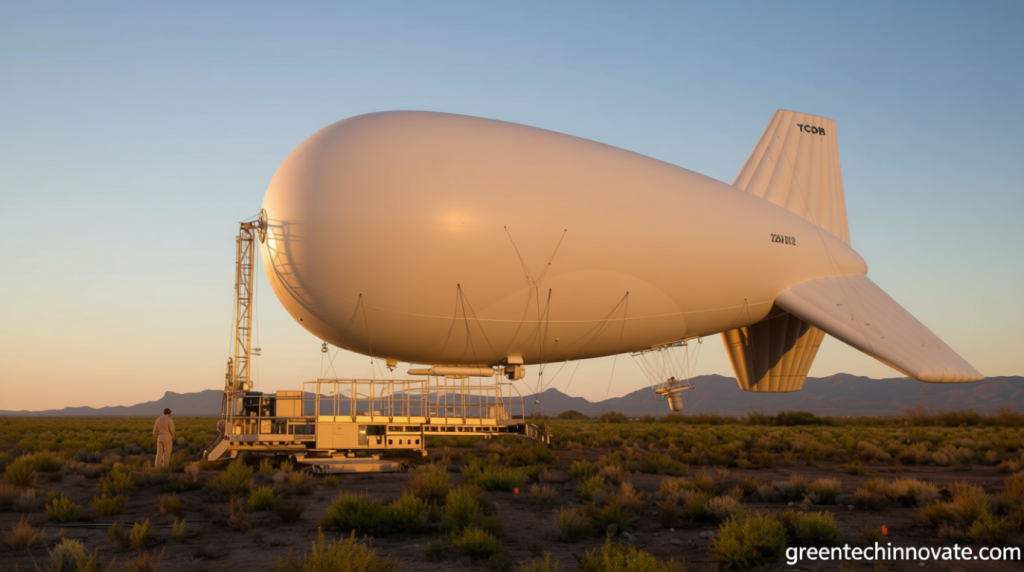
US Military Surveillance Blimp on Loan to CBP Lost at Southern Border, Wreckage Discovered in Mexico
US military surveillance blimp on loan – A 66-foot surveillance blimp, operated by Customs and Border Protection (CBP) contractors near Laredo, Texas, detached from its mooring line on Monday evening and subsequently landed in Mexican territory. The incident occurred during severe weather conditions, with the blimp’s tether cable becoming entangled with other wires amid heavy thunderstorms, a Joint Task Force-Southern Border spokesperson confirmed in a statement to CNN. No crew was aboard the aircraft during the flight, and no ground personnel were harmed in the event.
The blimp, which relies on helium for buoyancy, was part of CBP’s broader aerial surveillance program. According to the spokesperson, the operators attempted to resolve the tangled cables but were unable to secure the vehicle before it floated away. The exact model of the lost aerostat was not disclosed, though it was described as a “medium aerostat” used for monitoring the border. Such balloons are deployed across the region, with some equipped for high-resolution imaging and others designed to detect drones and other aerial vehicles associated with smuggling operations.
“The tether became entangled with other cables during the storm, leading to the blimp becoming untethered,” the spokesperson explained. “Despite our best efforts, the aircraft drifted into international airspace before crashing in Mexico.”
Following the incident, Mexican military forces located the wreckage in a secluded area southwest of Laredo. The discovery marked the first time the blimp’s location was identified, prompting collaboration between US and Mexican troops to retrieve the device. While the blimp’s descent was not immediate, its remote crash site suggested it had traveled a considerable distance before landing.
The event underscores the challenges of maintaining aerial surveillance in extreme weather. The National Weather Service reported that the Laredo area experienced sustained winds exceeding 44 miles per hour during the storm, complicating efforts to stabilize the balloon. CBP’s reliance on military technology for border monitoring highlights the integration of advanced systems into its operations, though such equipment can sometimes lead to unforeseen outcomes.
CBP’s use of aerostats dates back to 2012, when the agency began employing smaller tactical blimps for surveillance missions. However, the program has faced intermittent funding shortages, forcing reliance on contracts with the Department of Defense. During the Iraq and Afghanistan conflicts, the military invested over $5 billion to develop and acquire more than 140 surveillance blimps, according to a Government Accountability Office report from 2012. These assets have since been repurposed for border security, with CBP operating a fleet that includes both high-tech and traditional monitoring systems.
Earlier this year, CBP experienced a similar incident when a 200-foot aerostat on South Padre Island, Texas, broke free from its tether and traveled nearly 600 miles before colliding with power lines near Dallas. That event raised questions about the reliability of such systems, particularly under harsh weather conditions. The current loss near Laredo adds to the agency’s list of operational mishaps, emphasizing the need for improved maintenance and control protocols.
CBP plays a critical role in President Donald Trump’s strategy to secure the US-Mexico border and curb illegal immigration. His administration prioritized border hardening, resulting in the allocation of military personnel and equipment to the agency. While this has enhanced surveillance capabilities, it has also led to unintended consequences. In February, the use of a high-energy anti-drone laser system provided by the Pentagon caused the Federal Aviation Administration to temporarily close civilian airspace over El Paso, Texas, due to safety concerns.
The latest incident with the blimp serves as a reminder of the complexities involved in deploying advanced technology along the border. Mexican and US forces are now working together to recover the wreckage, which may provide valuable data on the blimp’s performance and the conditions that contributed to its detachment. The coordination between the two nations highlights the shared responsibility in managing border security challenges, even as the incident raises new questions about the effectiveness of such systems.
Despite the setback, CBP continues to leverage aerostats as a key tool in its surveillance arsenal. The agency’s reliance on military-grade equipment reflects a broader trend of integrating defense technologies into civilian operations. However, the recent loss and the March 2025 incident suggest that while these systems offer significant advantages, they also require careful oversight to prevent disruptions.
Meanwhile, the partnership between CNN and the Outrider Foundation, alongside Journalism Funding Partners (JFP), supports investigative reporting on border security and related issues. Davis Winkie, a CNN contributor, plays a pivotal role in uncovering these stories, ensuring that the public remains informed about the evolving dynamics of cross-border operations. CNN maintains full editorial control over its content, guaranteeing the accuracy and independence of its reporting.
The incident has sparked discussions about the long-term sustainability of CBP’s aerial surveillance programs. While the military’s investment in aerostats has provided a technological edge, the frequency of such accidents raises concerns about the balance between innovation and operational efficiency. As the agency works to recover the lost blimp, the broader implications of its use in border security continue to be scrutinized.
