
‘This is long overdue’: Jan. 6 rioters and election deniers celebrate Trump’s $1.8 billion compensation fund
‘This is long overdue’: Jan. 6 Rioters and Election Deniers Celebrate Trump’s $1.8 Billion Compensation Fund
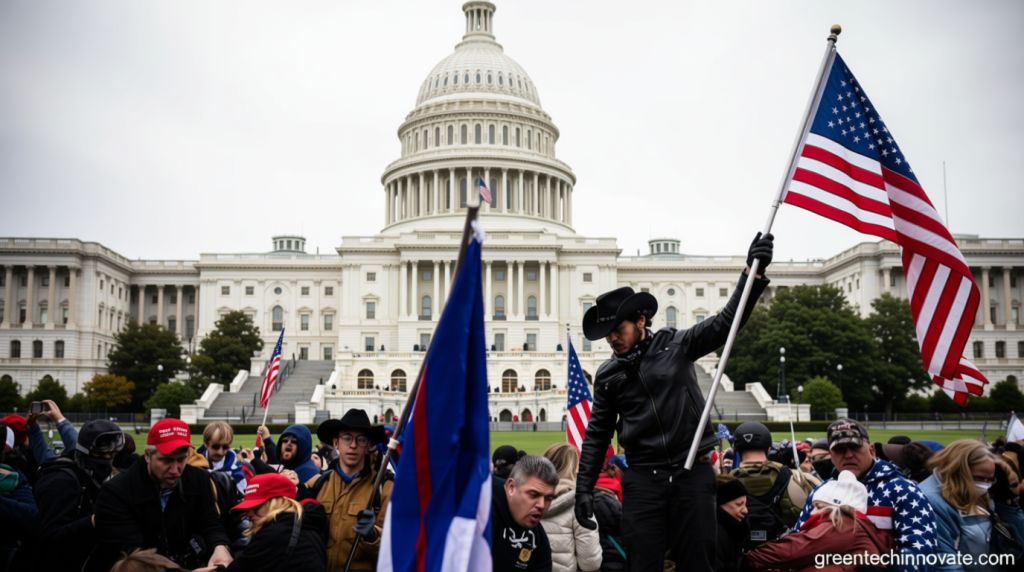
This is long overdue – The Trump administration has unveiled a $1.8 billion fund aimed at compensating individuals it deems victims of government “weaponization and lawfare.” Supporters of former President Donald Trump, including those who attempted to overturn the 2020 election, have expressed enthusiasm about the initiative, viewing it as a much-needed acknowledgment of their struggles. Convicted Capitol rioters, fake electors, and prominent election deniers are among those eager to claim the financial support, which they argue was delayed for far too long.
Rioters and Election Deniers Eye Compensation
Convicted January 6 rioters and election deniers have publicly welcomed the fund as a means to recover losses incurred during the 2020 election cycle. Dominic Box, a January 6 defendant who served 1.5 years in prison before being pardoned by Trump, shared his perspective with CNN. “I can’t even find a job answering the phone at a motorcycle dealership,” Box said, highlighting his financial difficulties. “I lost my career. I look forward to financial compensation. This will be a welcome relief.”
“I can’t even find a job answering the phone at a motorcycle dealership,” said Dominic Box. “I can’t find a way to support myself right now. I lost my career. I look forward to financial compensation. I need it. This will be a welcome relief.”
Box, a college graduate from Georgia, described his pre-January 6 job as a car salesman. He noted that after the insurrection, his ability to work in a forward-facing role diminished, leaving him without the income he once relied on. “The car market exploded during Covid,” he added. “Because of my inability to work in a forward-facing role, I wasn’t able to acquire any of that income. I knew guys who typically made $40,000 a year, and then got $150,000 to $200,000.”
MyPillow CEO Mike Lindell, another key figure in the election-denying movement, also expressed optimism about the fund. He claimed his company suffered a $400 million loss due to government actions following the 2020 election. “I would say we were the number-one company in the world hurt by our own government,” Lindell told CNN. His assertions gained traction as he became a vocal advocate for baseless claims of widespread voter fraud, prompting boycotts, lawsuits, and FBI scrutiny.
“I would say we were the number-one company in the world hurt by our own government,” said Mike Lindell. “So, I’m guessing I’ll be in line. I hope I’ll be ahead of those who savagely beat police officers and sacked the Capitol.”
Even organizations like One America News (OAN), a pro-Trump channel that disseminated false claims about election rigging, are contemplating claims under the fund. A representative for OAN confirmed to CNN that the network is “seriously considering pursuing rights under this fund.” Despite being dropped by most major cable providers and settling multiple defamation lawsuits, OAN remains a prominent voice in the movement to challenge election outcomes.
Broader Scope of the Compensation Fund
The fund’s eligibility extends beyond the immediate January 6 defendants. It includes a wide range of Trump allies, such as those scrutinized during Robert Mueller’s 2016 election investigation or involved in the 2019 Trump-Ukraine impeachment inquiry. Michael Caputo, a Trump adviser investigated by Mueller for his ties to Russian officials, is one of the first known individuals to file a claim. He is seeking $2.7 million in restitution, citing the financial strain caused by the probes.
James Comey, former FBI Director and a target of Trump’s Justice Department, also joked about his potential claim. “It’s to compensate people who’ve been targeted by the Justice Department for, they say, personal, political, or ideological reasons,” Comey explained to CNN’s Jake Tapper. “So, I’m guessing I’ll be in line. I hope I’ll be ahead of those who savagely beat police officers and sacked the Capitol.” His remarks underscore the broader political implications of the fund, which some view as a tool to reimburse individuals for perceived injustices.
Top Trump officials, including Vice President JD Vance and acting Attorney General Todd Blanche, have not explicitly addressed whether those convicted of January 6 crimes should receive compensation. During a budget hearing, Blanche stated that “anybody can apply” to the fund, emphasizing that even individuals who stormed the Capitol are eligible. The process will be managed by a five-member commission he will appoint, which will evaluate claims based on the administration’s definition of “government weaponization.”
Political Allies and the Fund’s Legal Basis
While the fund is designed to assist those targeted by the Justice Department, its reach is broader than just January 6 participants. It includes individuals like former White House officials, campaign staff, and others who faced scrutiny or legal challenges tied to Trump’s policies. The initiative has been praised by some as a means to restore reputations and financial stability, though critics argue it prioritizes political allies over those who committed violence.
Blanche’s comments during the hearing suggest a deliberate effort to frame the fund as a bipartisan effort. However, the selection criteria remain contentious, with questions about how the government’s “lawfare” tactics are defined. The administration’s stance appears to focus on victims of “systemic” attacks rather than those who participated in the insurrection. This approach has drawn mixed reactions, with some arguing it’s a way to reward loyalty, while others see it as a necessary gesture to aid those unfairly targeted.
Box’s experience exemplifies the challenges faced by January 6 defendants. After being pardoned by Trump, the Justice Department dismissed his case, ending pending prosecutions. However, the financial toll of his imprisonment and the stigma of being labeled a “boogeyman” by the media have left him struggling to regain his footing. “This is long overdue,” Box said, emphasizing that his hardworking status was overshadowed by the events of January 6.
“This is long overdue,” Box said. “It’s not okay for hardworking, average Americans to be chewed up and destroyed as a collective boogeyman.”
The fund’s creation has sparked debate about its fairness and scope. While it provides restitution to those accused of being political targets, it also raises concerns about accountability. Critics argue that the compensation could benefit those who actively undermined democratic processes, while supporters claim it offers a necessary lifeline to individuals who lost their livelihoods due to government actions. As the commission reviews applications, the outcome will determine whether the fund serves as a genuine form of redress or a political tool for Trump’s allies.
Legacy of January 6 and the Path Forward
The January 6 insurrection, which saw nearly 1,600 people charged with participating in the attack on the U.S. Capitol, has left a lasting impact. Many of these individuals received clemency through Trump’s mass pardons, but the new compensation fund offers an additional layer of support. For Box, who was never accused of violence but still faced career setbacks, the financial aid represents a step toward reclaiming his life. “I need it,” he said, underscoring the fund’s importance to those seeking recovery from the fallout of the 2020 election.
As the fund’s applications continue to be processed, its role in shaping public perception of January 6 and the broader 2020 election narrative will become clearer. Whether it is seen as a symbol of justice or a political reward, the initiative has already ignited discussions about the balance between accountability and support for those who supported Trump’s vision of overturning the election results.
