
Should you worry about the Ebola outbreak? Here’s what the numbers tell us
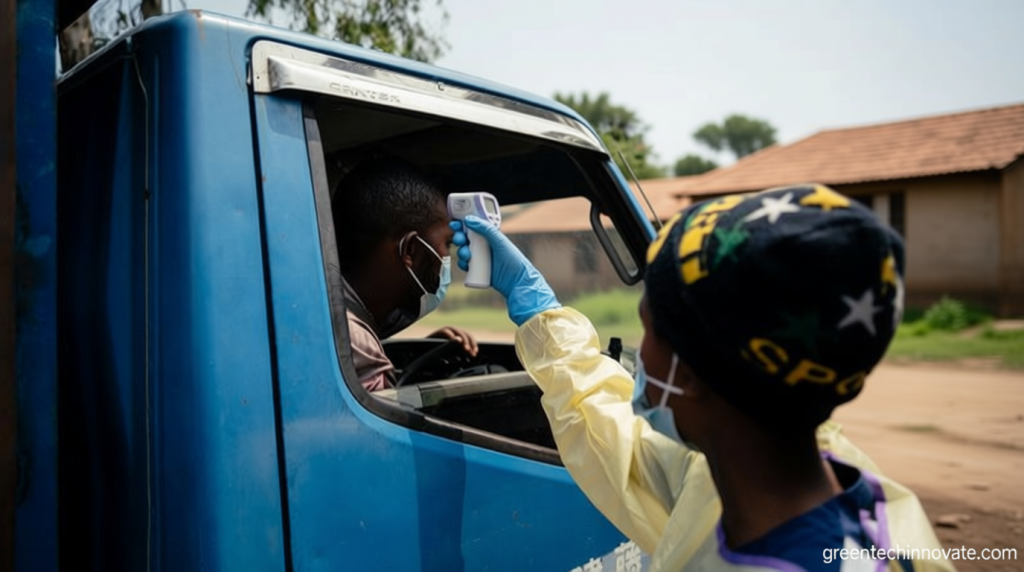
Should You Worry About the Ebola Outbreak? Here’s What the Numbers Tell Us
Should you worry about the Ebola – The World Health Organization (WHO) has raised the alarm over a rapidly escalating Ebola outbreak in the Democratic Republic of Congo (DRC) and Uganda, labeling it a “public health emergency of international concern.” Despite this classification, the global risk remains relatively low. The strain responsible for the outbreak, Bundibugyo, is notable for its lack of a specific treatment or vaccine, which has added to the urgency of the situation.
The Spread and Risk Factors
Recent tests have confirmed that the Bundibugyo strain is the culprit behind the current surge in cases. This strain, which has previously caused outbreaks in the DRC and other regions, has now been linked to a significant number of infections. Dr. Tedros Adhanom Ghebreyesus, the WHO’s director-general, highlighted several critical factors contributing to the outbreak’s severity. These include delayed identification of the disease, the high mortality rate among healthcare workers, substantial population movement within the affected areas, and the absence of a targeted vaccine or therapy for Bundibugyo.
While the outbreak is being monitored closely, officials emphasize that its spread is not yet a global crisis. “The risk is high at the national and regional levels, but the global threat remains manageable,” Tedros stated. This assessment comes after a four-week period where the virus went undetected, allowing it to proliferate without intervention. The initial cases were identified in April, but it wasn’t until late May that the WHO confirmed the outbreak, after receiving an alert about an unknown illness in Mongbwalu, a town in the DRC’s Ituri province.
The American Case and International Response
One of the notable aspects of the outbreak is the involvement of an American healthcare worker. According to the international charity Serge, a U.S. citizen who was working in the DRC has tested positive for the virus. The patient was transferred to Germany on Wednesday for medical treatment, as reported by German authorities. He is currently being cared for at the Charité University Hospital in Berlin and is described as stable by Health Minister Nina Warken.
The U.S. Centers for Disease Control and Prevention (CDC) confirmed that six high-risk contacts of the American patient are traveling to Europe for observation. Five of these individuals will be monitored in Germany, while one will be in the Czech Republic. This international collaboration aims to prevent further transmission and ensure that the patient’s condition is closely tracked. Dr. Peter Stafford, the American who tested positive, is a general surgeon specializing in burn care. He was treating patients in Bunia, a city in the DRC, when he contracted the virus.
Serge also reported that two other healthcare professionals, Dr. Rebekah Stafford (his wife) and Dr. Patrick LaRochelle, may have been exposed to the virus but are currently asymptomatic. Both are following strict quarantine and monitoring protocols to minimize the risk of spreading it further. The uncertainty surrounding the exact number of cases has prompted WHO officials to caution against overestimating the outbreak’s scale.
Confirmed Cases and Regional Impact
As of Wednesday, the DRC has reported at least 148 deaths associated with the outbreak. However, only 51 cases have been officially confirmed, with 575 suspected infections. Health officials are actively tracking over 800 contacts within the DRC to better understand the virus’s reach. Dr. Anne Ancia, WHO’s representative in the DRC, noted that there is still “significant uncertainty” about the true extent of the infection.
In Uganda, the situation has been less severe but still concerning. The country’s health ministry confirmed two cases as of Tuesday. The first was a patient from the DRC who received treatment in a Ugandan facility but later succumbed to the illness. The second case is also considered imported from the DRC. Ugandan authorities have implemented outbreak control measures, including enhanced disease surveillance, travel screenings, and preparedness protocols to contain the virus within the region.
Doctors and public health officials stress that Ebola spreads primarily through direct contact with bodily fluids such as blood, vomit, or feces. It can also be transmitted via contaminated objects or surfaces. The incubation period for the virus ranges from two to 21 days, meaning symptoms may not appear for up to three weeks after exposure. Importantly, individuals are not contagious until they begin showing signs of illness, which provides a window for containment efforts.
Global Measures and Preparedness
Many countries have taken proactive steps to limit the spread of the virus. These include restricting travel from the DRC, implementing screening procedures at airports, and deploying medical resources to the affected areas. While the measures are effective, they have also caused some disruption, particularly for those traveling from the region. The WHO’s assessment of the outbreak underscores the need for continued vigilance, especially in areas with high population mobility.
The delay in identifying the outbreak has been a major concern for health experts. The WHO noted that the disease was not detected until May 5, nearly a month after the first known patient showed symptoms. This critical four-week gap allowed the virus to spread unchecked, compounding the challenge of controlling it. The agency has since sent an investigation team to the DRC, which collected samples for testing on May 12. These efforts are crucial for understanding the outbreak’s origins and trajectory.
Despite the challenges, the WHO remains confident that the outbreak can be managed with the right interventions. The organization has been working closely with local governments and international partners to coordinate response strategies. Dr. Tedros emphasized that while the outbreak is a serious threat to the DRC and neighboring countries, its global impact is currently contained. This conclusion is supported by the fact that the Bundibugyo strain, though deadly, has not yet demonstrated the capacity to cause large-scale international transmission.
What This Means for Public Health
Experts urge the public to stay informed but not overly alarmed. While the outbreak is a cause for concern, especially given the lack of a specific treatment for the Bundibugyo strain, the measures being taken by governments and health organizations are proving effective. The movement of high-risk contacts to Europe, for instance, is a practical step to monitor their health and prevent any potential spread within the continent.
Dr. Anne Ancia reiterated that the outbreak’s complexity lies in its rapid spread and the difficulty in pinpointing the exact number of cases. “The numbers are still evolving, and the situation requires constant reassessment,” she said. This uncertainty highlights the importance of ongoing data collection and analysis. The WHO is also investigating the precise timing and location of the outbreak’s origin, which could inform future prevention strategies.
For now, the focus remains on containing the virus within the DRC and Uganda. The success of these efforts will depend on the speed of identification, the efficiency of response teams, and the cooperation of local communities. As the world watches the situation unfold, the WHO continues to provide updates, ensuring that the public has the most accurate information to make informed decisions.
In summary, while the current Ebola outbreak presents a significant challenge, the lack of a specific vaccine for the Bundibugyo strain does not necessarily mean it will become a global pandemic. With timely intervention and international collaboration, the situation can be brought under control. The key is maintaining vigilance and adapting strategies as new information emerges.
