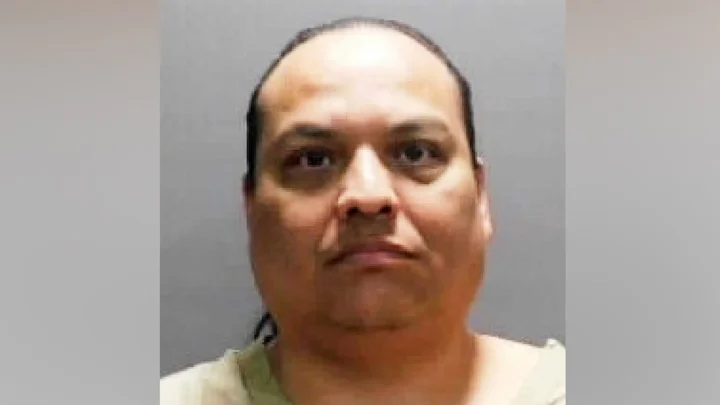


Tentative Trial Date Established for U.S. Soldier Accused in Maduro Capture Scandal
Tentative trial date set for soldier – A federal court has scheduled a preliminary trial date for Master Sgt. Gannon Ken Van Dyke, a U.S. Army special forces member facing charges of using classified intelligence about the capture of Venezuelan President Nicolas Maduro to profit over $400,000 on the prediction market Polymarket. The trial is tentatively set for December 7, marking a pivotal step in what could be the first U.S. prosecution targeting insider trading on such platforms. Van Dyke, who has not yet spoken publicly about the case, was released on a $250,000 personal recognizance bond following his April arraignment, where he entered a not guilty plea to the allegations.
Inside Information and Evidence Handling
Prosecutors claim Van Dyke leveraged privileged details about Maduro’s capture to place 13 bets on Polymarket, a decentralized platform where users trade on the likelihood of future events. The soldier allegedly attempted to conceal his actions by destroying evidence related to the trades after amassing more than $400,000 in profits. According to court records, the prosecution has “substantially completed” the process of presenting evidence, with an estimated timeline of one week for the trial itself.
Defense attorneys, however, argue the case will be resolved quickly, with their presentation expected to last just a few days. Zach Intrater, Van Dyke’s attorney, stated the soldier is currently on leave from the Army, focusing on preparing his defense. The defense’s strategy hinges on challenging the prosecution’s ability to prove guilt, particularly by highlighting the ambiguity surrounding the source of the classified information.
Legal Arguments and Challenges
Mark Geragos, one of Van Dyke’s defense lawyers, emphasized during Monday’s proceedings that the government’s case rests on speculative claims. In a
“The prosecution must establish who was in the Situation Room at the time of the operation and who authorized the capture. Without identifying that decision-maker, there’s no way to confirm the information was truly classified or that Van Dyke had exclusive access to it.”
Geragos further argued that the evidence would be insufficient to meet the burden of proof required for a conviction.
The defense also plans to file a motion to dismiss the indictment by July 31, asserting that prediction markets like Polymarket operate differently from traditional financial markets. Geragos explained,
“Prediction markets are amorphous and non-binary, which means outcomes aren’t as clear-cut as stock trades. The government can’t impose criminal liability unless they can define the exact parameters of what constitutes insider trading in this context.”
He pointed to the lack of definitive answers about who made the decision to capture Maduro, suggesting the case lacks the necessary foundation for a trial.
Geragos described the prosecution’s approach as an “exercise in futility” during a press conference outside the courthouse. “There’s only one person who could have ordered the operation — that person is the president,” he stated. “The government will never get the president to admit when or how the decision was made. This trial is built on a shaky premise, and it will collapse under its own weight.”
Broader Implications for Prediction Markets
The case has drawn attention to the growing role of prediction markets in financial transactions, with critics questioning their regulatory oversight. Van Dyke’s alleged actions have sparked public debate over the transparency of platforms like Polymarket and Kalshi, which allow users to bet on events ranging from political outcomes to economic indicators. Prosecutors in New York recently filed similar charges against a Google employee for using confidential company data to generate over $1.2 million on Polymarket, underscoring the expanding reach of insider trading investigations.
Van Dyke’s defense team is positioning the case as a test of how the legal system treats emerging financial instruments. They argue that prediction markets, by their nature, involve uncertainty and subjective judgment, which should be factored into the definition of insider trading. “The government is trying to fit a square peg into a round hole,” Geragos said. “In a prediction market, the outcome is determined by collective belief, not a single individual’s decision. That’s not the same as traditional stock trading.”
During the hearing, Geragos highlighted the difficulty of proving Van Dyke’s access to classified information. “Unless the prosecution can demonstrate that the data was shared exclusively with Van Dyke, the case lacks a key element,” he said. The defense also stressed the need for evidence showing Van Dyke intentionally used the information to gain an advantage, rather than acting on general knowledge of the operation.
Background and Public Reaction
The charges against Van Dyke emerged after he was accused of placing bets on Maduro’s capture using data he had access to as part of his military duties. Prosecutors allege he did not share the information with colleagues and instead exploited it for personal gain. This incident has raised questions about how the military handles classified data and whether soldiers are held to the same standards as corporate insiders in financial markets.
Public scrutiny of prediction markets has intensified as a result of the case. These platforms, which operate on blockchain technology, have become popular for their real-time betting and transparency. However, their ability to process sensitive information quickly has sparked concerns about potential misuse. Van Dyke’s case could set a precedent for future prosecutions, particularly as more individuals use such markets to speculate on global events.
Intrater noted that the trial will depend heavily on the government’s ability to link Van Dyke’s bets to the classified information. “If they can’t prove the timing or the source of the data, the case will fail,” he said. The defense is also pushing for the inclusion of expert testimony to explain how prediction markets function and why the alleged trades don’t meet the criteria for insider trading.
Impact on Military and Financial Systems
The case has implications beyond Van Dyke’s personal fate, affecting both the military and the broader financial landscape. If convicted, he could face significant penalties, including imprisonment, which might prompt stricter policies for handling classified information in armed forces. The defense is also challenging the legal framework that applies to prediction markets, arguing that the lack of clear boundaries makes it unfair to hold individuals accountable for speculative bets.
Geragos emphasized the need for the court to consider the unique characteristics of prediction markets. “These platforms are designed for uncertainty, not certainty,” he said. “The government is trying to apply a one-size-fits-all standard to a system that inherently involves risk and probability. That’s not just a legal challenge — it’s a philosophical one.”
As the trial approaches, the case has become a focal point for discussions about the intersection of national security and financial innovation. While prosecutors aim to demonstrate that Van Dyke’s actions were deliberate and damaging, the defense is countering with arguments that question the validity of the evidence and the appropriateness of the charges. The outcome could shape how future cases involving prediction markets are handled, especially in contexts where classified information is involved.
Van Dyke, who has remained silent during court proceedings, is expected to face a rigorous examination of his actions. The defense’s motion to dismiss, filed by July 31, could be a decisive move in the case. If successful, it would signal a shift in how courts view the legality of trading on prediction markets. If rejected, it would likely lead to a trial that tests the boundaries of insider trading in the digital age.
With the trial date set and the legal arguments laid out, the case will proceed to the next phase, where the truth of Van Dyke’s alleged actions will be scrutinized. The outcome will not only determine his fate but also influence how the U.S. legal system treats insider trading in the evolving world of financial markets.