
Lincoln Memorial Reflecting Pool Renovation Surpasses $16 Million Estimate
Reflecting Pool renovations to cost more – The Lincoln Memorial Reflecting Pool, a iconic feature of Washington, D.C., is facing significant cost overruns as the total expenditure for its recent renovations has surpassed $16 million. According to federal contract records, the project’s final price has exceeded the original estimated cost by more than $4 million, primarily due to a no-bid contract awarded to Atlantic Industrial Coatings for repainting the pool. This marks a notable increase from the initial projections, raising questions about the decision-making process behind the procurement.
Contract Details and Project Scope
In addition to Atlantic Industrial Coatings, the National Park Service has allocated $1.74 million to Green Water Solutions, an Ohio-based company, to install a “nano bubble” filtration system. This system, designed to combat algae growth, was implemented to ensure the pool was ready for the Fourth of July celebrations. The combined efforts of the two firms have pushed the total cost beyond $16 million, with the project’s final phase expected to wrap up shortly. However, details regarding the exact breakdown of payments and the rationale for the no-bid contracts remain unclear.
The contracting documents, which were released to the public, provide minimal insight into the additional expenses. They note that the work conducted by Atlantic Industrial Coatings falls within the scope of their original agreement, which was labeled as “PAINT LINCOLN REFLECTING POOL.” Despite this, the final cost has reached $14.65 million for repainting alone, with the nano bubble system contributing an extra $1.74 million. The National Park Service has not yet disclosed the full status of these payments, leaving some uncertainty about the financial commitment.
Interior Department’s Justification
“The advanced nanobubbler technology very effectively killed the algae that has plagued every Lincoln Reflecting Pool reopening—most infamously Obama’s reopening—since 1922,” stated the Interior Department in a statement shared via X. “The Reflecting Pool water is crystal clear, and our National Park Service team is now vacuuming up the dead algae resting on the bottom of some parts of the Reflecting Pool—just like the destroyed Iranian Navy resting on the bottom of the Persian Gulf.”
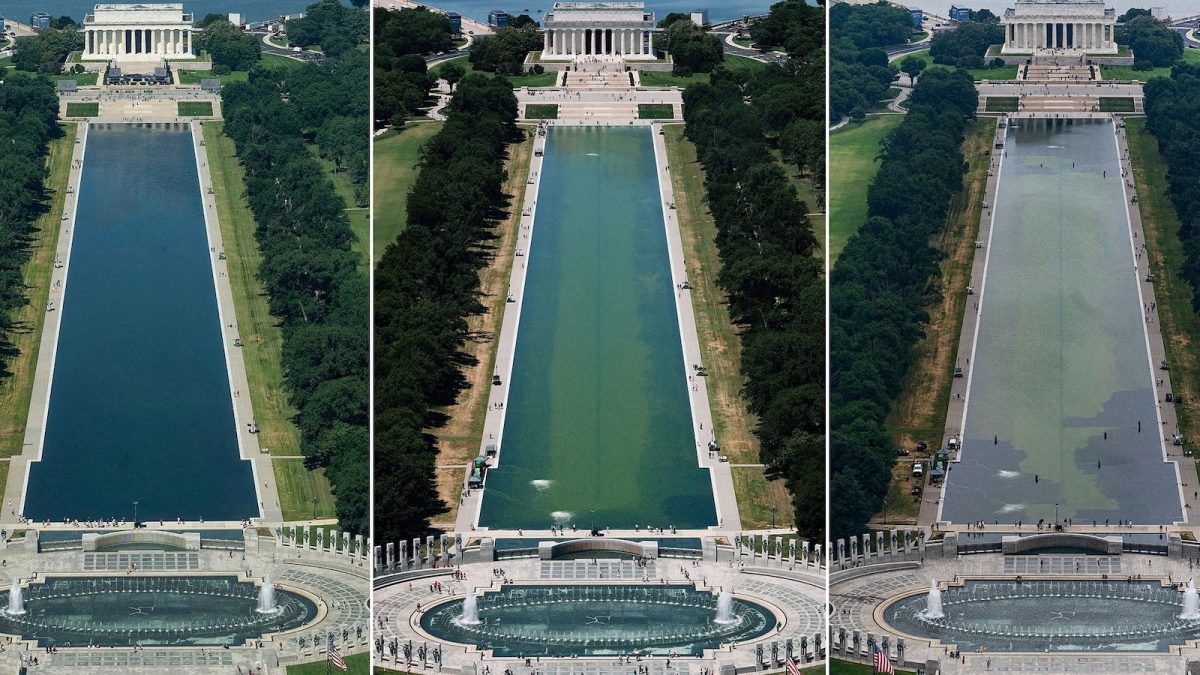
The department emphasized the effectiveness of the new system, claiming it has resolved a long-standing issue that has affected the pool’s appearance for over a century. However, critics argue that the algae problem has resurfaced despite these efforts, with visible blooms now covering the surface. This has sparked debates about the efficiency of the project and whether the no-bid contracts were the best choice for expedited completion.
Trump’s Defense of the Renovation
President Donald Trump has publicly defended the renovation project, highlighting the expertise of the contractors involved. In April, he remarked, “As a developer, I’ve probably built more than 100 swimming pools in different buildings I built, and I have some really good pool builders.” Trump praised the contractors’ work, expressing respect for those who deliver quality results and disdain for those who fail. “They charge you more money and they give you a bad job, but we—we don’t accept it,” he added, underscoring his belief in the value of the investment.
Despite Trump’s support, the new paint applied to the pool has drawn criticism. Reports indicate that the surface is already showing signs of peeling, which has raised concerns about the durability of the materials used. The National Park Service has been seen manually removing algae from the pool’s bottom, suggesting that the nano bubble system may not have fully addressed the issue. This has led to speculation about whether the higher costs were necessary or if alternative solutions could have been more cost-effective.
Taxpayer Funds and Ongoing Scrutiny
The millions spent on the contractors are sourced from taxpayer funds, prompting calls for transparency. The National Park Service has not yet provided a detailed account of how the money was allocated, though they have acknowledged the need for the project’s completion. ABC News has sent multiple requests to Atlantic Industrial Coatings for further comments, but as of now, no official response has been received.
Public interest in the pool’s restoration has grown, with some viewing the project as a necessary effort to preserve the historical site. Others, however, question the lack of competition in the bidding process and the decision to award no-bid contracts. The National Park Service has defended the choice, stating that the speed of completion was critical for the Fourth of July events. Yet, the debate over the cost and efficiency of the renovation continues to gain traction in the media and among political figures.
Related Stories
Iran live updates: Special Envoy Witkoff en route to Switzerland, US official says
18-year-old tourist dies after falling from runaway Central Park horse carriage
Jun 17, 9:02 PM Trump says US and Iran have reached a deal, opening the Strait of Hormuz
Jun 14, 2:51 PM
The Lincoln Memorial Reflecting Pool, which has been a symbol of American history and culture since its completion in 1922, remains a focal point for public gatherings. Its restoration has been a priority for the National Park Service, with officials emphasizing the importance of maintaining its pristine condition for visitors. However, the recent cost overruns have shifted the conversation to include questions about the management of the project and the long-term implications for future maintenance budgets.
As the pool continues to be cleaned and restored, the controversy surrounding the renovation’s financial decisions is likely to persist. With millions of dollars in taxpayer funds spent and the project’s completion imminent, the National Park Service faces pressure to justify the expenses and demonstrate the value of the work. The outcome of this effort will determine whether the pool’s revitalization is seen as a success or a cautionary tale of overpriced contracts and rushed timelines.
Meanwhile, the image of the pool being cleaned by National Park Service staff on June 18, 2026, has captured public attention. Rahmat Gul’s AP Photo captures the scene, offering a visual reminder of the pool’s role in both history and modern events. As the pool’s appearance improves, the debate over its renovation will continue to shape discussions around public infrastructure spending and the balance between quality and cost efficiency.