
Canary in the Coal Mine: States Target Election Betting Amid Rising Concerns
Canary in the coal mine – As political races intensify across the United States, a growing number of states are taking action to curb election betting, viewing it as a potential threat to electoral fairness. Maryland, a state with strict regulations on this practice, has become a focal point for debate. In recent weeks, bettors have flooded prediction markets like Kalshi and Polymarket, placing wagers on a wide array of outcomes—from the winner of the state’s upcoming gubernatorial election to the margin of victory in the 6th Congressional District. These markets have already generated substantial trading activity, with millions of dollars in bets exchanged for every race. Yet, despite the popularity of such platforms, Maryland officials remain committed to enforcing their ban on election betting, citing concerns about its influence on voters.
States Navigate Legal and Ethical Challenges
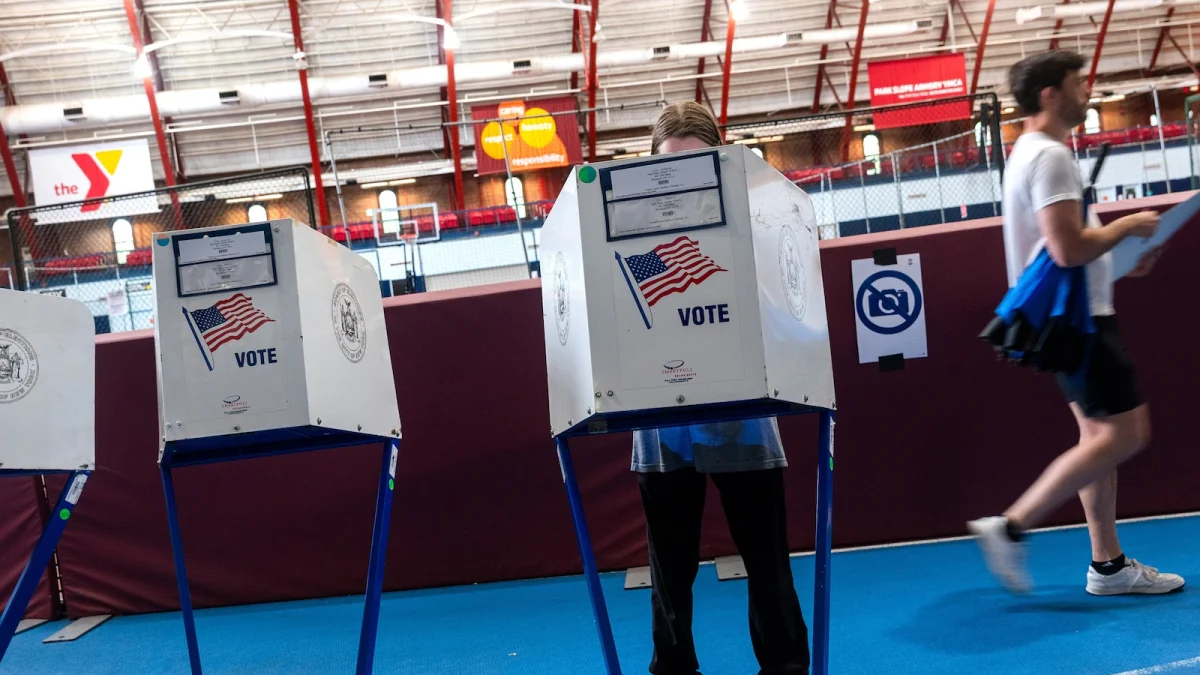
While the federal government has generally supported the use of prediction markets, several states have taken a more cautious approach. According to data from the Pew Research Center, over half of U.S. states have laws that either limit or outright prohibit election betting. These regulations vary in scope, with some states like Texas and Arizona imposing outright bans, while others, such as Wisconsin, have more specific restrictions. In Wisconsin, for example, residents who wager on elections may face challenges if they later cast ballots in the same race, as the law states they cannot vote in elections where they’ve placed a wager. This has raised questions about the practicality of such rules and their impact on voter participation.
Jared DeMaranis, Maryland’s election administrator, has emphasized the need for proactive enforcement. “If we have credible information about illegalities and it’s not within our civil citation authorities, we will of course refer those matters to the office of the state prosecutor for enforcement,” he said in a recent interview with ABC News. DeMaranis described election betting as a “growing issue” that must be addressed early to prevent it from undermining public trust. His comments reflect a broader trend among state officials who argue that betting on elections could lead to biased voting or the spread of misinformation.
Legal Battles Over Jurisdiction
Arizona has emerged as a key battleground in the legal fight over election betting. The state’s attorney general filed criminal charges against Kalshi earlier this year, accusing the platform of operating an unlicensed gambling business. These charges followed a wave of bets by Arizona residents on state elections, prompting officials to question whether the practice falls under state or federal authority. However, a federal judge recently intervened, blocking Arizona from proceeding with its criminal case. The decision came after the Commodity Futures Trading Commission (CFTC) filed a lawsuit, arguing that prediction markets are subject to federal oversight rather than state gambling laws.
The CFTC’s stance highlights a central conflict: whether prediction markets should be regulated at the state level or left to federal agencies. In the wake of the Arizona case, the state’s attorney general’s office has remained silent, leaving uncertainty about how they’ll handle election betting this season. Meanwhile, Texas officials, who also have a ban in place, have not yet responded to questions about their enforcement strategy. Christopher McGinn, executive director of the Texas Association of County Election Officials, noted that administrators are already discussing potential measures, including monitoring individuals with a financial stake in election outcomes. “There’s a risk that those with a vested interest might have more incentive to manipulate results or spread misleading information,” McGinn explained.
Impact on Voter Integrity and Political Forecasting
While critics argue that election betting could distort democratic processes, proponents maintain it enhances political forecasting. Prediction markets, which operate on principles of supply and demand, allow participants to bet on a range of electoral events, from candidate viability to voter turnout. Advocates claim these platforms provide more accurate insights than traditional polls, as they reflect real-time opinions and market sentiment. However, this view is often met with skepticism from election experts who warn of the potential for conflicts of interest.
Ann Jacobs, chair of the Wisconsin Election Commission, acknowledged the challenges of enforcing the state’s rule but defended its intent. “The policy behind saying, ‘You can bet or you can vote, but you can’t do both,’ is 100% a sound policy,” she said. Jacobs emphasized that the goal is to ensure voters make decisions based on their own beliefs rather than financial incentives. “We want people to vote for the candidate they truly believe is best for their community,” she added. This sentiment echoes the broader rationale behind state bans, which aim to prevent undue influence on election outcomes.
Despite these efforts, the enforcement of election betting restrictions remains complex. In Maryland, for instance, the challenge lies in distinguishing between casual bets and coordinated campaigns to sway voters. Officials have yet to outline a clear strategy for identifying and penalizing violators, leaving room for interpretation. Similarly, in Arizona, the legal dispute over jurisdiction has stalled progress, with the CFTC’s argument that prediction markets fall under federal oversight gaining traction. This has forced states to reconsider their approach, balancing the need for regulation with the realities of modern political engagement.
The debate over election betting also extends to the broader implications for democracy. While some see it as a harmless form of civic participation, others fear it could create a situation where voters are influenced by financial motives. For example, if a candidate’s supporters bet heavily on their victory, there may be pressure to ensure the outcome aligns with their investments. This concern is amplified in states where betting is explicitly banned, as officials seek to eliminate such risks entirely. Yet, even with these rules in place, the line between betting and influencing elections remains blurred.
As the 2026 elections approach, the issue of election betting is gaining national attention. With prediction markets continuing to thrive and state laws evolving, the question remains: how can regulators protect electoral integrity without stifling legitimate political discourse? The answer may lie in a combination of stricter oversight, public education, and collaboration between state and federal authorities. For now, however, the situation in Maryland and other states underscores the ongoing tension between innovation and tradition in the democratic process.
Related Stories and Ongoing Discussions
Recent developments in election betting have sparked a wave of related discussions. In one notable case, Kalshi suspended three congressional candidates for wagering on their own races, highlighting the potential for self-interest to shape market dynamics. Meanwhile, the federal government’s lawsuit against Minnesota over its prediction market ban has drawn comparisons to similar legal actions in Arizona, suggesting a pattern of states asserting control over an issue that may ultimately belong to federal regulators.
These stories illustrate the rapidly changing landscape of election betting. As platforms like Kalshi and Polymarket grow in popularity, they are challenging the boundaries of state authority. Yet, for states like Maryland, Texas, and Arizona, the fight to maintain control over election outcomes continues. With public opinion divided and legal precedents still being set, the future of election betting remains uncertain—offering a glimpse into the broader struggle between financial interests and democratic ideals.