
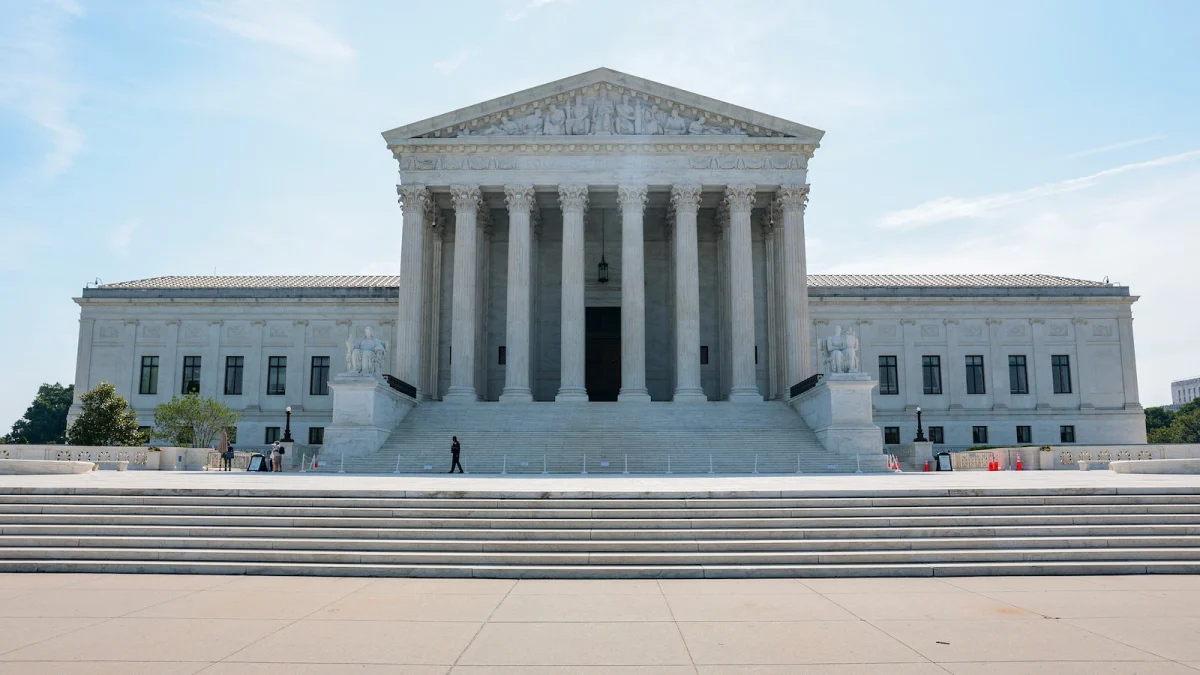
Supreme Court Overturns Hawaii’s Gun Carry Restrictions on Public Access Private Property
Supreme Court rolls back limits on carrying – On Thursday, the U.S. Supreme Court delivered a landmark ruling that invalidated Hawaii’s law restricting firearm possession on private property accessible to the public. The decision, authored by Justice Samuel Alito and supported by a 6-3 majority, centers on the Second Amendment and its application to individuals exercising their right to carry weapons on premises open to the public. The court found the law to be an undue burden on constitutional freedoms, prompting immediate reactions from gun rights advocates and safety organizations alike.
Majority Opinion: Balancing Individual Rights and Public Safety
The ruling, which is expected to have ripple effects across several states, hinges on the interpretation of the Second Amendment’s protections. Alito’s majority opinion argues that the law imposes “severe restrictions on the daily activities” of lawful gun owners, effectively limiting their ability to carry firearms in spaces like shopping malls, bars, and private beaches. “Rather than allowing all to enter private property open to the public unless specifically prohibited, these new laws provided that no one carrying a firearm may enter without express authorization,” the opinion states in a
blockquote>blockquote>.
Alito emphasized that the Hawaii law at issue “violates the constitutional right to keep and bear arms,” highlighting a shift in the court’s stance on private property regulations. The decision underscores a broader principle: that the default rule permits public carry unless explicitly barred by signage or explicit consent. This approach places the responsibility on property owners to communicate restrictions, rather than requiring individuals to seek permission before exercising their rights.
Dissenting View: Concerns Over Public Safety and Legislative Authority
Justice Ketanji Brown Jackson, in a dissenting opinion joined by Justice Sonia Sotomayor, criticized the majority for undermining the ability of modern legislatures to address gun violence. “Today’s decision makes one thing clear: The Court’s objective is protecting guns, not consistently preserving any principle of law,” Jackson wrote in a
blockquote>blockquote>.
She argued that the ruling creates a significant challenge for lawmakers seeking to balance individual freedoms with community safety. “This common-sense law is what the people of Hawaii wanted, but the court has complete disregard for that community will,” said Kris Brown, president of Brady, a gun safety group, in a
blockquote>blockquote>. The dissenters contended that the law’s provisions were designed to reduce risks in crowded public spaces, such as schools or event venues, by requiring gun owners to obtain permission before entering private property.
Historical Context and Legal Precedents
Hawaii’s law drew upon historical examples of similar regulations, including early 20th-century statutes that allowed property owners to restrict firearm access. However, the majority opinion dismissed these analogues as “outlier legal rules adopted in a few locales,” asserting that they do not reflect the enduring American tradition of public carry.
Alito noted that “overwhelming evidence” demonstrates a consistent legal principle permitting individuals to carry guns on private property open to the public. This interpretation aligns with the broader trend of the court prioritizing individual rights over collective safety measures. The decision also suggests that the tradition of public carry predates modern gun control laws and remains a fundamental aspect of constitutional freedoms.
Statewide Implications and Advocacy Reactions
Legal experts anticipate that the ruling will invalidate similar laws in California, Maryland, New York, and New Jersey. These states had previously enacted regulations requiring property owners to permit firearms on their premises in public spaces. Gun control advocates, including those in Hawaii, expressed disappointment, arguing that the decision weakens efforts to curb gun violence in high-risk environments.
The National Rifle Association (NRA) welcomed the ruling, stating that it empowers law-abiding gun owners to exercise their rights without excessive bureaucracy. “Law-abiding gun owners will no longer be forced to beg for special permission simply to exercise their constitutional right to bear arms in public places,” said John Commerford, executive director of the NRA-ILA, in a
blockquote>blockquote>.
Conversely, Brady and other safety groups view the decision as a major setback for public safety. “This common-sense law is what the people of Hawaii wanted, but the court has complete disregard for that community will,” reiterated Kris Brown. The group warned that the ruling could lead to a surge in gun-related incidents in spaces where armed individuals might now feel emboldened to enter without prior authorization.
Broader Legal Trends and Future Debates
The Hawaii case is part of a growing series of Supreme Court decisions expanding the scope of the Second Amendment. Earlier this year, the court ruled in favor of allowing some marijuana users to own firearms, further eroding federal restrictions. These rulings reflect a judicial philosophy that emphasizes individual liberties, even in the face of potential risks to public safety.
While the decision grants more flexibility to gun owners, it also places the onus on property owners to clearly communicate their restrictions. For example, a business or home open to the public must now display signage prohibiting firearms if they wish to limit access. This change has sparked discussions about how to effectively enforce rules in spaces where guns are now permitted by default.
Advocates for gun control argue that the ruling creates a new standard for public safety, potentially requiring additional legislation to address specific threats. “The court’s decision only further binds the hands of modern legislatures attempting to balance and protect their residents’ interests,” Jackson stated in her dissent. Meanwhile, supporters of the ruling maintain that it upholds the core principles of the Second Amendment, ensuring that individuals can exercise their rights without unnecessary interference.
Public Reaction and Ongoing Implications
The ruling has ignited a polarized debate, with gun rights proponents celebrating the decision as a victory for constitutional freedoms. Conversely, public safety advocates have criticized it as a “deeply dangerous” move that privileges gun ownership over community well-being.
As the debate continues, the decision may influence future legislation and court cases. States with similar laws could face renewed challenges, while others might adopt more permissive policies. The ruling also raises questions about the role of the judiciary in shaping laws that balance individual rights with collective safety.
In the aftermath of the decision, the focus will likely shift to how property owners and communities adapt to the new legal landscape. Whether this change leads to increased gun access or a reevaluation of public safety strategies remains to be seen, but the Supreme Court has clearly signaled its commitment to expanding the Second Amendment’s reach.