
Hegseth Blocks Promotions of Navy Officers to One-Star Rank
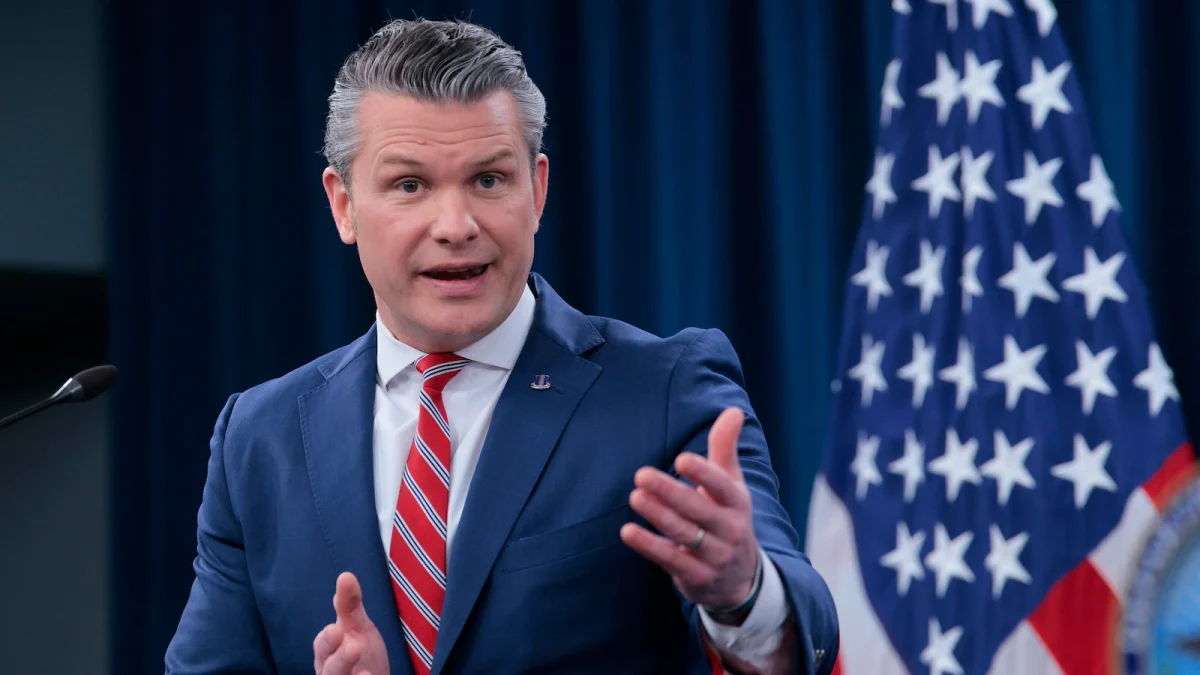
Hegseth blocks promotion of several Navy – Defense Secretary Pete Hegseth has taken action to prevent the advancement of multiple senior Navy officers to the rank of one-star admirals, as confirmed by three individuals connected to the decision, who spoke to ABC News. These officers had already been approved for promotion by a committee of high-ranking admirals, yet Hegseth’s intervention disrupted the process. This move highlights his growing influence over military appointments, as it is uncommon for a defense secretary to overturn promotions in both the Army and Navy’s most recent senior rank assessments.
According to sources, the affected officers included individuals from diverse backgrounds—African Americans, women, and white males—who were removed from the promotion list for reasons tied to their involvement in Diversity, Equity, and Inclusion (DEI) programs. The motivations behind these reversals remain unclear, though the decision has drawn attention to Hegseth’s broader approach to military leadership. In addition to blocking the Navy promotions, he also sought to elevate one of his key military assistants, Capt. William Francis Jr., to the list. However, Francis did not meet the necessary qualifications, such as leading a major command, which disqualified him from consideration, sources noted.
The official list of promotions was announced by the Pentagon on May 22. While the release of the list was routine, the removal of several officers raised eyebrows, particularly because of the demographic representation of those affected. Hegseth’s actions have been seen as part of a larger effort to reshape the military’s leadership structure, aligning with his public criticism of policies he describes as fostering a “woke” culture. This critique has intensified as minority representation in the ranks has increased and women have begun to claim more positions in higher command.
In a separate development, the New York Times was the first to report on Hegseth’s interference in the promotion process. The article detailed his attempts to secure Capt. Francis’s inclusion, underscoring the personal and strategic elements of his decisions. Since taking office, Hegseth has been associated with a series of abrupt dismissals and promotion rejections, affecting 19 senior generals and flag officers. Among them, several were women or minorities, a trend that has sparked debate over the fairness of his tenure.
Sean Parnell, the Pentagon’s chief spokesperson, defended the decision in a statement to ABC News, asserting that promotions are based on merit. “Military advancement is awarded to those who have earned it,” he said. “The Department will never let the color of a service member’s skin or their gender sway the promotion process. Under President Trump and Secretary Hegseth, meritocracy remains the guiding principle at the War Department.” Despite this reassurance, critics argue that Hegseth’s actions have slowed progress toward greater diversity in leadership roles.
Earlier this year, Hegseth made headlines by challenging the military’s diversity initiatives, emphasizing his belief that such programs sometimes prioritize identity over capability. His remarks were part of a broader speech to top generals and admirals, where he outlined new standards for promotions. These standards reportedly favor candidates with a strong record of traditional military values, such as discipline and operational readiness, over those engaged in DEI efforts.
The impact of Hegseth’s decisions extends beyond individual cases. For instance, in the Army’s recent promotion cycle to brigadier generals, four colonels were removed from the list, including two African Americans and two women. This mirrors the Navy’s situation, suggesting a pattern of targeted interventions. While the Pentagon maintains that these actions are based on objective criteria, the timing and selection of officers have raised questions about the influence of personal or ideological preferences on military appointments.
As the military continues to grapple with the balance between tradition and inclusivity, Hegseth’s tenure has become a focal point. His efforts to limit DEI participation in promotions align with a narrative that frames such initiatives as undermining core military values. However, proponents of diversity argue that these programs are essential for reflecting the broader population in leadership and fostering innovation within the ranks.
One of the most contentious aspects of Hegseth’s strategy is the removal of officers based on their involvement in DEI initiatives. While the specific reasons for each case remain under investigation, the overall effect has been a reduction in the number of women and minorities advancing to senior ranks. This shift has been particularly notable in the Navy, where the promotion of underrepresented groups has been a growing trend in recent years.
Related: Hegseth Criticizes ‘Woke’ Culture in Military
“The military should be a place of excellence, not political correctness,” Hegseth stated in a speech to top generals and admirals. “Our promotions must reflect not only experience but also a commitment to the values that have guided us for decades. DEI programs are important, but they should not overshadow the hard work and dedication of every service member.”
The Pentagon’s response to Hegseth’s actions has been measured, with officials citing the necessity of maintaining a merit-based system. However, the growing number of promotions blocked or revised has led to calls for greater transparency in the selection process. Critics suggest that the decisions may be influenced by personal relationships or ideological alignment, rather than purely objective performance metrics.
As the debate over Hegseth’s leadership continues, the military faces the challenge of reconciling its evolving demographic landscape with the principles of traditional hierarchy. Whether his interventions represent a strategic realignment or a setback for diversity remains a topic of discussion among military analysts and advocacy groups. For now, the promotion lists reflect a new era of selection criteria under his direction.