
Judge Blocks Part of Trump’s Proposed Mail-In Voting Restrictions
Judge blocks part of Trump s proposed – In a significant development, a federal judge has halted a key component of President Donald Trump’s executive order aimed at limiting mail-in voting. The ruling, issued by Judge Indira Talwani of the U.S. District Court for the District of Massachusetts, marks the third time in under a week that a federal judge has challenged the Trump administration’s efforts to enhance federal oversight of elections. This decision prevents the implementation of a national voter list managed by the Postal Service, which would have required states to submit approved voter records for mail-in ballots. It also blocks new rules intended to give the Postal Service greater authority over the mail-in voting process.
Constitutional Authority and State Powers
Talwani’s ruling emphasizes the constitutional boundaries of presidential power. “The Constitution reserves the power to determine voter eligibility to the States alone,” she wrote in part. “Neither the Executive Branch nor Congress may interfere with this power.” The judge argued that Trump’s executive order overreached by imposing federal mandates on states’ election systems, which she described as “an encroachment on the right of states to oversee their own voting processes.” She further stated, “The Constitution does not grant the President any specific powers over elections. The President ‘plays no direct role in the process’ of appointing electors, ‘nor does he have authority to control the state officials who do.’”
“The Constitution does not grant the President any specific powers over elections. The President ‘plays no direct role in the process’ of appointing electors, ‘nor does he have authority to control the state officials who do.’”
Preceding Legal Challenges
Before this latest ruling, two other federal judges had already issued similar decisions against Trump’s election policies. The first blocked a provision requiring proof of citizenship for voter registration, while the second halted a voter-screening database that aimed to purge non-citizens from voter rolls. These rulings highlighted the administration’s push to centralize control over election procedures, often framing them as necessary to prevent fraud. However, critics argued that the measures lacked clear justification and could disproportionately affect minority voters.
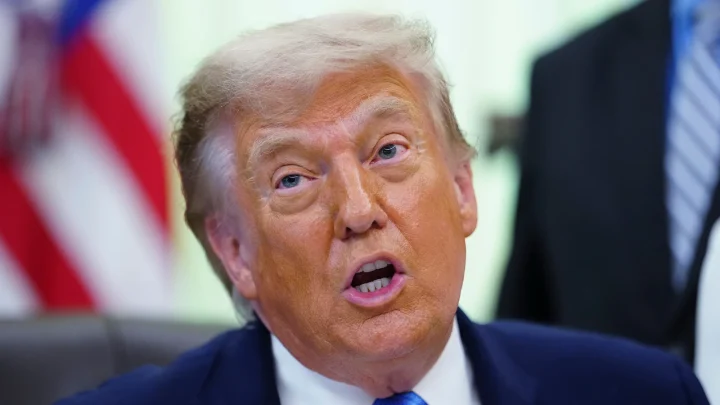
On June 17, 2026, Trump participated in a bilateral meeting with Indian Prime Minister Narendra Modi during the G7 Summit in Evian-les-Bains, France. While the event itself was unrelated to the current legal dispute, it underscored the administration’s ongoing focus on international alliances, including efforts to secure support for stricter voting rules.
Postal Service’s Role and Policy Implications
The ruling directly impacts the Postal Service, which had proposed a rule mandating the delivery of ballots only if states provided their voter lists. Postmaster General David Steiner had previously stated that the agency would refuse to deliver mail-in ballots unless states cooperated by submitting voter data. This policy was part of the broader Trump administration strategy to tighten election oversight, with the argument that federal agencies should have a say in how states conduct voting.
However, the current decision stops this policy in its tracks. The judge found that the executive order’s provisions exceeded the President’s authority and conflicted with state autonomy in election administration. “No law enacted by Congress delegates authority to control mail-in voting to USPS,” Talwani’s ruling stated. “The voting-related guidance currently issued by USPS is not binding on the States, merely recommended.”
“[T]he Constitution reserves the power to determine voter eligibility to the States alone. … Neither the Executive Branch nor Congress may interfere with this power,” Talwani wrote, in part.
Earlier this month, a different judge had declined to issue a block on the mail-in voting policy, citing that it had not yet been implemented. The Postal Service then posted a proposed rule to enact part of the executive order, prompting further legal action. The latest ruling, however, effectively halts that process, though the Trump administration is expected to challenge the decision in appeals.
Broader Context of the Legal Battles
This latest development is part of a series of legal challenges targeting Trump’s election-related policies. The administration’s push to expand federal oversight has been met with resistance from multiple courts, each highlighting the tension between executive authority and state autonomy. The executive order, proposed in March 2025, sought to streamline mail-in voting by requiring the Postal Service to enforce stricter deadlines and verification processes. While supporters claimed these measures would enhance election integrity, opponents warned they could create logistical hurdles for voters, particularly in states with limited resources.
Key provisions of the order included a requirement for states to submit voter lists to the Postal Service, which would then be used to manage ballot distribution. This move was seen as a way to align state election procedures with federal standards, but the judge ruled it unconstitutional. The decision reinforces the argument that states should retain primary responsibility for managing their own electoral systems, with federal agencies playing a supportive role rather than a controlling one.
Implications for the 2026 Election Cycle
The ruling has immediate implications for the upcoming election cycle, which includes the 2026 midterms and the 2028 presidential race. With mail-in voting remaining a critical component of election access, the decision ensures that states will continue to set their own rules for ballot distribution. However, the Trump administration may still attempt to modify the policy through legislative action or by appealing the ruling. Legal experts suggest that the case will be closely watched as it could set a precedent for future debates on federal versus state control over voting processes.
Meanwhile, the Postal Service has faced mounting pressure to adapt to the new restrictions. While the agency had previously expressed confidence in its ability to manage mail-in voting, the court’s decision has forced it to reconsider its role in the process. The ruling also highlights the potential for ongoing disputes between the executive branch and state governments, as each side continues to assert its authority in shaping election procedures.
As the legal battles unfold, the focus remains on balancing electoral efficiency with voter rights. The judge’s emphasis on state sovereignty underscores the importance of preserving local decision-making in elections, particularly during high-stakes periods like the 2026 cycle. While the Trump administration may still advocate for its policies, the current ruling serves as a reminder of the constitutional limits on federal intervention in state electoral systems.