
America 250: David Muir’s Journey to the Statue of Liberty’s Torch
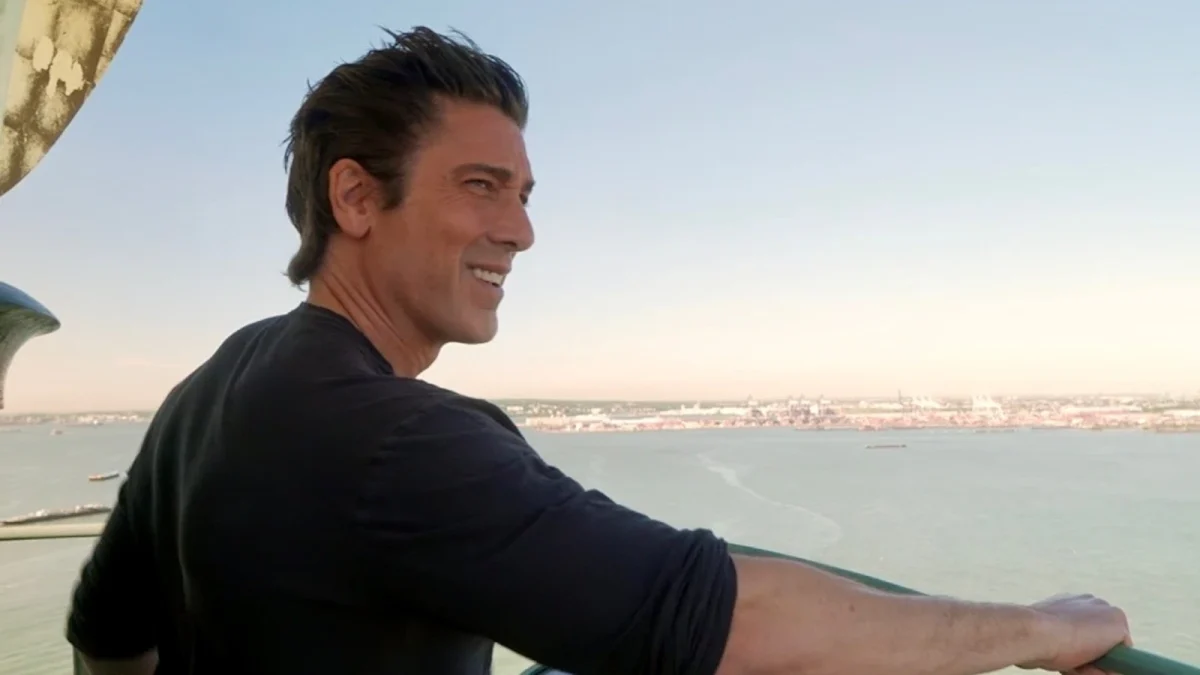
America 250 – As part of ABC News’ special commemorations for the nation’s 250th anniversary, anchor David Muir took an extraordinary step by ascending to the top of the Statue of Liberty, reaching the iconic torch that overlooks New York Harbor from a height exceeding 300 feet. The climb, which involved navigating through the statue’s right arm, symbolized a vivid connection to the country’s enduring legacy of welcoming immigrants and shaping its identity.
A Legacy of Immigration and Symbolism
The Statue of Liberty, a gift from the French people in 1886, has stood as a beacon of hope for millions of immigrants arriving in America over the decades. During its time, the statue witnessed the arrival of over 12 million immigrants, particularly during the era when Ellis Island operated as the primary immigration center from 1892 to 1954. For many, the sight of Lady Liberty’s torch was the first glimpse of freedom and opportunity in a new land.
While traveling to Liberty Island on a ferry, Muir engaged in conversation with Captain Hamilton Clancy, whose family has lived in the vicinity of the statue for generations. Clancy’s grandfather once served as the superintendent of Liberty Island, offering a personal link to the statue’s history. Reflecting on the immigrants’ experience, Clancy noted the profound impact of the statue’s presence. “It’s impossible to fully imagine what it was like for the immigrants all those years ago, turning the corner and seeing that torch for the first time,” he said, emphasizing the courage it took for newcomers to embark on their American dreams.
From Restoration to Rivalry: A New Perspective
ABC News is celebrating America’s 250th anniversary with a week-long series of events, including 24 hours of programming titled “Disney Celebrates America.” This multi-platform initiative spans ABC, Disney+, Hulu, ESPN, National Geographic, FX, Freeform, and ABC News Live, aiming to showcase the nation’s history and cultural landmarks. The coverage begins on July 3 at 10 p.m. ET and continues through July 4, highlighting stories from every state.
During the climb, Muir met with Tony Soraci, the grandson of Italian immigrants and a key figure in the 1980s restoration project. Soraci, who helped preserve the original torch, shared insights about the challenges of maintaining the monument. “She’d been up there for 100 years—she’s out in the middle of the ocean,” he remarked, describing the wear and tear the statue endured over its first century. The original torch, damaged over time, was replaced with a replica for the centennial celebration, though the original remains on display in the museum on Liberty Island.
The Engineering of a National Icon
As Muir and his team ascended the double helical staircase leading to the crown, they were treated to a rare view of the statue’s inner workings. Matt Housch, a historian with the National Park Service, explained the intricate copper patchwork that forms the statue’s exterior. “The copper is so thin, it’s really just, like, almost two pennies in your hand,” Housch said, highlighting the contrast between the statue’s delicate interior and its weathered exterior, which has developed a green patina over time.
Meanwhile, Housch also discussed the statue’s design, noting how it was engineered to withstand harsh weather conditions. “One of the things you notice right away up here, when you’re standing on the torch at the Statue of Liberty—something they’ve given to very few people—is the movement caused by the winds,” Muir observed. Housch added that the statue’s flexibility was intentional, allowing it to sway and endure the elements. “Architects designed it that way with the purpose of withstanding weather for generations,” he explained, underscoring the blend of artistry and practicality in the monument’s construction.
A Glimpse into the Past: Immigrants and the Statue
Muir’s climb provided a poignant reminder of the statue’s role as a symbol of American ideals. As he stood atop the torch, the anchor described the sweeping view of New York Harbor, mirroring the experiences of those who first saw it as they approached the city. “Welcome to New York Harbor. You can hear the ferry pulling off. Wow. This is what all of those immigrants saw as they pulled into the harbor,” he said, capturing the emotional weight of the moment.
The statue’s design, conceived by French sculptor Frédéric-Auguste Bartholdi, was a deliberate choice to ensure that arriving immigrants would immediately encounter Lady Liberty’s face. “Bartholdi didn’t know that the most immigrants in history were gonna come into New York City,” Housch noted, highlighting the foresight in the statue’s creation. Despite this, the monument has become an enduring symbol of freedom, with its torch representing the light of opportunity that has guided countless newcomers.
According to the National Park Service, approximately 40% of Americans can trace their ancestry back to Ellis Island, the gateway for millions of immigrants in the early 20th century. The statue’s presence was not just a landmark but a guiding force for those seeking a better life. Muir’s climb, therefore, serves as a powerful reminder of the historical and emotional significance of the monument, bridging the past with the present.
Throughout the journey, Muir’s interactions with Clancy, Soraci, and Housch offered a multifaceted view of the statue’s role in American history. From the personal stories of those who lived near it to the technical aspects of its preservation, the event encapsulated the spirit of the nation’s 250-year journey. As the week of programming unfolds, ABC News aims to honor this legacy, ensuring that the stories of the past continue to inspire the future.
Conclusion: A Shared Heritage
Muir’s ascent to the torch was more than a physical feat—it was a symbolic act of reconnection with the nation’s roots. The statue, once a beacon for immigrants, now stands as a testament to their resilience and the enduring values of freedom and opportunity. Through this celebration, ABC News seeks to highlight the contributions of those who came before, while also acknowledging the ongoing stories of those who continue to build America’s future.