
The US Navy lost $136 million worth of jets in an air show crash. Why risk it?
The US Navy lost $136 million worth of jets in an air show crash. Why risk it?
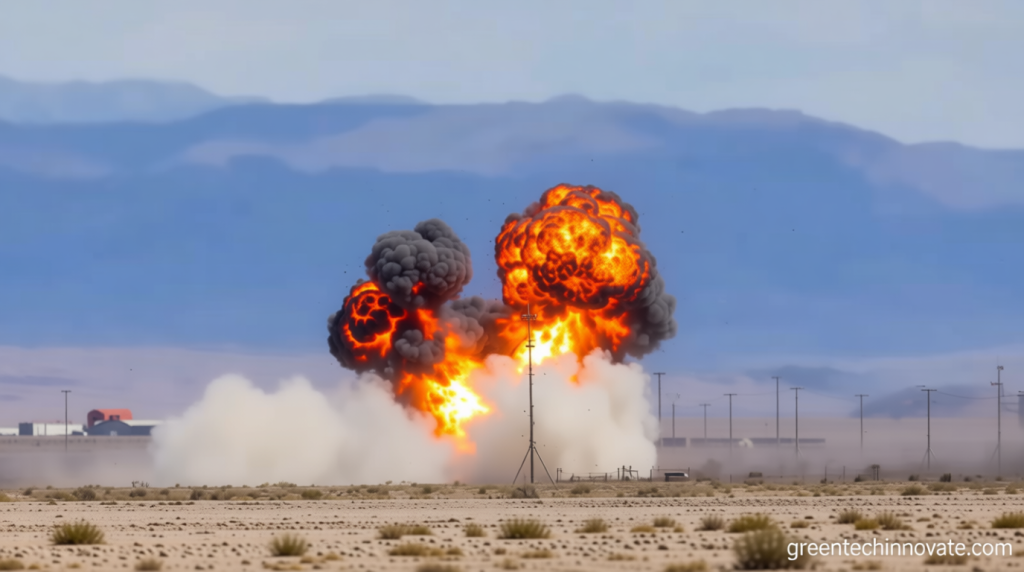
The US Navy lost 136 million – During the Gunfighter Skies Air Show in Idaho, a tragic incident unfolded as two US Navy EA-18 Growler aircraft collided mid-air, resulting in significant financial and human losses. The crash has reignited debates over the Pentagon’s willingness to deploy high-value military assets for public entertainment. While the event aimed to showcase the capabilities of the Navy’s electronic warfare planes, the incident highlights the inherent risks involved in such displays.
Costs of the Crash and Its Implications
The two EA-18 Growlers, valued at approximately $68 million each, were piloted by members of the Growler Airshow Team, according to a statement from the Navy. The collision led to the successful ejection of all four crew members, with only one sustaining minor injuries. Despite the crews’ safety, the crash underscores the financial stakes of air show performances. With production of the EA-18 jets now halted, replacing them would cost even more than their initial purchase price.
Operating these aircraft is itself an expensive endeavor. A 2022 Boeing press release indicated that the hourly costs for maintaining and flying F/A-18 jets, which form the basis of the EA-18 Growlers, amount to roughly $20,000. This figure, combined with the aircraft’s high market value, means that each incident can have a devastating impact on the military budget. The question remains: what justifies such expenditures when the risks are so high?
The Role of Demonstration Teams
While the Growler Airshow Team is one of many demonstration units, its role is part of a broader strategy to engage communities with military aviation. The Pentagon employs these teams to provide a more accessible experience for smaller audiences who may not have the opportunity to witness full-scale aerial displays. John Venable, a former Air Force fighter pilot and expert at the Mitchell Institute for Aerospace Studies, emphasized this point. “The services create these smaller demonstration teams to serve communities that otherwise wouldn’t get to see military flying,” he explained.
“Both the Air Force and the Navy really value smaller venues that can’t get a major jet team, which is why units like the EA-18G Growler Demonstration Team exist.”
Venable noted that the larger teams, such as the Navy’s Blue Angels and the Air Force’s Thunderbirds, typically headline major events across North America. However, these teams alone account for just 70 of the 325 to 350 air shows held annually. To fill the gap, the military relies on demonstration units like the Growlers, which can be deployed more flexibly. Yet, even these smaller teams face inherent dangers, as they perform at high speeds and in tight formations, often with limited margins for error.
Cost-Benefit Analysis Under Scrutiny
A 2012 cost-benefit study conducted by three Navy officers at a California post-graduate school revealed a concerning financial imbalance. The report found that the Blue Angels’ annual budget of around $98.6 million generated less than $1 million in recruitment benefits, yielding a negative 99% return on investment. Even when factoring in broader economic impacts, such as the spending generated by air show attendees, the analysis still concluded a negative 41% ROI.
Although the study focused on the Blue Angels, similar cost-benefit assessments likely apply to other demonstration teams. In 2024, Congress mandated a new review of these programs, yet the Pentagon has not yet released public figures. This lack of transparency fuels skepticism about the value of such initiatives, especially after high-profile incidents like the Idaho crash.
Historical Risks and Lessons Learned
The Idaho crash is not an isolated event. Military air shows have a history of deadly accidents, some of which have left lasting impressions. In 1982, the “Diamond Crash” in Arizona claimed four Thunderbirds pilots during a practice flight. The incident occurred while the team was preparing for its next season, and investigators later linked the tragedy to unsafe maneuvers.
Another notable accident took place in 1994 when a B-52 bomber crashed during a pre-show rehearsal in Washington state. The pilot was found to have executed maneuvers unsuitable for an eight-engine aircraft, leading to a catastrophic failure. More recently, in 2016, a Blue Angels pilot died in a crash before a show in Tennessee, and in 2018, an Air Force major lost their life during a practice session. These events demonstrate that the risks of air show flying are not merely theoretical.
Despite these dangers, the military continues to invest heavily in demonstration programs. The Blue Angels, for instance, have been a cornerstone of US naval aviation for decades, drawing crowds with their precision flying and distinctive paint schemes. However, the 2012 study suggests that the benefits may not always justify the costs. Venable acknowledged this dilemma, stating that while the entertainment value is undeniable, the financial and human toll raises critical questions about the long-term viability of such programs.
Broader Community Impact and Public Perception
Some argue that the economic and social benefits of air shows extend beyond direct recruitment gains. Local businesses often see a surge in activity, and the presence of military aircraft can inspire interest in aviation careers. However, the 2012 analysis challenged this perspective, finding that the economic gains were insufficient to offset the financial losses. Even with these indirect advantages, the overall cost-benefit ratio remains negative.
The Idaho crash serves as a reminder that the stakes are high. For every successful display, there is the potential for a catastrophic event. Yet, the military continues to prioritize these performances, citing their role in fostering public support and demonstrating operational readiness. Whether it’s the full-time Blue Angels or temporary units like the Growlers, the decision to risk expensive aircraft and skilled pilots for public engagement remains a contentious one.
As the Pentagon awaits the results of its latest cost-benefit study, the debate over the value of air shows continues. While the immediate costs of the Idaho incident are clear, the broader question of whether these events contribute meaningfully to the military’s goals remains unanswered. For now, the Growler Airshow Team’s crash highlights the ongoing tension between spectacle and sacrifice in the world of military aviation.
