
Protesters set Ebola treatment center on fire in DRC, demanding return of body
Protesters Set Ebola Treatment Center on Fire in DRC, Demanding Return of Body
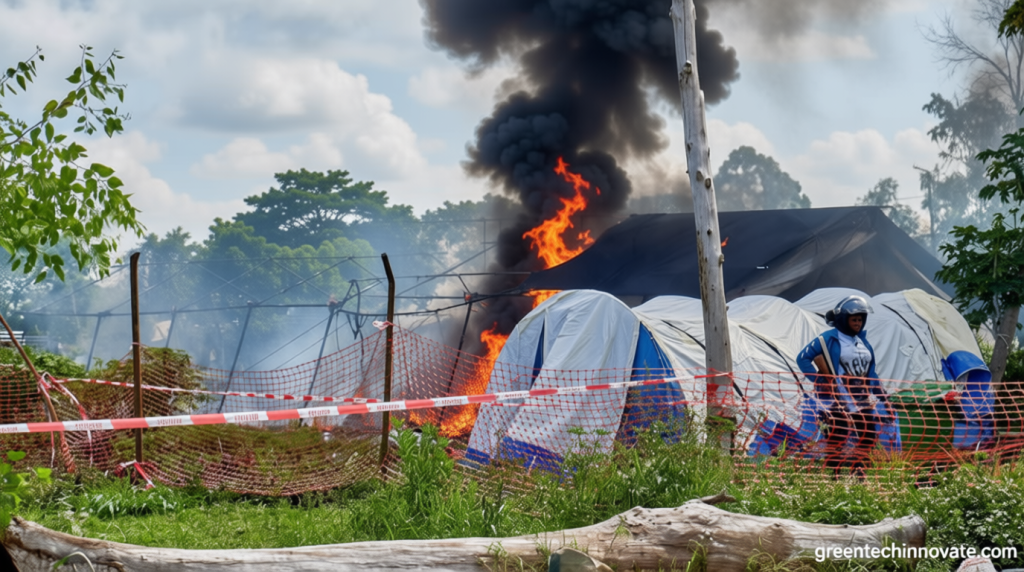
Protesters set Ebola treatment center on fire – A fire erupted at a medical facility in the eastern Democratic Republic of Congo (DRC) on Thursday, as protesters stormed the site of an Ebola treatment center. The blaze, which damaged two hospital tents, was reported by Luc Mambele, a local politician and vice president of the Congolese political party A2RC. According to Mambele, the unrest began when the family of a young man who died from the disease attempted to reclaim his body “by force” from Rwampara Hospital. This incident sparked a confrontation, with health authorities refusing to hand over the remains, leading to projectiles being thrown at the facility and igniting the fire.
The DRC’s struggle with the Ebola outbreak has intensified, with a lethal strain of the virus now threatening communities in the region. Tests conducted by the World Health Organization (WHO) have identified the Bundibugyo strain as the source of the current outbreak. Unlike the more commonly known Ebola virus, the Bundibugyo variant lacks a specific treatment or vaccine, exacerbating concerns about its spread. The government has reported at least 160 deaths linked to the disease, with 13 confirmed cases and 78 suspected infections in Ituri province on Thursday.
“The population is not sufficiently informed or made aware of what is happening. To members of the most remote communities, Ebola is a White man’s invention; it doesn’t exist,” Mambele remarked, highlighting the deepening mistrust among locals.
Residents in Ituri province have grown increasingly skeptical, with many believing that the virus is a fabrication. This skepticism has fueled protests, as seen in the recent attack on the health facility. The medical tents at the Alliance for International Medical Action (ALIMA) site were targeted, leaving six patients—initially receiving care in the tents—displaced and now treated in the hospital. ALIMA issued a statement warning against the proliferation of “incorrect or unconfirmed information circulating on social media and the internet,” which they claim could intensify fear and undermine confidence in health services.
Video footage shared with CNN depicted the chaos at the scene, showing police firing warning shots to drive away protesters. Reuters captured images of the aftermath, where the charred remnants of the medical tents stood over blackened hospital beds. Despite the destruction, officers from the national police force acted swiftly to restore order, Mambele confirmed. The incident has raised alarms about the dangers of misinformation, which he described as a significant factor in the community’s reaction.
Patrick Muyaya, a spokesperson for the DRC, expressed condemnation over the attack, stating that locals had “exactly what they shouldn’t do” by setting the facility ablaze. The government’s response included increased security measures and efforts to address the outbreak. However, the situation remains volatile, with health officials working to manage both the crisis and public sentiment. The first suspected case of the outbreak originated in Bunia, where a healthcare worker exhibited symptoms on April 24 before succumbing to the illness. By May 5, the WHO had flagged an “unidentified illness” in the province, linked to high mortality rates.
The Spread of the Outbreak and Global Response
Following an investigation by a rapid response team, the outbreak was officially confirmed as the Bundibugyo virus on May 15. This strain has since reached neighboring Uganda, where health authorities identified two laboratory-verified cases in the capital, Kampala. One patient, a woman, tested negative for Ebola and is currently out of danger, according to the Ugandan Health Ministry. The spread across borders has prompted heightened vigilance, with public transport, flights, and ferries between Uganda and the DRC temporarily suspended. Enhanced border security patrols are now in place to monitor movement and prevent further transmission.
The U.S. Centers for Disease Control and Prevention (CDC) became aware of the outbreak on Thursday, May 14, as per a source involved in the Ebola response. The CDC’s first meetings to address the situation were held on Friday, indicating a coordinated international effort. Notably, an American citizen working in the DRC tested positive for the virus and is now receiving treatment in a hospital in Berlin, Germany. This case underscores the global reach of the outbreak, even as the DRC continues to report suspected cases and contacts.
While 64 cases have been officially confirmed, the DRC has documented 671 suspected infections, with over 1,260 individuals under active monitoring. The rapid spread of the Bundibugyo strain has placed immense pressure on local health infrastructure, which is already strained by the ongoing crisis. Mambele emphasized that the community’s resistance to Ebola is not merely a reaction to fear but a reflection of deep-seated beliefs about the disease’s origin and purpose.
The World Health Organization has declared the situation a “public health emergency of international concern,” a classification that highlights the global significance of the outbreak. Despite this designation, the organization maintains that the risk to international populations remains low. Peter Piot, a renowned virologist who co-discovered the Ebola virus, reiterated that prioritizing patient care and safeguarding health workers is critical to containing the spread. His insights come at a time when both the DRC and Uganda are racing to control the outbreak, with health officials emphasizing the need for accurate information and community engagement.
The fire at Rwampara Hospital serves as a stark reminder of the challenges faced by health workers in the region. As protesters clash with authorities, the broader implications of the outbreak continue to unfold. The Bundibugyo strain’s presence in the DRC and Uganda has not only disrupted local healthcare systems but also strained diplomatic and logistical ties between the two countries. The suspension of public transport and the deployment of border security patrols illustrate the urgency with which governments are responding to the crisis.
Meanwhile, efforts to educate communities about the virus are intensifying. Health officials are working to dispel myths and address concerns, particularly in remote areas where misinformation has taken root. The attack on the hospital, Mambele noted, exemplifies how fear and misunderstanding can escalate into violent confrontations. As the DRC strives to manage the outbreak, the balance between protecting health facilities and building public trust remains a crucial challenge. The situation is a test of resilience, not only for medical workers but for the entire region as it navigates the dual threats of the virus and societal unrest.
