
Immigration authorities detain former Kansas mayor who voted illegally
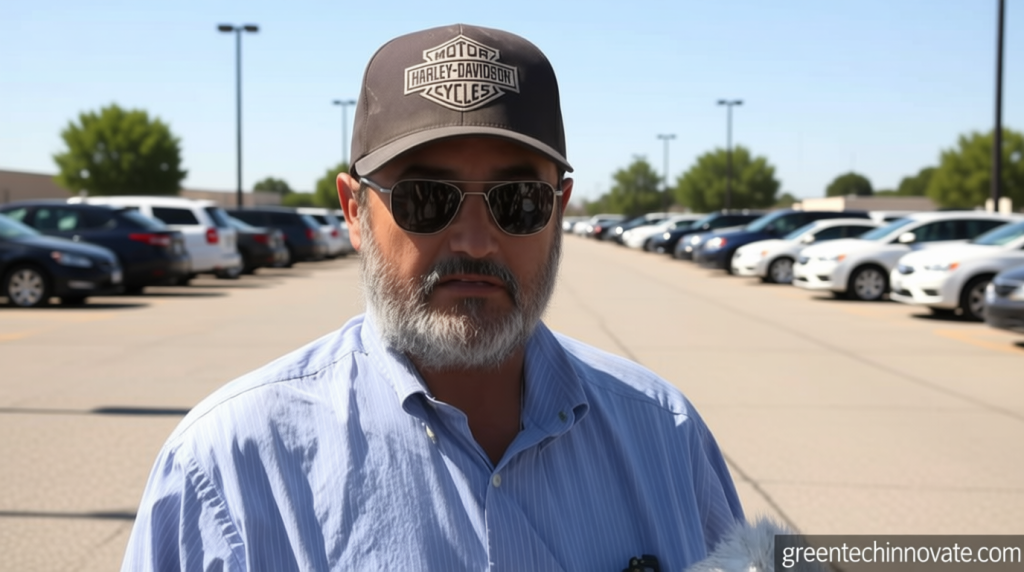
Immigration authorities detain former Kansas mayor who voted illegally
Immigration authorities detain former Kansas mayor – On Wednesday, Joe Ceballos, the former mayor of Coldwater, Kansas, was taken into custody by immigration officials following an admission that he had cast votes in local elections without holding U.S. citizenship. The 55-year-old, who was born in Mexico and holds legal permanent resident status, was detained during a meeting at a U.S. Immigration and Customs Enforcement (ICE) office in Wichita. His attorney, Jess Hoeme, confirmed the event, stating that Ceballos now fears the potential for deportation. This development has sparked a mix of reactions in the small conservative town, where he was a prominent figure.
Community support and political tensions
As Ceballos entered the federal building in Wichita, a crowd gathered outside, waving signs that read “We Support Mayor Joe” and “ICE Out.” The supporters’ chants of “Let Joe go!” underscored the community’s emotional investment in his case. Hoeme noted that while the Trump administration and ICE have intensified their focus on voter fraud, the actual prevalence of the issue remains low. “Thinking what could happen — it’s just kind of crazy,” Ceballos told reporters, his voice trembling with uncertainty. “Obviously nervous. I don’t know what’s going to happen. I don’t know where they’re going to take me and what I can and can’t do inside there.”
“He’s kind of got to live the American dream, to come from absolutely nothing and build up — I don’t know about wealth — but to build up a business and have a job and be a productive part of society,” longtime friend Ryan Swayze told Wichita station KAKE-TV.
Ceballos, who was raised in Coldwater, has long been a symbol of civic engagement in the town. The local newspaper, The Western Star, once featured an advertisement encouraging residents to back his political career. Despite his community ties, the case has become a flashpoint in the ongoing debate over voting rights and immigration enforcement. His detention has drawn attention from national figures, including Trump, who has consistently warned about the risks of noncitizens influencing elections.
Legal background and plea deal
Ceballos’ journey to politics began in childhood, when he was encouraged to register to vote at age 18 during a school field trip to the Comanche County courthouse. He has previously stated in interviews that he supported Republican candidates, a claim that has resonated with many in his hometown. However, his actions in 2025, while seeking U.S. citizenship, exposed a gap in his knowledge. Hoeme explained that Ceballos admitted during an interview that he had voted, unaware that green card holders are not eligible to participate in elections.
Following his admission, Ceballos was charged with voting illegally but reached a plea deal with the Kansas attorney general in April. The agreement resulted in a misdemeanor conviction for disorderly election conduct, which Hoeme described as akin to disturbing the peace. “He has not been convicted of any kind of voter fraud. It should not have impacted his immigration status,” the attorney argued. “The Trump administration and ICE have doubled down on nonsense that he is a criminal.”
Political context and the SAVE Act
The case has been amplified by the Trump administration’s broader campaign to tighten voting regulations. Since the 2024 presidential election, Trump and his allies have emphasized the need for stricter oversight of noncitizen voters, a stance that has gained traction among Republican lawmakers. This has led to the push for the SAVE America Act, a legislative proposal designed to require documented proof of U.S. citizenship for voter registration. The act, which would expand the scope of citizenship verification, has already been adopted in at least 25 states, most of which are controlled by Republicans.
Homeland Security has also enhanced its program to check voter eligibility, a measure that has drawn criticism from some legal experts. While the administration claims these efforts are necessary to combat fraud, research indicates that the issue is relatively rare. For example, the proportion of noncitizen votes in local elections is typically small, and most cases involve minor infractions rather than widespread deception. Ceballos’ case, however, has become a lightning rod for political discourse, with his community divided between those who see him as a victim of overreach and those who believe he should have known better.
Timeline of events and charges
Ceballos’ troubles began in December when he resigned as mayor of Coldwater, a town with a population of just 700, amid state charges related to his voting activities. The state attorney general’s office, led by Kris Kobach, accused him of casting ballots without the proper qualifications and of committing election perjury. However, a plea deal allowed Ceballos to avoid more severe penalties. According to Hoeme, the agreement classified his actions as a misdemeanor, emphasizing that the legal system had not formally convicted him of fraudulent behavior.
Hoeme’s team is now working to secure his release on bond, arguing that the immigration consequences of his case are disproportionate. “The situation is not about a criminal act but a misunderstanding,” the attorney said. “The facts are clear: he was a legal resident, not a citizen, and he voted in good faith.” This sentiment has been echoed by some community members, who view Ceballos’ detention as an example of how immigration enforcement can be applied selectively to political figures.
“The Trump administration and ICE have doubled down on nonsense that he is a criminal,” Hoeme stated, highlighting the tension between the legal definitions of citizenship and the political implications of voting without it.
Ceballos’ story also reflects broader trends in voter eligibility laws. His case comes as several states have implemented stricter requirements for proving citizenship, often under the guise of preventing fraud. Critics argue that these measures disproportionately target immigrants, especially those who are well-integrated into American society. Ceballos, who has lived in the U.S. since childhood, has been a vocal advocate for local issues and a role model for many in Coldwater. His detention has raised questions about how far the law should go in penalizing those who make honest mistakes in the voting process.
While the SAVE Act aims to address perceived gaps in voter verification, opponents contend it could make it harder for millions of legal residents to participate in elections. For Ceballos, the law’s strictness may have had unintended consequences. His green card, granted in 1990, was a testament to his long-term commitment to the U.S., yet it left him vulnerable to being labeled a “criminal” for a mistake he believed to be acceptable. As his case moves forward, it will serve as a test of how immigration enforcement intersects with the democratic process in a country where voting is a cornerstone of civic identity.
Despite the legal challenges, Ceballos remains a figure of significance in Coldwater. His ability to rise from humble beginnings to lead the town for two terms has been celebrated by some as a triumph of perseverance. Yet the current situation has cast a shadow over his legacy, with his attorney stressing the importance of distinguishing between legal errors and deliberate fraud. “This case is about a man who built a life in the U.S., contributed to his community, and now faces the threat of being separated from his family due to a single misstep,” Hoeme said. As the debate over voting rights and immigration continues, Ceballos’ fate will be watched closely by advocates and critics alike.
