
Supreme Court Set to Decide on Birthright Citizenship in Historic Ruling
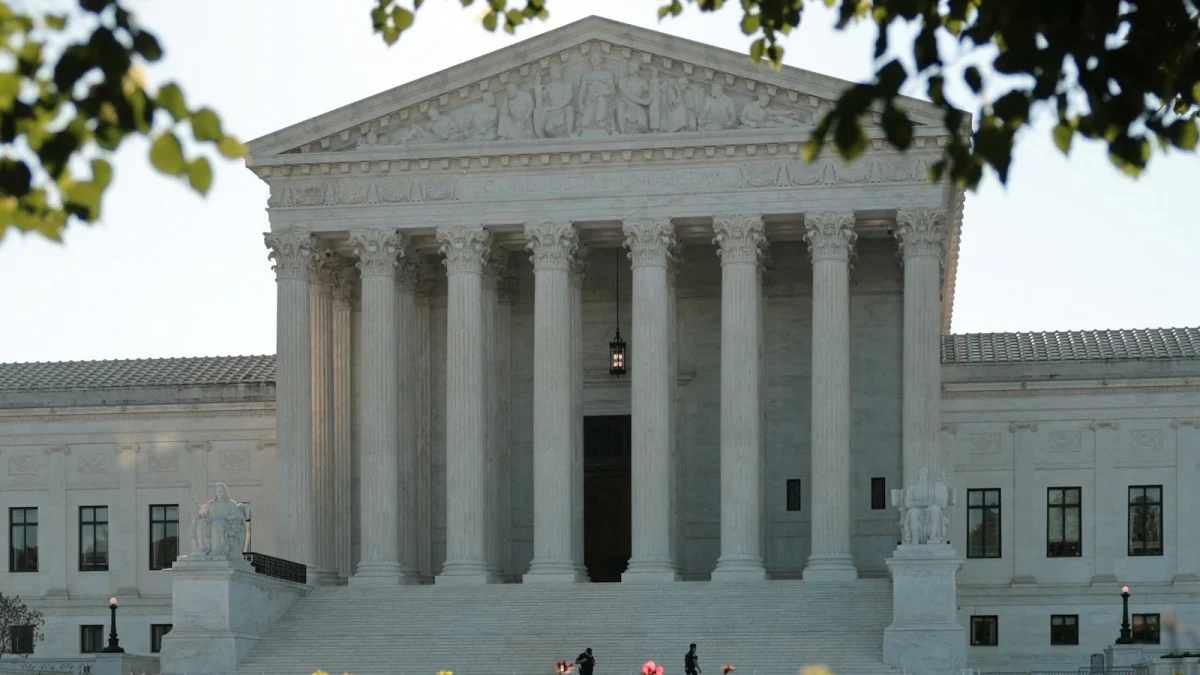
What to know about birthright citizenship – The U.S. Supreme Court is poised to make a landmark decision on a policy proposal that could redefine the legal status of children born to undocumented parents. President Donald Trump’s executive order, introduced at the start of his second term, seeks to eliminate birthright citizenship by narrowing the interpretation of the 14th Amendment. This decision has sparked widespread debate, with millions of families across the country anxiously awaiting the court’s verdict on a principle that has shaped American identity for over 150 years.
Birthright citizenship, also known as jus soli, is a foundational concept in U.S. law. It guarantees that anyone born on American soil automatically becomes a citizen, regardless of their parents’ immigration status. This practice has been integral to the nation’s history, particularly during periods of large-scale migration and social change. The Supreme Court’s upcoming ruling will determine whether this long-standing tradition remains intact or is challenged by a new executive interpretation.
How Birthright Citizenship Functions in the United States
Under current federal law, all children born in the U.S. are granted citizenship by birth, with very few exceptions. Each year, around 3.6 million infants are registered as citizens through their birth certificates, which serve as the primary document for accessing a wide range of rights and benefits. These include Social Security numbers, passports, and eligibility for public services such as education and healthcare.
As individuals mature, their birth certificates remain critical for establishing legal standing. They are used for voter registration, employment verification, securing home loans, and enlisting in the military. This system has created a seamless pathway for immigrants’ children to integrate into American society, often without the need for additional documentation or legal processes.
Constitutional Basis and Legal Precedent
The 14th Amendment, ratified in 1868, explicitly states that “all persons born or naturalized in the United States, and subject to the jurisdiction thereof, are citizens of the United States.” This clause was designed to ensure that newly freed African American slaves and their descendants would have equal rights under the law. Over time, it has been interpreted to include children of immigrants, regardless of their parents’ status.
Congress further solidified this principle in the 1940 Immigration and Nationality Act. The law’s wording has been consistently upheld by courts, which have ruled that birthright citizenship applies universally to children born in the U.S. This includes those born to unauthorized immigrants, temporary visitors, and even international students. Legal scholars argue that the amendment’s language is clear, but critics contend that its interpretation has expanded beyond its original intent.
“The 14th Amendment was intended to grant citizenship to all individuals born within the country, regardless of their parents’ background,” stated a constitutional expert in a recent analysis.
Global Perspectives on Birthright Citizenship
Birthright citizenship is not unique to the United States. According to data from the Pew Research Center, 32 countries have similar laws, while an additional 50 offer limited versions. Nations like Brazil, Canada, Argentina, and Mexico closely mirror American policies, granting automatic citizenship to children born on their soil. However, other countries, such as France, Greece, and Spain, apply stricter criteria, requiring at least one parent to be a native-born citizen.
European nations like Australia, Germany, and the United Kingdom also provide automatic citizenship to children of legal residents. These systems reflect a global trend where birthright citizenship is often linked to the parents’ legal status. Critics of Trump’s proposal argue that the U.S. system is more inclusive, offering a pathway to citizenship for children of immigrants who may not have the means to navigate complex legal processes.
President Trump’s Argument for Ending Birthright Citizenship
President Trump claims that the current interpretation of birthright citizenship allows children of undocumented immigrants to claim American citizenship without meeting specific residency or legal requirements. He argues that the phrase “subject to the jurisdiction thereof” in the 14th Amendment should be applied more narrowly, excluding individuals born to parents who are not lawfully present in the country.
Under his executive order, citizenship would be restricted to children born to U.S. citizens or lawful permanent residents who have established a legal domicile. This change would affect millions of children, many of whom are born to parents who are temporarily in the country for work, travel, or family reasons. Trump’s proposal has been framed as a way to curb the growth of the U.S. population and reduce the number of individuals eligible for public benefits.
The administration’s argument hinges on a redefinition of the 14th Amendment. Trump asserts that the clause’s original purpose was to ensure citizenship for individuals born within the territory of the United States, not to include those born to parents who are not in compliance with immigration laws. This interpretation has been met with strong opposition from legal experts and civil rights advocates, who emphasize the importance of birthright citizenship in preserving the rights of vulnerable populations.
The Supreme Court’s decision will have far-reaching implications for immigration policy, family unity, and the legal definition of citizenship. It represents a pivotal moment in the ongoing discussion about the balance between national sovereignty and the rights of immigrants. The ruling could set a precedent for future administrations, reshaping the way birthright citizenship is understood and applied in the United States.