
UFOs and a Tardis – why unusual holiday stays are booming
The Rise of Experience-Driven Travel
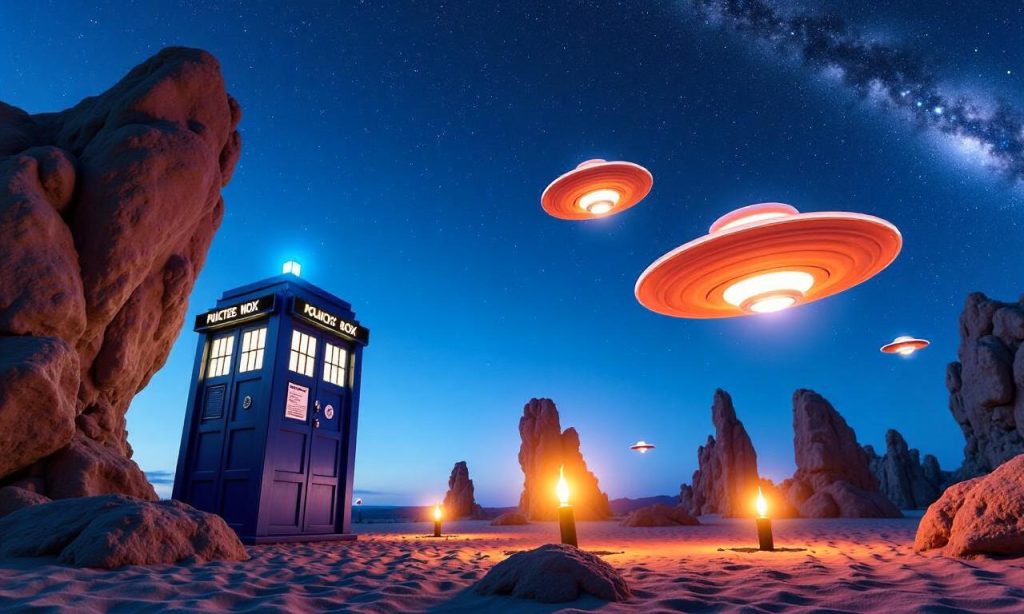
Near the quiet countryside of Pembrokeshire, a structure that mimics an alien craft stands out against the backdrop of undulating farmland and starry nights. Its peculiar design is no accident—it’s a deliberate choice. This UFO-shaped pod is one of several unconventional holiday retreats at the Spodnic site, a venture owned by Martin and Carol Anne Johnson. For over a decade, the couple has transformed a once-neglected area around a 17th-century mill into a collection of creative stays that defy traditional lodging norms.
A Shift in Travel Priorities
According to industry analysts, a growing number of travelers are prioritizing unique accommodations over conventional locations. “People are looking for something more immersive,” explains Alex Wilson, co-founder of Host Unusual. “The experience itself has become the main attraction.” This trend reflects a broader movement in UK tourism toward “experience-led travel,” where the ambiance and design of a place are as important as its location.
“We’ve noticed a significant increase in demand for experiential stays,” Wilson adds. “Searches for unconventional accommodations have risen by over 32% in recent years.”
The Spodnic site embodies this philosophy, drawing visitors who seek both novelty and comfort. While some are drawn by its science-fictional touches—like a Tardis-style bathroom and themed costumes—the primary appeal lies in its ability to offer a private, self-sufficient escape. “Many guests come here and never leave the premises,” says Johnson. “They book two nights, but they’re staying for the entire experience.”
The Creative Vision Behind the Pod
The idea for the UFO pod began as a modest project. Initially, the couple purchased four acres of land with the aim of restoring the old mill. As a temporary solution, they built a treehouse. However, the concept of glamping—a blend of glamour and camping—soon took shape. Johnson, inspired by the idea of creating something otherworldly, repurposed a fibreglass structure originally used at the 2012 London Olympics. “I saw it on eBay and thought, ‘That’s a fascinating shape,’ he recalls.
The design process was largely intuitive. “I didn’t plan anything on paper,” Johnson says. “It was all in my head. I’d sit by the hot tub at night, visualize the details, and test ideas the next day.” Challenges arose, particularly with the engineering of a drop-down door meant to resemble a spacecraft hatch. “It required a lot of trial and error,” he notes, but the final result is a theatrical experience that captivates guests upon arrival.
A Broader Impact on Travel Trends
Travel journalist Simon Calder highlights the wider significance of this shift. “There’s a growing split in what travelers value,” he says. “Some seek affordable, functional spaces, while others crave places with character and storytelling.” This divergence underscores the evolving priorities in the industry, where unique experiences often outweigh traditional amenities.
“Inbound tourism is a major economic driver,” Calder explains. “Exciting, unconventional offerings are exactly what regions like Wales need to stand out.”
The Spodnic example illustrates how such trends can thrive in domestic markets. With travel budgets tighter, shorter trips to exotic destinations are being replaced by accessible, imaginative stays that provide a sense of adventure without the expense. The couple’s success highlights a growing appetite for escape and novelty, proving that the future of travel may lie not in far-flung locations, but in the stories and settings we choose to inhabit at home.
