
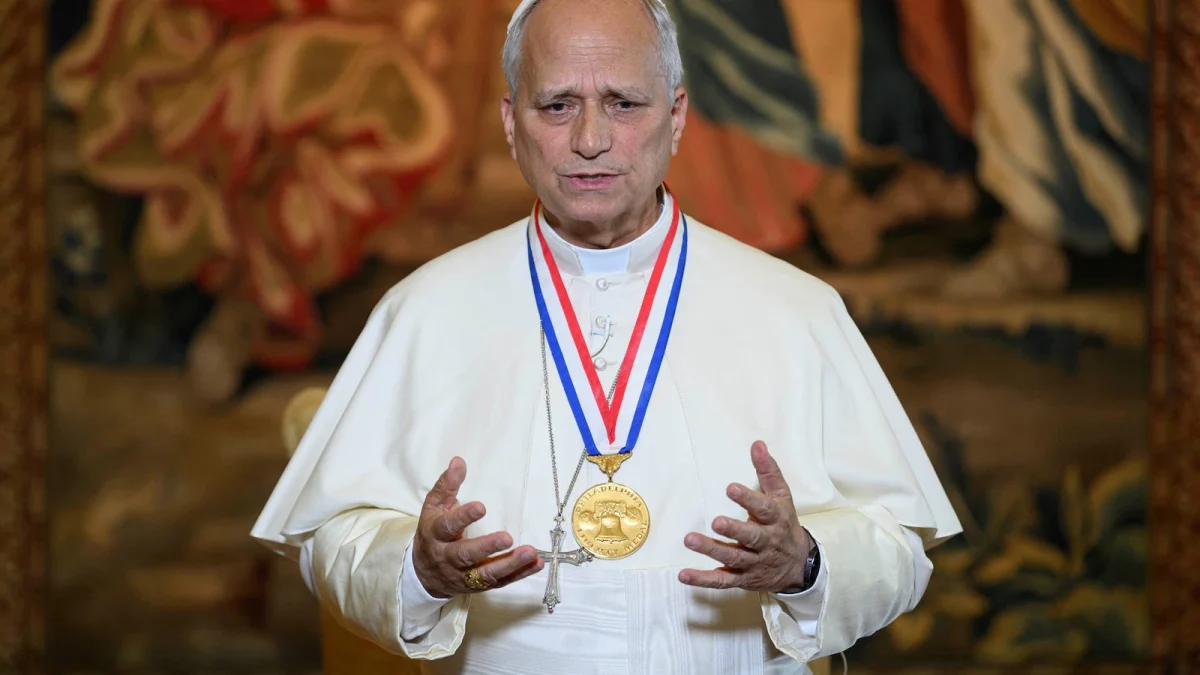
Pope Leo XIV Champions Unity at Philadelphia Liberty Medal Ceremony
Pope Leo XIV calls for unity – On July 3, 2026, Pope Leo XIV accepted the Liberty Medal during a ceremony held at the National Constitution Center in Philadelphia. The event, which took place virtually, marked the first time the pope addressed a diverse audience representing over 30 faiths. Speaking from the Vatican while wearing the honor he was bestowed earlier this year, Leo XIV emphasized the importance of unity and peace as foundational pillars of America’s identity. His remarks resonated with attendees, underscoring the enduring relevance of the nation’s founding ideals in today’s global context.
A Call for Renewed Commitment to American Ideals
Leo XIV, the first pope of American descent, framed his acceptance speech around the concept of collective purpose. “This nation was built by visionaries who envisioned a land of opportunity,” he said, addressing the crowd. “Their dream was not merely for personal freedom, but for a society where all people could thrive together.” The pope highlighted the Declaration of Independence as a cornerstone of these principles, urging the audience to see its legacy as a living guide for modern challenges. “Let us reaffirm the values that have shaped this great nation,” he added, “so that its promise of unity, justice, and peace may endure for generations to come.”
“As a son of this great country, founded by courageous men and women who dreamed of liberty and of a better life for themselves and for their children, I join you in asking God’s blessings upon America’s future, that the lofty ideas enshrined at the beginning of the Declaration of Independence may continue to guide the flourishing of the nation in unity, justice and peace.”
Symbolism of the Virtual Ceremony
The event’s virtual format symbolized the Pope’s global reach and the interconnected nature of modern leadership. Though physically present in the Vatican, his words echoed through the Constitution Center, where a gathering of religious and civic leaders awaited his message. The choice of Philadelphia, a city steeped in constitutional history, underscored the significance of the award. “This location holds a special place in American heritage,” noted Governor Josh Shapiro, who praised the city’s role as a “living testament to the values we celebrate today.”
Shapiro also highlighted the Pope’s personal ties to the region, pointing out that the Chicago-born pontiff had studied at Villanova University in suburban Philadelphia. “His journey from the Midwest to the Vatican reflects the spirit of opportunity that defines this nation,” he said, calling Leo XIV “a beacon of hope for global religious freedom.” The governor emphasized the Pope’s steadfast advocacy for liberty, stating that his efforts “have transcended borders, offering a vision of justice that unites all people.”
Religious Liberty and the Human Dignity Imperative
During his remarks, the Pope reiterated the central role of religious liberty in shaping America’s character. “The right to life,” he said, “is the foundation upon which all other freedoms are built.” This assertion linked the nation’s founding principles to the universal dignity of every individual. “A society that does not honor the sanctity of human life cannot truly embrace liberty,” he explained, framing the issue as both moral and practical.
“A country’s vitality is deeply tied to the value it affords the human life in every form and condition, acknowledging the dignity endowed upon every human person by virtue of their very existence.”
While the Pope did not explicitly reference the Trump administration’s immigration policies, he acknowledged the United States’ tradition of welcoming immigrants. “America has long been a refuge for those seeking a new beginning,” he said. “Each wave of newcomers has strengthened the nation’s identity as a symbol of freedom.” This sentiment aligned with the Liberty Medal’s purpose, which celebrates individuals who exemplify the ideals of liberty and freedom of conscience.
Historical Reflection and Forward-Looking Vision
The ceremony coincided with the 250th anniversary of American independence, prompting the Pope to reflect on the nation’s historical trajectory. “Today’s celebration offers a chance to revisit the principles that once inspired a nation,” he remarked. “As we honor this milestone, let us reaffirm our dedication to the dream that earned America its title: ‘The land of the free, and home of the brave.’” His words resonated with the crowd, who responded with enthusiastic applause.
In his closing statement, the Pope expressed hope that the anniversary would serve as a moment of renewal. “By accepting this award,” he said, “I pray that this milestone may inspire a renewed commitment to the ideals that define our nation. Let us strive to ensure that peace, prosperity, and generosity remain at the heart of America’s journey.”
Officials Commend Pope’s Leadership and Legacy
Vince Stango, interim president and CEO of the National Constitution Center, praised Leo XIV for his global influence. “The Pope’s lifelong dedication to protecting religious freedom has made him a vital voice in today’s world,” Stango said. “His work echoes the vision of the First Amendment, which enshrined the right to free exercise of religion as a fundamental American value.”
Shapiro echoed this sentiment, stating that the Constitution Center and Philadelphia were fitting venues for the honor. “These spaces are not just landmarks—they are reminders of the ideals that have guided our nation since its inception,” he remarked. The governor also noted the Pope’s role as a unifying figure, describing him as “a leader who has brought people together across faiths and cultures.”
Legacy and Future Implications
Leo XIV’s acceptance of the Liberty Medal served as a powerful reminder of the intersection between faith and freedom. His speech, which blended historical reflection with contemporary relevance, highlighted the Catholic Church’s role in advocating for global human rights. “Religious liberty is not a privilege but a right,” he declared. “It is the bedrock of a just society, one that respects the inherent worth of every individual.”
As the event concluded, the Pope’s message left a lasting impression on attendees. The ceremony, while rooted in the past, aimed to inspire future action. “Let this anniversary be a call to action,” he urged. “May we carry forward the values that have shaped this nation, ensuring they continue to light the path for all who call it home.” His words, delivered with conviction, set the tone for a renewed dialogue on the meaning of liberty in an ever-changing world.
Contextualizing the Liberty Medal’s Significance
The Liberty Medal, awarded annually by the National Constitution Center, recognizes individuals who have made extraordinary contributions to the cause of liberty. Past recipients have included civil rights advocates, diplomats, and leaders in various fields. For Leo XIV, the honor was a testament to his global impact. “His work has not only protected the Catholic faith but has also championed the rights of all people,” Stango emphasized. This dual focus on religious freedom and human dignity underscored the medal’s broader mission.
While the ceremony focused on unity and liberty, it also sparked conversations about the role of faith in shaping national identity. The Pope’s presence in Philadelphia—a city known for its religious diversity—highlighted the interplay between tradition and innovation. “This nation’s strength lies in its ability to embrace both its roots and its aspirations,” he said, a sentiment that resonated with the audience. The event’s virtual format further amplified its reach, allowing global audiences to witness the Pope’s vision of a united and free America.
Looking Ahead: A Commitment to Shared Values
Leo XIV’s speech served as a bridge between history and the present, encouraging both Americans and the world to uphold the values that define the nation. “Let us not forget that the ideals of liberty are not static—they are dynamic, evolving with each generation,” he stated. This call to action resonated with the audience, who left the event with a renewed sense of purpose. As the Pope departed, the applause from the crowd symbolized a collective recognition of his message and the enduring power of America’s founding principles.
With the ceremony behind him, the Pope’s words lingered, offering a vision of a future where unity and freedom coexist. The Liberty Medal, now in his possession, became a symbol of this aspiration. As the 250th anniversary of the nation’s founding approached, the Pope’s address served as both a reflection on the past and a challenge for the future, urging all to remain steadfast in their pursuit of peace, justice, and the shared dream of liberty.