
Major Blow to Independent Agencies: Supreme Court Upholds Trump’s FTC Commissioner Firing
In major blow to independent agencies – The U.S. Supreme Court has delivered a decisive ruling that reshapes the balance of power within the federal government, enabling President Donald Trump to remove a Democratic FTC commissioner, Rebecca Slaughter, for policy-related reasons. This decision overturns a century-old legal framework that safeguarded the independence of regulatory agencies, granting the executive branch greater authority to shape oversight bodies according to its priorities. The 6-3 majority opinion, authored by Chief Justice John Roberts, marks a pivotal shift in how presidential power is interpreted in the context of independent commissions.
Presidential Authority and Separation of Powers
Chief Justice Roberts, writing for the majority, argued that the “for cause” removal provisions—established by Congress in the 1935 case Humphrey’s Executor v. U.S.—were inconsistent with the separation of powers. According to his reasoning, these rules had constrained the president’s ability to replace agency heads without justification, creating a barrier to direct executive control. Roberts emphasized that the decision aligns with the original intent of the Constitution, which allows the president to appoint and remove officials who serve at his pleasure. “What text, history, and structure settle, our precedent confirms—the President may remove his subordinates at will,” he asserted, framing the ruling as a return to foundational principles of governance.
“What text, history, and structure settle, our precedent confirms—the President may remove his subordinates at will,” Roberts wrote.
The ruling effectively dismantles the tradition of bipartisan oversight, enabling future administrations to fill regulatory agencies with members aligned with their political agendas. This shift has sparked concerns about the erosion of institutional independence, as agencies that once operated with relative autonomy now risk becoming extensions of executive will. The decision also expands the president’s capacity to influence key policies, particularly in areas like consumer protection and antitrust enforcement, by ensuring swift replacement of officials who may challenge his priorities.
Dissenting Voices and Constitutional Reforms
Justice Sonia Sotomayor, joined by Justices Elena Kagan and Ketanji Brown Jackson, challenged the majority’s interpretation of the Constitution, calling it a “total executive control” theory that diverges from the framers’ vision. In her dissent, she argued that the ruling grants the president powers not explicitly granted by the Constitution, thereby undermining checks and balances. “It is a power, however, that neither the People, nor Congress, nor the Constitution bestowed upon him,” Sotomayor contended, warning that the decision would allow the executive to dominate regulatory functions with minimal oversight. She further criticized the majority for “misconstruing our history” and abandoning judicial restraint.
“The result is a President who emerges with far greater power than ever before,” Sotomayor wrote. “It is a power, however, that neither the People, nor Congress, nor the Constitution bestowed upon him. In granting the President this unbridled authority, the Court upends its precedent, misconstrues our history, and sheds any pretense of judicial modesty.”
While the majority emphasized the president’s constitutional authority, the dissent highlighted the potential for misuse, particularly in politically charged environments. Sotomayor’s critique underscores the tension between executive efficiency and the preservation of an impartial regulatory framework, a debate that has intensified in recent years as partisan control of the White House and Congress has expanded.
Historical Context of Independent Agencies
Independent agencies, such as the Federal Trade Commission (FTC), have historically served as pillars of nonpartisan governance, with members appointed for their expertise rather than political loyalty. Since the New Deal era, these bodies have been entrusted with regulating industries, ensuring fair competition, and protecting consumer rights across diverse sectors. For instance, the FTC has overseen everything from antitrust laws to advertising standards, maintaining consistency in policy implementation despite shifting political landscapes.
Conservatives have long advocated for this change, arguing that unelected officials wield excessive influence over critical areas of governance. They view the current system as allowing bureaucrats to operate with limited accountability, often at odds with the president’s broader agenda. The ruling, however, has been met with criticism from liberals, who see it as a threat to the stability and neutrality of agencies designed to function independently of partisan politics.
Broader Implications for Regulatory Governance
While the decision does not dissolve the FTC or other independent agencies, it allows for their composition to be dictated by the president’s preferences. This could lead to scenarios where an administration fills a commission with members from a single party, potentially skewing regulatory outcomes toward specific ideological goals. The ruling also enables rapid turnover of officials, reducing the time for dissenting views to challenge executive decisions or introduce alternative policy approaches.
President Trump celebrated the decision on his social media platform, calling it a “BIG WIN” for presidential powers and “one of the most important ever given with respect to Presidential Powers.” His remarks reflect the administration’s view that the ruling strengthens executive authority, particularly in an era of polarized governance. However, critics argue that the decision could lead to regulatory capture, where agencies prioritize the interests of the ruling party over the public good.
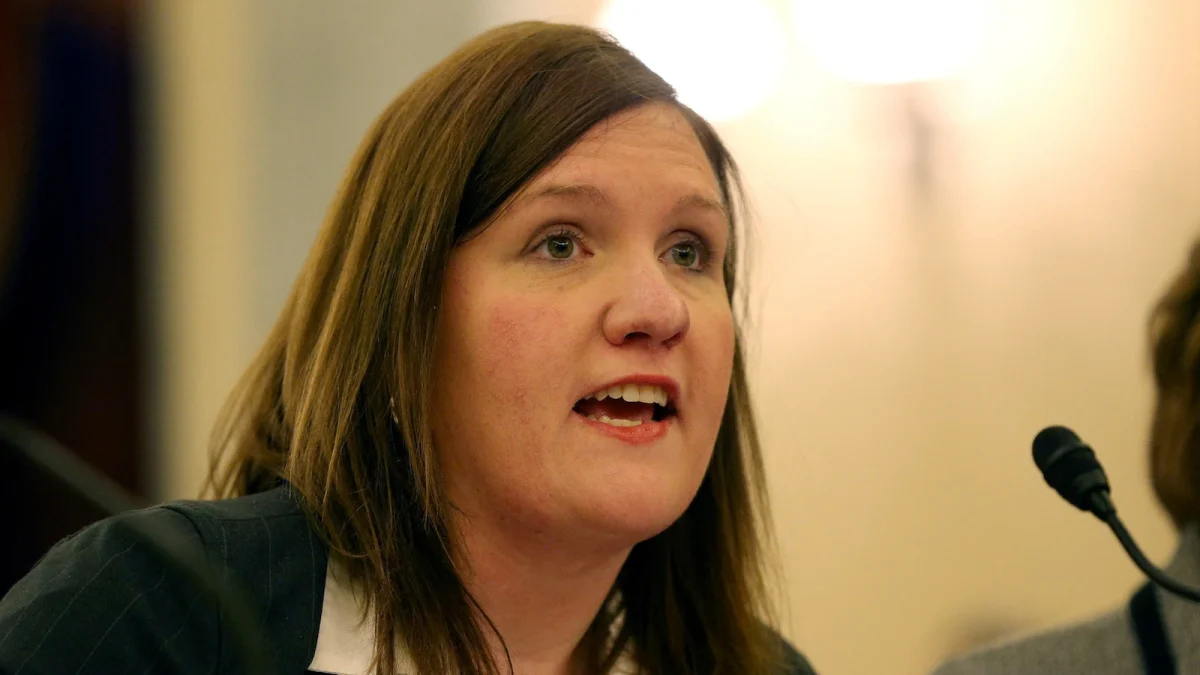
The case originated from a challenge to Trump’s removal of FTC Commissioner Rebecca Slaughter in 2018. At the time, Slaughter had testified before the Senate about the commission’s oversight role, drawing attention to its bipartisan mandate. The Supreme Court’s ruling in 2026 reaffirms that such removals can occur for policy reasons, rather than requiring evidence of misconduct. This interpretation aligns with the majority’s argument that the original intent of the “for cause” provision was to limit presidential power, not to guarantee it.
Legacy of Humphrey’s Executor and the Path Forward
Roberts’ decision directly overturned the 1935 precedent that had previously restricted presidential removals to cases of cause. In a blunt statement during oral arguments in December, he described Humphrey’s Executor v. U.S. as “just a dried husk of whatever people used to think it was,” signaling a willingness to reinterpret the law in favor of executive flexibility. This reversal has significant implications for agencies like the FTC, the Federal Election Commission, and the Securities and Exchange Commission, which may now be subject to more frequent reshuffling.
As the ruling takes effect, the debate over independent agencies will likely continue. The decision raises questions about how future administrations will use their expanded authority to shape regulatory policies. Meanwhile, legal scholars and political analysts are closely examining the long-term effects on governance, with some predicting a shift toward more politicized oversight and others warning of a decline in regulatory neutrality. The Supreme Court’s action underscores the ongoing struggle between constitutional checks and the concentration of power in the executive branch.
The ruling also has symbolic weight, as it represents a broader effort to redefine the relationship between the president and federal agencies. By allowing the removal of commissioners for policy reasons, the court has reinforced the executive’s role in steering regulatory outcomes, a development that could reshape the landscape of American governance for decades to come. As the political climate evolves, the balance between presidential control and independent oversight will remain a central issue in the fight for democratic accountability.