
The most powerful rocket ever built is now even bigger and more powerful. But will it work?
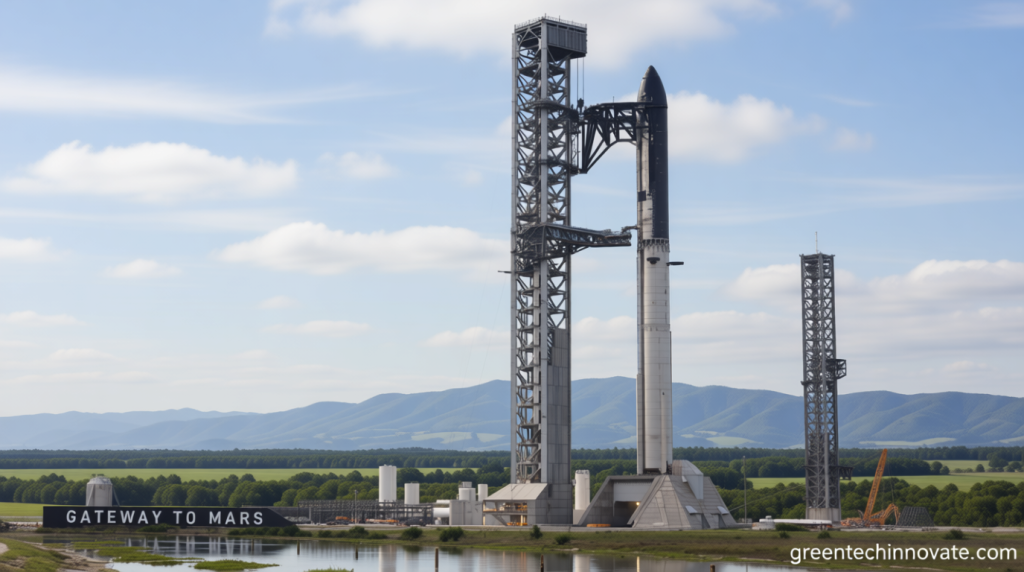
The most powerful rocket ever built is now even bigger and more powerful. But will it work?
The most powerful rocket ever built – SpaceX is poised to test its latest iteration of the Starship megarocket after a seven-month break, marking a crucial phase in its quest to achieve reliable spaceflight. This upgraded version, designated V3, aims to overcome previous challenges and position the vehicle as a key player in NASA’s lunar ambitions. However, the upcoming launch has sparked debate among experts about whether the company can deliver on its promises before the global space race with China reaches a decisive turning point.
A High-Stakes Launch Window
The countdown for Starship V3’s inaugural flight has been repeatedly interrupted, with teams struggling to resolve technical hurdles in the final moments before liftoff. Originally scheduled for Thursday evening, the launch may now occur as early as Friday at 6:15 p.m. ET, according to SpaceX’s latest update. The company has opted to share real-time progress through social media, emphasizing transparency amid heightened public interest.
As the rocket prepares for its maiden voyage, the stakes for SpaceX have never been higher. The company is on the brink of its record-breaking initial public offering, and any setbacks could sway investor confidence. “There are likely more eyes on this test launch than ever before for this company,” said Andrew Chanin, CEO of ProcureAM, in a recent analysis. “It’s a risky call to do this highly anticipated launch so close to the IPO.” Yet, Chanin acknowledged the boldness required to push the boundaries of aerospace innovation.
Past Setbacks and Lessons Learned
Despite earlier successes, Starship’s development has been marked by a series of dramatic mishaps. The V2 version, which first flew in January 2025, encountered explosive failures during two test launches. One incident resulted in debris falling on roadways in Turks and Caicos, while another caused wreckage to wash ashore in the Bahamas. A third test flight in May 2025 showed improved performance, but the spacecraft still lost control during its descent into the Indian Ocean.
Even the Super Heavy booster, a critical component of the launch system, faced issues during V2’s trials. In the Gulf of Mexico, it exploded shortly after landing, underscoring the complexity of the technology. These challenges have led to federal investigations, with regulators scrutinizing SpaceX’s safety protocols. However, the company has maintained that such anomalies are an expected part of its iterative development strategy.
More recently, a ground test in June 2025 triggered an emergency response in Brownsville, Texas. The incident, which occurred during pre-launch preparations, was described in a detailed report obtained by CNN. “Dispatchers were forced into rapid-fire triage, making split-second decisions to prioritize life-threatening emergencies,” the document stated. “At the same time, public panic rippled across the region, and command staff had to rapidly reallocate emergency resources across the city.” Local officials did not comment on how the incident may have influenced their preparedness.
Testing the Limits of Innovation
In November 2025, SpaceX encountered another explosive issue during a fueling test of the V3 rocket. While the vehicle was destroyed, the test site sustained minimal damage, and no one was injured, according to Joe Petrzelka, vice president of booster engineering. “The test site incurred very little damage and of course nobody was hurt in the incident,” Petrzelka noted in a recent promotional video. This incident, like others, highlights the aggressive testing approach that defines SpaceX’s development philosophy.
Such anomalies, though disruptive, are seen as part of the process for the company. Unlike traditional aerospace firms, which often prioritize gradual refinement, SpaceX embraces rapid experimentation, even if it means frequent failures. The approach has led to breakthroughs, such as the successful recovery of the Super Heavy booster in October 2024. The rocket landed in the metal arms of SpaceX’s “Mechazilla” launch tower, a feat that demonstrated the company’s ability to engineer reusable systems at scale.
The Road to Lunar Exploration
Starship’s ultimate goal is to transport NASA astronauts to the moon, a mission that has become a focal point of the US space race with China. The V3 launch is a critical step toward achieving this, as it represents the most advanced version of the rocket yet. If successful, it could streamline future missions and reduce costs for deep-space exploration. However, the vehicle’s performance during these tests will determine its viability as a reliable transport system.
SpaceX’s ambitions extend beyond NASA. The company plans to integrate Starship into its Starlink project, which relies on a constellation of satellites to provide global internet coverage. A functional Starship could enhance the efficiency of satellite deployment, supporting the expansion of Starlink’s network. Additionally, the rocket is expected to offer logistical services to the US military, further solidifying its role in national defense and space operations.
A Test of Resilience
With so much at stake, the V3 launch carries immense pressure. The company has faced criticism for its high-profile failures, yet it continues to refine its technology under intense scrutiny. “They are going to be rejected again,” said NASA’s chief administrator during a recent grilling on Trump’s budget proposal, highlighting the challenges of evaluating Starship’s readiness. The debate centers on whether the rocket can meet the rigorous demands of lunar and interplanetary travel.
As the countdown proceeds, the world watches closely. The success of Starship V3 could redefine the future of space exploration, while its failure might delay NASA’s lunar plans and intensify competition with Blue Origin. The Jeff Bezos-founded company is also developing its own spacecraft, which could challenge SpaceX’s progress. This moment, therefore, is not just a test of engineering but a pivotal juncture in the broader race for space dominance.
For SpaceX, the journey has been one of relentless innovation and setbacks. Each explosion and technical issue has been met with determination, as the company strives to achieve its vision. The V3 version, with its enhanced capabilities, represents the culmination of years of trial and error. If it clears its final tests, it may finally prove that the megarocket can fulfill its promise as a cornerstone of humanity’s expansion beyond Earth.
