

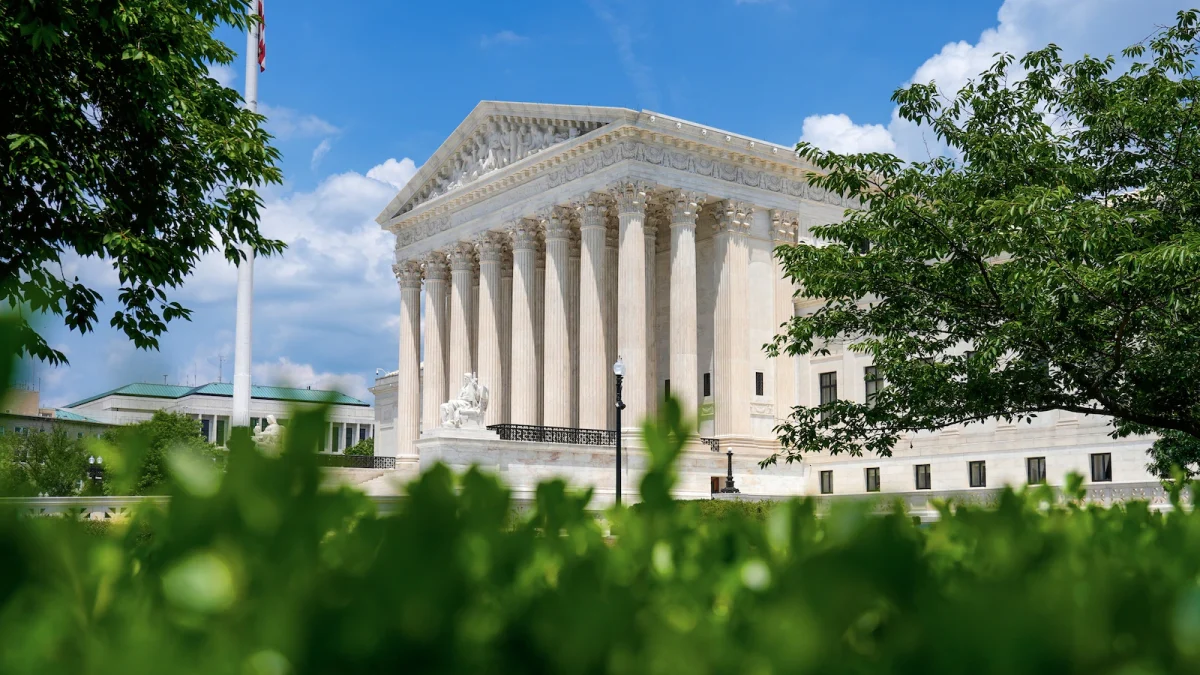
Supreme Court Upholds Michigan County’s Tax Foreclosure Practices
Supreme Court sides with Michigan county – On Tuesday, the U.S. Supreme Court delivered a landmark decision in a tax foreclosure dispute, affirming the authority of Isabella County, Michigan, to proceed with the sale of properties to recover unpaid taxes. The ruling effectively dismissed a challenge that sought to modify the standard process, allowing homeowners to retain more funds when their property is sold through a tax auction. The case, which has drawn attention to the balance between government revenue collection and individual property rights, centered on a family’s claim that the sale of their home undervalued the asset and violated constitutional protections.
Case Details and Legal Conflict
The dispute involved a Michigan couple whose home was sold at a tax auction for less than half its market value. The property was auctioned to cover a tax debt of over $2,000, yet the family argued that the sale could have generated significantly more if conducted through conventional real estate channels. They claimed the auction process failed to account for the property’s full potential, leaving them with less than a third of its estimated fair market price. The Supreme Court, however, sided with the county, reinforcing the current system’s efficiency in addressing delinquent tax obligations.
“Requiring foreclosure sales to match open-market prices would essentially end them, making it harder to collect unpaid taxes,” the county stated in its defense.
The decision highlights the legal tension between speed and fairness in tax foreclosure processes. While the family contended that the sale deprived them of equitable compensation, the court emphasized the necessity of rapid auctions to ensure timely recovery of funds. This reasoning aligns with the broader purpose of tax foreclosures: to prevent financial losses for local governments by swiftly converting delinquent properties into revenue sources.
Historical Context and Precedent
This ruling follows a similar case three years prior, where the Supreme Court had already addressed the issue of tax sale proceeds. In that instance, the justices determined that counties could not retain funds beyond the amount owed in unpaid taxes. The previous case involved a 94-year-old Minnesota woman whose condominium was sold, and the county had kept approximately $40,000 in surplus from the transaction after she defaulted on a $2,300 tax bill. The current decision maintains the precedent set in that case, but with a key distinction: it allows counties to sell properties at lower prices without requiring them to return excess funds to homeowners.
The court’s current ruling underscores the practical challenges of enforcing open-market valuations in tax sales. Legal experts noted that auction prices often fall below market rates due to factors such as time constraints, lack of buyer competition, and the requirement for cash transactions. In contrast, traditional real estate sales typically involve mortgages, appraisals, and extended negotiation periods, which can inflate the final price. The Michigan family’s argument relied heavily on the disparity between these two methods, but the Supreme Court found the auction process to be constitutionally valid.
Implications for Homeowners and Tax Collectors
The decision has significant implications for both homeowners and local governments. For residents facing tax delinquency, it means they may not have the same recourse to reclaim surplus funds as they did in the Minnesota case. However, for counties, the ruling reinforces the ability to quickly liquidate assets and meet financial obligations. Legal analysts suggested that the decision could encourage more aggressive tax collection efforts, particularly in areas with high delinquency rates.
While the Michigan family’s case focused on the specific issue of surplus funds, the broader legal question revolves around the fairness of auction-based sales. Critics argue that the current system can lead to unfair outcomes, as properties are often sold without the benefit of a full market analysis. Proponents, on the other hand, maintain that the process is necessary to prevent prolonged financial strain on public coffers.
Broader Impact on Tax Policy
Justice Elena Kagan’s majority opinion in the case underscored the importance of allowing counties flexibility in tax collection. She wrote that the auction mechanism provides a streamlined solution, ensuring that property owners who fail to pay taxes are held accountable. The ruling also addressed concerns about the constitutionality of tax foreclosures, reaffirming that the process does not infringe on property rights as long as it adheres to established legal standards.
Opponents of the decision, however, pointed to the potential for systemic inequities. They cited examples where homeowners could have sold their properties for much higher prices but were forced to accept lower offers through the auction process. Some legal scholars warned that the ruling might pave the way for similar cases in other states, challenging the uniformity of tax foreclosure practices across the country.
Related Stories
In addition to the Michigan tax case, recent news has covered developments in international affairs. Iran has announced its military is prepared to respond to potential threats, following heightened tensions with the United States. Meanwhile, President Donald Trump has stated that repairs to the White House Reflecting Pool will begin immediately after arrests related to vandalism incidents. These stories reflect the diverse issues currently shaping national and global headlines.
Separately, a new report on economic policy has sparked debate over the effectiveness of current tax collection methods. The findings suggest that while tax foreclosures generate critical revenue, they also disproportionately affect low-income households. This analysis has reignited discussions about the need for reforms to protect homeowners from financial hardship while maintaining the integrity of the tax system.
The Michigan case, now a settled legal precedent, may influence future debates on property rights and government authority. As the nation grapples with economic challenges, the Supreme Court’s decision to uphold the auction process signals a continued emphasis on fiscal responsibility. However, advocates for homeowners remain hopeful that further rulings could refine the system to better reflect market realities and individual circumstances.
With the court’s latest decision, the focus shifts to how local governments will apply the ruling in practice. Some counties may use the case as a justification for expanding their tax collection efforts, while others could explore modifications to the auction process. The outcome of this case will likely shape the landscape of property foreclosures for years to come, balancing the need for efficient revenue generation against the rights of homeowners to challenge the process.