
As former Nato chief warns about defence spending, how much has the military shrunk?
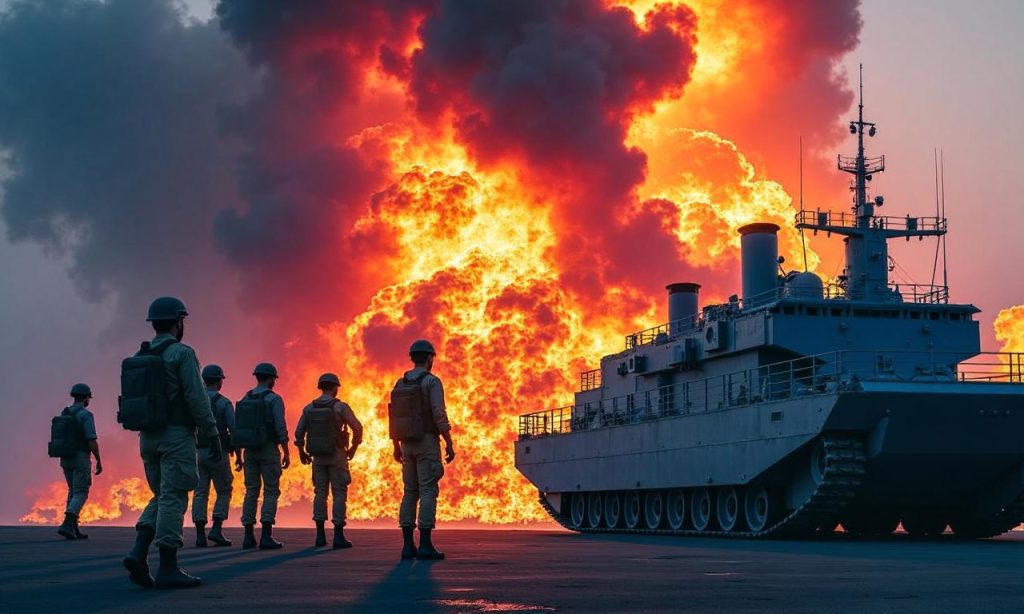
As Former NATO Chief Warns About Defence Spending, How Much Has the UK Military Shrunk?
Former NATO secretary general and Labour defence secretary Lord Robertson has raised concerns over the UK’s defence strategy, claiming it risks putting national security at risk. He argued that the government’s recent Strategic Defence Review (SDR) has failed to commit sufficient resources to protect the country. “We cannot defend Britain with an ever-expanding welfare budget,” he warned, highlighting the growing gap between military needs and financial allocations.
Shrinking Forces Across the Armed Services
Since the end of the Cold War in 1990, the UK military has undergone significant reductions. The army, which once had 153,000 regular soldiers, now stands at 73,790, a decline of nearly 50%. The 2025 SDR aimed to stabilize the regular force at 73,000, but recent figures show a 40% drop in enlistment applications compared to 2024. Meanwhile, the reserve forces have also diminished, falling from 76,000 to 25,770 since 1990.
The Royal Navy has faced similar cuts, reducing its major combat ships from 48 in 1990 to 11 frigates and 6 destroyers. This shrinkage has sparked criticism, especially after a single ship, HMS Dragon, took weeks to reach the Gulf to support a RAF base in Cyprus. The RAF, once boasting over 300 combat jets, now operates 137 Eurofighter Typhoons and at least 37 F-35 Lightning II aircraft, which, while technologically advanced, represent a smaller fleet than before.
Rising Role of Drones in Modern Warfare
Uncrewed aircraft systems, or drones, have emerged as a critical component of the UK’s air force capabilities. These were absent in 1990 but now play a significant role in combat operations. Analysts point to their impact in the Ukraine conflict, where drones have caused more casualties than traditional artillery, underscoring the need for greater investment in this technology.
Despite these modern threats, the government has emphasized its commitment to increasing defence spending. A spokesperson stated that the UK plans to achieve the largest sustained rise in defence funding since the Cold War. However, critics argue this is a modest goal, given the long-term decline in defence budgets since the fall of the Berlin Wall.
Procurement Challenges and Fiscal Priorities
The Ministry of Defence (MoD) oversees 47 of the 213 Government Major Projects Portfolio (GMPP) initiatives in the 2024-25 fiscal year. Yet, recent performance reports reveal setbacks, with 12 of these projects marked as ‘Red’—indicating their success is uncertain. The National Audit Office (NAO) noted that the MoD often struggles to meet deadlines, costs, and quality benchmarks, with contracts for projects over £20 million taking an average of six and a half years to finalize.
Lord Robertson’s critique also targets the disparity between defence and welfare spending. In the mid-1980s, defence funding was lower than social benefits, but this trend has reversed. Welfare spending is projected to reach 4.3% of GDP by the end of the decade, driven by rising claims for benefits like Personal Independence Payments (PIP). While mental health conditions may partly explain this surge, researchers remain divided on the exact causes.
Amid these challenges, the UK has pledged to meet NATO’s target of 5% GDP on national security by 2035. This includes 3.5% for core defence and an additional 1.5% for protecting infrastructure and civil preparedness. In 2025, the UK spent 2.3% of GDP on defence, placing it near the middle of NATO members’ spending levels. Only three countries—Poland, Lithuania, and Latvia—surpassed the 3.5% threshold, though Estonia and Norway were close behind.
Lord Robertson’s warnings echo broader debates about balancing fiscal priorities. While the government frames its defence strategy as ambitious, analysts stress that historical trends suggest a need for more substantial investment to address both shrinking forces and evolving threats.
