
Trump and Italian PM Giorgia Meloni Clash Online Over G7 Photo Dispute
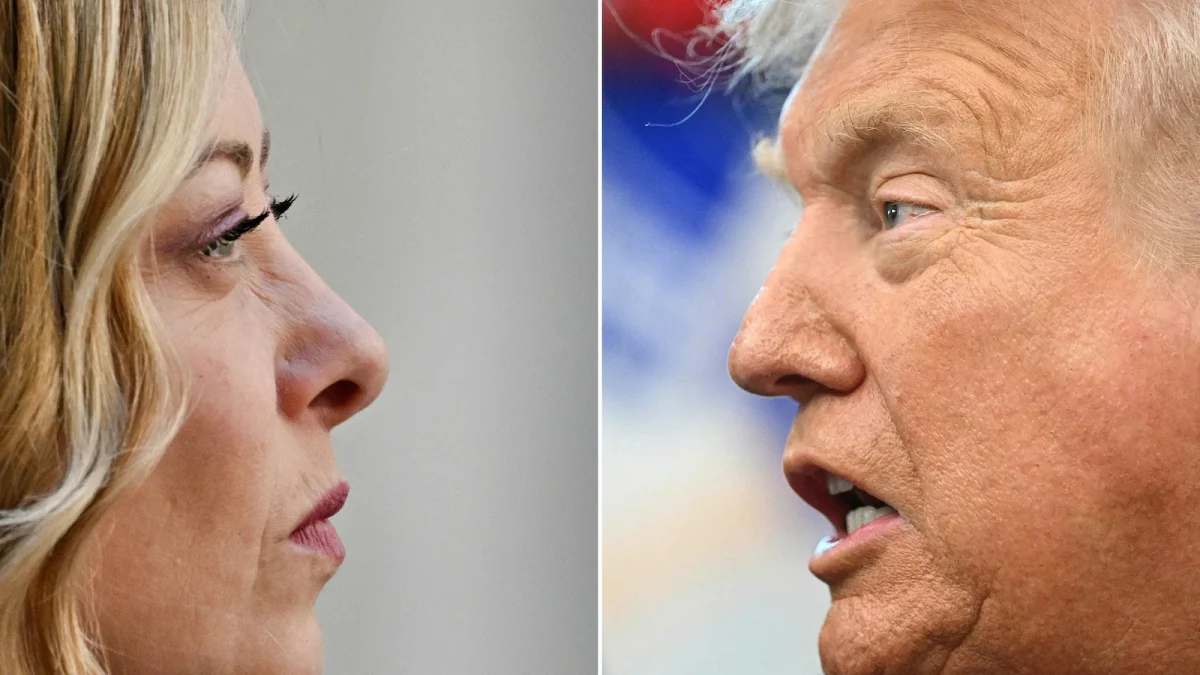
Trump Italian PM Giorgia Meloni feud – President Donald Trump reignited tensions with Italian Prime Minister Giorgia Meloni on Saturday, accusing her of “begging” for a photograph during the recent G7 summit. The claim, posted on social media, contradicted Meloni’s assertions that she had never sought such a moment. Italian ministers expressed frustration with Trump’s persistent criticism, which they argue lacks factual basis. The exchange highlights the growing ideological rift between the two leaders, particularly regarding their national policies and international alliances.
Trump’s Social Media Attack and Meloni’s Denial
In a recent social media post, Trump reiterated his assertion that Meloni had repeatedly requested a photo with him at the G7 summit. “She asked over and over for a picture,” he wrote, framing the incident as a sign of her eagerness to align with the U.S. However, Meloni quickly refuted the claim, calling it “fabricated.” In a follow-up post shared in the morning, she included a screenshot of Trump’s message alongside a statement in English, emphasizing her independence and rejecting the notion that she owed him anything.
“Being your friend has certainly not helped my popularity, nor does it depend on my relationship with you. My popularity is tied to my ability to defend Italy’s national interests, which I have always done,” Meloni stated.
The dispute appears to stem from an interview Trump gave with an Italian journalist earlier this week. In that conversation, he claimed Meloni had “begged” for the photo, suggesting she was desperate to appear in a favorable light. “I could have skipped it, but I felt sorry for her,” Trump said, implying that her lack of assertiveness was a flaw. Meloni, however, took to social media to counter this narrative, stating that she would not revisit the issue. “I and Italy never beg,” she added, underscoring her country’s self-reliance.
Broader Criticisms and NATO Context
Trump’s comments about Meloni extended beyond the photo controversy, targeting her perceived stance on the U.S. military campaign in Iran. “She is doing poorly in Italy with her level of popularity, possibly because she turned down the United States of America, a country that truly loves and protects Italy,” he wrote. Trump argued that Meloni’s decision to withhold support for the U.S. in denying Iran nuclear capabilities was a betrayal, despite NATO’s own position on the matter.
“She wouldn’t even let us use Italy’s landing strips or runways, a great logistical inconvenience, and this despite the fact the U.S. contributes hundreds of billions of dollars a year to protect Italy and other ‘so-called’ NATO Allies,” Trump added.
Italy’s political figures, including Deputy Premier and Foreign Minister Antonio Tajani, echoed concerns about Trump’s remarks. Tajani canceled his planned visit to the U.S. for Sunday and Monday, stating that Trump’s “serious and offensive words” toward Meloni were a disservice to Italy’s international reputation. “It’s not the first time the president has behaved this way with his allies,” Tajani wrote, highlighting a pattern of criticism aimed at European leaders.
Context of the G7 Summit and Meloni’s Leadership
The G7 summit in Evian-les-Bains, France, served as the backdrop for the heated exchange. During the event, Trump and Meloni were seen in a group photo, which he later claimed was a result of her persistent requests. Meloni, however, maintained that the photo was taken as part of routine diplomatic protocol, not a sign of submission. She emphasized that Italy’s support for the U.S. is rooted in mutual strategic interests, not personal favor.
In a separate statement, Meloni reiterated her commitment to the alliance, noting that Italy hosts U.S. military bases and collaborates closely with NATO. “My popularity depends on my ability to defend Italy’s national interests,” she said, framing her leadership as a reflection of her country’s priorities. The prime minister also pointed out that Trump’s focus on her popularity was misplaced, urging him to address his own challenges.
Public Reaction and Related Developments
The feud has sparked a wave of commentary across political and media circles. Italian officials and citizens have criticized Trump’s behavior as unprovoked, while U.S. allies in Europe have expressed concern over the implications for transatlantic relations. Meanwhile, the White House did not immediately respond to ABC News’ inquiry about the matter, leaving the public to speculate on the administration’s stance.
Trump’s remarks also drew attention to his broader approach in international diplomacy. A related video released earlier this week showed Meloni asserting that the U.S. had “made up” the story about her begging for the photo. The footage, which was shared widely on Italian social media, captured her firm tone as she defended her actions. “I can only say that I’m sorry he doesn’t have the same determination with the enemies of the West,” she said in the clip, highlighting a perceived inconsistency in Trump’s alliances.
Italy’s role in the G7 summit underscored the importance of its position within the alliance. As a key member, the country’s decisions often carry weight in discussions about defense, trade, and global partnerships. Meloni’s leadership, characterized by a strong emphasis on sovereignty and national security, has positioned her as a leader with a distinct vision for Italy’s role in NATO and international affairs.
Historical Precedents and Implications
This incident is not the first time Trump has clashed with European leaders over diplomatic gestures. Earlier this year, he criticized Meloni for her “Herbert Hoover” approach to the U.S.-Iran conflict, suggesting she was overly accommodating to adversaries. “She didn’t want to be a part of the fight, and it had to have some missiles,” he said in a related post, drawing parallels between her policy and that of the 1920s U.S. president.
Analysts note that the feud reflects deeper ideological differences. While Trump often prioritizes bilateral relationships and personal rapport, Meloni’s government emphasizes collective action within NATO and a pragmatic foreign policy. These contrasting styles have led to periodic friction, particularly on issues like Iran and European defense spending.
The G7 summit, held in June 2026, brought together world leaders to address pressing global challenges. Meloni’s presence at the event was a testament to Italy’s continued involvement in international cooperation, despite the domestic criticism she faced from Trump. Her response to the controversy has been met with mixed reactions, with some praising her assertiveness and others questioning her willingness to engage with the U.S. on key issues.
As the dust settles, the incident serves as a reminder of the challenges in maintaining cohesive alliances. Trump’s public disputes with European leaders have become a hallmark of his presidency, often drawing attention to his larger narrative of “America First.” Meanwhile, Meloni’s firm defense of her policies reinforces her image as a leader unswayed by personal attacks, focusing instead on Italy’s national interests and global standing.
Related Stories and Media Coverage
Other headlines from the same day included a story about a man whose life sentence was commuted by South Dakota Governor Kristi Noem, drawing comparisons to Trump’s judicial appointments. Additionally, the Los Angeles Police Department released body camera footage of an officer shooting a dog while wearing a Knicks jersey, sparking debates about police conduct and public perception. Another report highlighted the popularity of a reflective pool in a major city, though its appeal seemed to diverge from Trump’s own political messaging.
These related developments, while distinct from the Trump-Meloni feud, underscore the dynamic and often polarizing nature of current events. The G7 summit, in particular, has become a focal point for international tensions, with leaders navigating complex geopolitical landscapes. As the dialogue between Trump and Meloni continues, it may influence how Italy and the U.S. approach their partnership in the years to come.