
Trump hints at wind down of war as US prepares to send more troops to Gulf
Trump Hints at Wind Down of War as US Prepares to Send More Troops to Gulf
President Donald Trump suggested the possibility of reducing military involvement in the Middle East, even as the United States is set to deploy additional forces to the area. The move includes three more amphibious assault ships and around 2,500 additional marines, according to recent reports. This comes amid escalating tensions, with Iran threatening to target global tourist locations and the region enduring a series of airstrikes and missile attacks.
Washington is reportedly contemplating measures to occupy or restrict access to Iran’s key Kharg Island, which plays a vital role in controlling the Hormuz Strait. The island serves as a critical hub for oil exports, handling approximately 90% of Iran’s crude shipments. Its strategic location—just 8 square miles and 16 miles from the city of Bushehr—makes it a focal point for maritime control. However, such an operation would carry significant risks, exposing U.S. forces to Iranian drone and rocket attacks in a confined coastal zone.
Mixed Messages from Trump
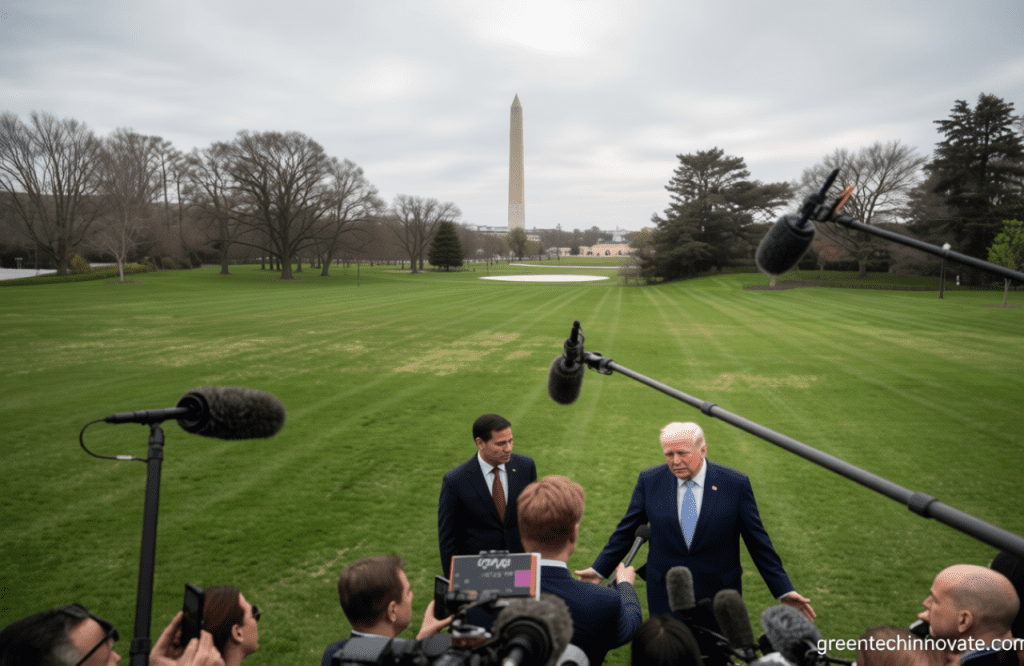
On Friday, Trump expressed conflicting views on the potential end of the ongoing conflict. Initially, he dismissed the idea of a ceasefire, claiming Washington holds the advantage. “I don’t want to do a ceasefire. You don’t do one when you’re obliterating the other side,” he told reporters at the White House. Later that night, he tweeted a more tempered stance, stating the U.S. was “considering winding down” its military efforts against Iran. “We are very close to achieving our goals as we think about scaling back our operations in the Middle East,” he wrote, referring to Iran as a “Terrorist Regime.”
“Without the U.S.A., NATO IS A PAPER TIGER! They didn’t want to join the fight to stop a Nuclear Powered Iran. Now that fight is Militarily WON, with very little danger for them. They complain about the high oil prices they are forced to pay, but don’t want to help open the Strait of Hormuz, a simple military maneuver that is the single reason for the high oil prices. So easy for them to do, with so little risk. COWARDS, and we will REMEMBER!”
The Pentagon has already moved the 31st Marine Expeditionary Unit to the region, a force of about 2,200 marines. The USS Boxer, carrying the unit, departed the U.S. three weeks earlier than planned. Despite these deployments, administration officials remain vague about specific missions, hinting at evolving strategies. Meanwhile, the Trump administration and its Israeli allies have provided inconsistent updates, with plans shifting daily as the war’s impact grows unpredictable.
Violence continued on Friday, with an Iranian drone strike hitting a Kuwaiti refinery and the U.S. and Israel targeting 16 Iranian cargo ships in Gulf ports. A local official from Hormuzgan province reported that the attacks “completely burned” vessels linked to Bandar Lengeh and Bandar Kong. In Dubai, explosions rattled the city as air defenses intercepted rockets during Eid al-Fitr celebrations. Separately, Israel launched strikes against Syrian government positions, just days after U.S. officials proposed using Syrian forces to disarm Hezbollah in Lebanon.
As tensions persist, oil and gas prices have risen sharply, with analysts warning of broader economic consequences. The war’s trajectory remains uncertain, reflecting the complex and rapidly changing dynamics of the region’s conflict.
