
Iran names slain supreme leader’s son as successor, in a defiant message to Trump
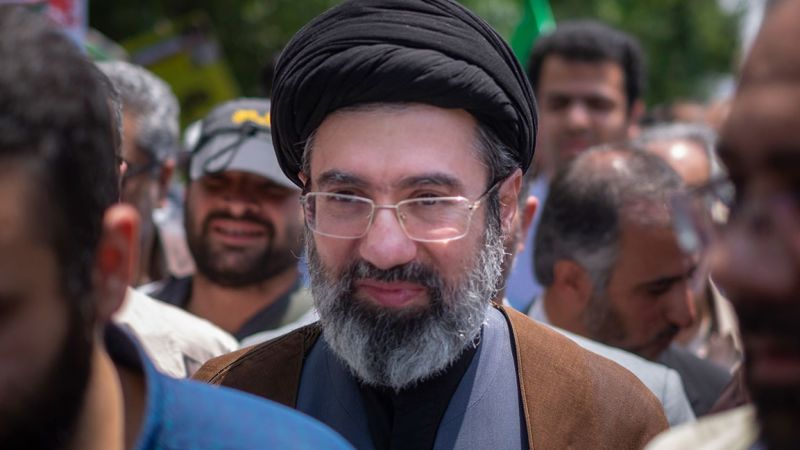
Iran names slain supreme leader’s son as successor, in a defiant message to Trump
Following the US-Israeli strikes that killed former Supreme Leader Ali Khamenei, Iran has appointed his second son, Mojtaba Khamenei, to the top position. This move has been interpreted as a bold statement against Donald Trump’s administration, which had previously labeled the new leader as “unacceptable.”
A Defiant Move Amidst US-Israeli Strikes
The 88-member Assembly of Experts, a body tasked with selecting Iran’s supreme leader, has made a decision that contradicts the revolution’s early ideals. In 1979, millions of Iranians protested against the shah’s rule, aiming to end the pattern of hereditary power. Now, Mojtaba’s rise marks a return to that tradition, solidifying the grip of hardline factions within the regime.
Mojtaba’s appointment coincides with a critical moment in Iran’s political landscape. State media swiftly launched a campaign, releasing a four-minute video that highlights his early life, seminary education, and frontline service during the Iran-Iraq war. The footage underscores his legitimacy as a leader, emphasizing his readiness to carry forward his father’s vision.
“Mojtaba may you die so you don’t assume the leadership role.”
This slogan, once chanted by protesters in 2009, now appears in the context of a regime that has shifted its focus. The new leader’s image is carefully curated, with AI-generated content filling gaps in his public presence. His background includes religious training, though he never attained the rank of Mujtahid, a title many loyalists see as essential for the supreme leader’s authority.
Behind the Scenes: A Political Operator
Despite his low profile, Mojtaba has been a key figure in Iran’s political machinery. His close ties to the Revolutionary Guards and economic networks have bolstered his influence. Observers note his quiet yet decisive role, particularly in the 2005 presidential election where he supported Mahmoud Ahmadinejad’s candidacy against Akbar Hashemi Rafsanjani.
The 2009 protests, which opposed Ahmadinejad’s re-election, revealed Mojtaba’s growing prominence. While not a public face, his presence was felt through the actions of his allies, including the IRGC. The regime’s response to the uprising—brutal and systematic—marked the beginning of his ascendancy as a central political actor.
Legacy and Sanctions
Since taking office, Mojtaba has been part of a strategy to reinforce the system’s stability. Pledges of loyalty from the president, parliament, and IRGC were swiftly announced, signaling unity amid the leadership transition. The US Treasury, in 2019, had previously criticized Mojtaba for his role in advancing his father’s “destabilizing regional ambitions and oppressive domestic objectives.”
With the nation under an internet blackout, state media worked rapidly to shape narratives around the new leader. The goal: to position Mojtaba as a successor with both religious and political gravitas, countering concerns about his scholarly credentials. His wife, Zahra, is the daughter of Gholam Haddad Adel, a former parliament speaker and close confidant of Ali Khamenei.
The appointment reflects a broader consolidation of power under the Revolutionary Guards. As Iran’s leadership doubles down on hardline policies, the message is clear: the regime remains steadfast in its opposition to Western pressure, even in the face of ongoing challenges.
