
Houthi forces enter Iran conflict with missile attacks on Israeli military sites
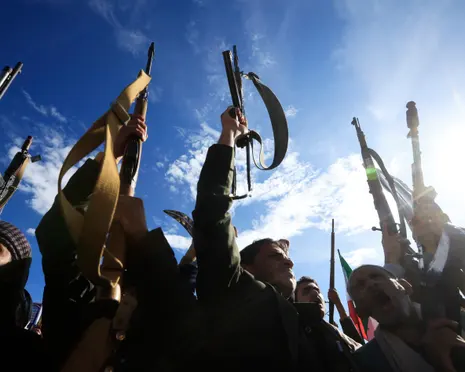
Houthi Forces Enter Iran Conflict with Missile Attacks on Israeli Military Sites
The US-Israeli conflict with Iran has broadened as Houthi militants from Yemen launched missile strikes against Israeli military installations, marking a significant expansion of hostilities. This development has intensified concerns over the conflict’s global economic repercussions, with the potential for further disruption in energy and trade routes. Pakistan has taken a diplomatic step by hosting a regional meeting of Middle Eastern nations on Monday, aiming to coordinate a collective strategy to resolve the escalating tensions. However, the gathering, which featured Saudi Arabia, Turkey, and Egypt’s foreign ministers, excluded the primary belligerents, including Iran and the Houthi group, undermining confidence in ongoing US claims of diplomatic progress.
On Saturday, Houthi forces, close allies of Iran, announced they had fired a series of ballistic missiles at “Israeli military targets” and pledged to continue their operations until hostilities ended in all regions. Israel reported that it had intercepted one missile launched from Yemen, though the full impact of the strikes remains under evaluation. Intelligence sources cited by Reuters indicated that the US had only confirmed the destruction of a third of Iran’s missile and drone arsenal, casting doubt on assertions that the country’s military capabilities were comprehensively weakened.
The conflict has also reached into Saudi Arabia and Kuwait, as missile and drone attacks targeted Prince Sultan airbase, injuring at least 12 US troops, two of whom were seriously wounded. Meanwhile, drones struck Kuwait International Airport, causing substantial damage to its radar systems. The Houthi control over Yemen’s most populated regions now poses a direct threat to the Bab al-Mandab Strait, a vital maritime route at the southern end of the Red Sea. This strait, along with the Hormuz Strait, is critical for energy and trade flows, and its closure could worsen economic strain, potentially reigniting the Saudi-Yemen war that has caused severe humanitarian crises for seven years.
Escalation and Regional Impacts
With the war entering its second month, Pakistan has positioned itself as a peace broker, seeking to facilitate dialogue between the US and Iran. Prime Minister Shehbaz Sharif and army commander Field Marshal Asim Munir had hoped to encourage talks, though the effectiveness of such efforts remains uncertain. Meanwhile, Iran’s central command claimed it had attacked a Ukrainian anti-drone system depot in Dubai, accusing the facility of supporting US operations. The UAE and Qatar had recently signed defense pacts with Ukraine, following Saudi Arabia’s agreement, but Dubai officials have not yet confirmed the strike.
“The Houthi involvement in the broader Middle East conflict represents a serious escalation. The disruption of key maritime routes, especially in the Red Sea and Bab al-Mandab, is profound. Gulf infrastructure is increasingly at risk,” said Farea Al-Muslimi, a researcher with the Chatham House thinktank.
Reports of weapon escalation also emerged, with Bellingcat experts noting the use of cluster munitions. Mines discovered near Shiraz’s missile base were identified as Gator anti-tank mines, a type of cluster munition banned by over 100 countries due to its indiscriminate effects. While the US is the sole possessor of this weapon, Tehran has employed ballistic missiles with cluster warheads in attacks on Israeli targets. Adm Brad Cooper, head of US Central Command, condemned these strikes on March 16, describing cluster bombs as “inherently indiscriminate,” a classification that highlights their broader strategic implications.
As the war intensifies, the involvement of the Houthi group has added new layers of complexity, challenging the existing dynamics between the US, Iran, and regional allies. The possibility of the conflict spreading further underscores the urgency of addressing its economic and humanitarian consequences.
