
Australia’s Trump Tower plans scrapped as developer says brand has become ‘toxic’
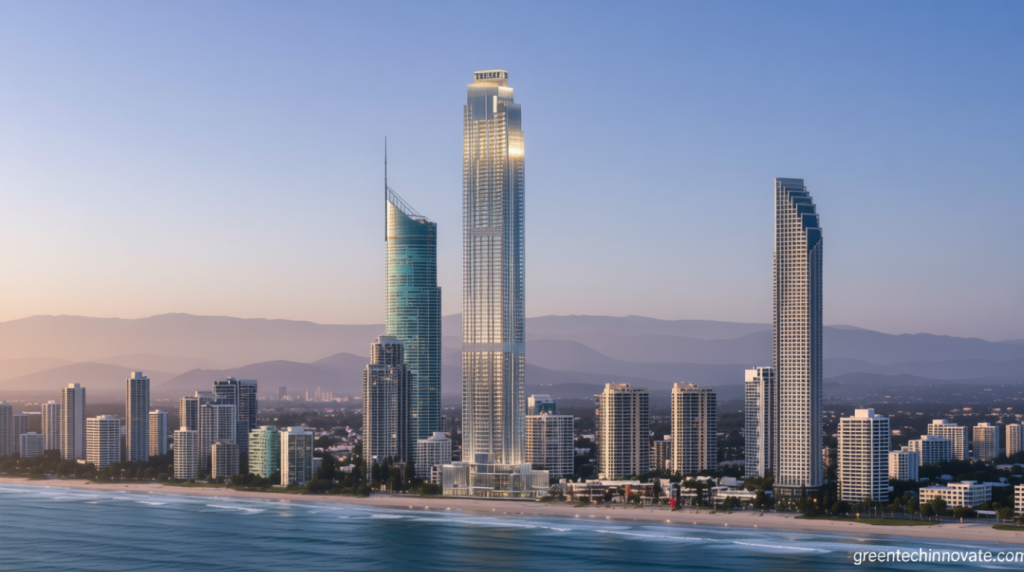
Australia’s Trump Tower plans scrapped as developer says brand has become ‘toxic’
Developer Announces Cancellation Amid Brand Criticism
Australia s Trump Tower plans scrapped – Altus Property Group, the Australian developer behind a once-ambitious project, has officially abandoned plans to construct the nation’s first Trump Tower. The decision came just three months after the project was initially unveiled, with CEO David Young citing the Trump brand’s growing unpopularity in Australia as the primary reason. Young’s statement to CNN emphasized that the brand’s reputation had shifted from positive to negative, impacting public perception of the development.
Young stated that global events, including the Iran conflict and other international factors, have made the Trump brand less favored in Australia.
Young, who previously expressed enthusiasm for the Trump name, now claims the brand has become “toxic” to Australians. He highlighted how political tensions, particularly around the Iran war and broader global developments, have influenced this shift. The decision to halt the project marks a significant turning point for a development that was once seen as a flagship luxury endeavor.
Project Details and Initial Hype
The Trump International Hotel & Tower Gold Coast, originally projected as Australia’s tallest structure, was envisioned as a mixed-use complex featuring a 285-room hotel, a high-end retail plaza, and upscale residential apartments. These elements were to align with Trump’s signature design philosophy, as outlined in a February press release from Altus Property Group. The announcement generated considerable excitement, with the developer positioning the project as a symbol of Australia’s expanding luxury real estate market.
Despite the initial optimism, the project soon faced criticism. Public opposition emerged after the collaboration between Altus and the Trump Organization, which is controlled by Donald Trump’s sons, Donald Jr. and Eric. Critics argued that the association with the Trump name would undermine the project’s appeal, particularly in light of the US president’s controversial policies and rhetoric.
Public Backlash and Petition Against the Project
One of the most vocal oppositions came in the form of a petition that gathered over 140,000 signatures. The organizer, who shared her concerns with CNN in February, linked the project to “anti-immigrant violence” and “social division” in the United States. Her comments reflected broader sentiments that the Trump brand was being used to justify divisive policies, which Australians were increasingly wary of endorsing.
Young defended the decision in a LinkedIn post, calling the backlash “grossly unfair.” He insisted that the project was still viable and that the Trump name, while controversial, was not the sole factor in its cancellation. “The brand in this country has become toxic to Australians,” he wrote, emphasizing the cultural and political shifts that had occurred since the project’s announcement.
Trump Organization Blames Developer for Project’s Demise
In response to the cancellation, the Trump Organization pointed to financial failures by Altus Property Group. According to Kimberly Benza, a spokesperson for the organization, the developer had not fulfilled basic financial commitments outlined in the agreement. Benza accused Young of using global events as a distraction to deflect from the project’s shortcomings.
Benza accused Young of using global events as a distraction to shift responsibility away from his own financial shortcomings.
The Trump Organization’s statement framed the situation as a failure of Altus to meet obligations, despite the developer’s claims of external pressures. The $1.5 billion project, which had been in the works for nearly two decades, now faces uncertainty as the partnership between Altus and the Trump family fractures.
Developer’s History with the Trump Family
Young’s relationship with the Trump Organization began in 2007 when he made an unsolicited call to Ivanka Trump, the former First Lady. At the time, Young introduced himself as an Australian property developer eager to create the nation’s “finest tourist property.” This early connection paved the way for a long-term partnership, culminating in the signing of the deal for the Gold Coast tower.
However, Young’s later remarks suggested a growing distance from the Trump name. In comments published in *The Australian* newspaper, he stated that the tower would be an “Australian, not American project,” signaling a desire to distance the development from its US-based branding. This shift was reportedly anticipated, as Young had hoped to launch the building before the Brisbane Olympics in 2032.
Mayor’s Perspective and Final Remarks
Gold Coast Mayor Tom Tate, who had once dined with Trump at Mar-a-Lago and supported the project enthusiastically, clarified that no formal development application had been submitted to the city council. “This project was an agreement between two private parties,” Tate stated in a CNN interview, adding that the city had no proposal to evaluate.
Tate’s comments underscored the lack of official process in the project’s early stages, raising questions about transparency and public consultation. While the mayor acknowledged the partnership’s significance, he noted that the city’s role was limited to supporting the agreement, which was left to Altus and the Trump Organization to finalize.
Broader Implications for Real Estate and Politics
The cancellation of the Trump Tower in Australia highlights the challenges of aligning international brands with local perceptions. As political tensions escalate, the Trump name has become a lightning rod for controversy, influencing public opinion on large-scale developments. Young’s decision to abandon the project reflects a strategic move to adapt to changing market dynamics, even if it means severing ties with a once-esteemed brand.
While the Trump Organization remains critical of Altus, the developer’s focus on maintaining the project’s Australian identity suggests a broader effort to redefine its legacy. The absence of a formal application may also indicate that the project’s fate was not solely dependent on the city council’s approval but rather on the partnership’s ability to sustain its vision.
As the real estate sector in Australia navigates this shift, the Trump Tower’s cancellation serves as a case study in how political branding can impact business ventures. Young’s journey from a supporter of the Trump name to its critic underscores the evolving relationship between developers and global political figures in an increasingly polarized world.
CNN’s Hilary Whiteman contributed to this report, ensuring the accuracy of details surrounding the project’s cancellation and the developer’s rationale. The story continues to unfold, with potential implications for future collaborations between Australian developers and international brands.
