
Top Benefits of Smart Living for Modern Homes
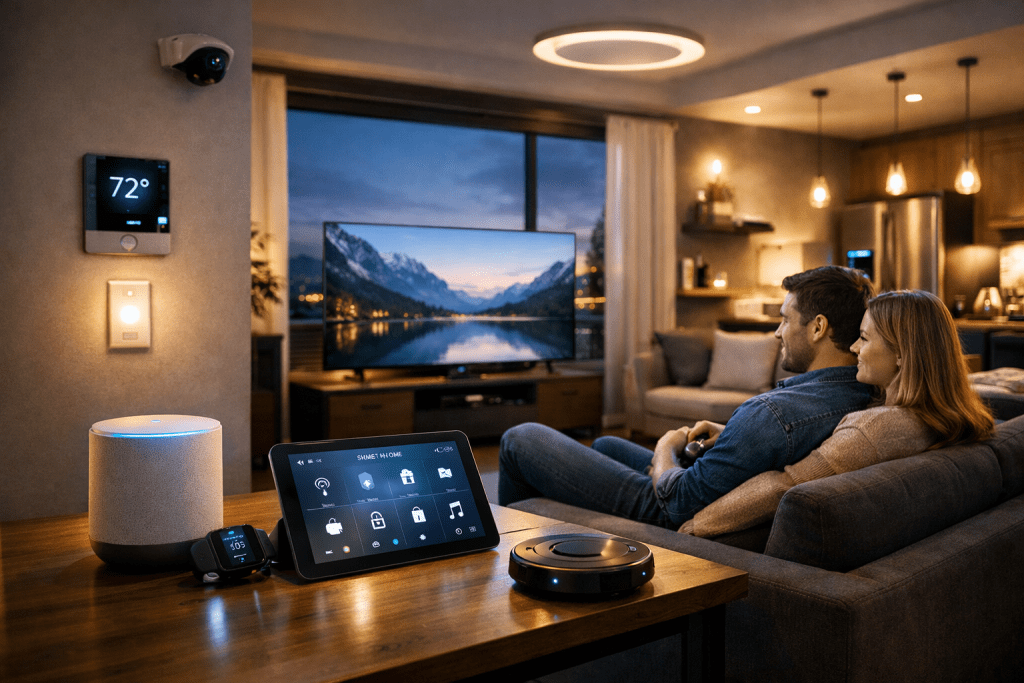
Modern homeowners are no longer looking only for aesthetic design or larger spaces. They want efficiency, control, security, and long-term value built into their properties. This is where the Benefits of smart living become highly relevant. Smart home technology integrates devices, systems, and data to create a living environment that is more responsive, automated, and energy-conscious.
Smart living is not limited to luxury properties. It is now accessible to middle-income households through connected lighting, intelligent thermostats, voice assistants, and advanced security systems. Understanding the Benefits of smart living helps homeowners make informed decisions that improve daily life while increasing property value.
Improved Energy Efficiency and Lower Utility Costs
One of the most significant Benefits of smart living is improved energy efficiency. Smart thermostats automatically adjust temperature settings based on occupancy, time of day, and weather patterns. This reduces unnecessary heating and cooling, which are typically the largest energy expenses in a home.
Smart lighting systems also contribute to savings. Motion sensors turn lights off when rooms are empty, and automated schedules ensure lights operate only when needed. Over time, these adjustments reduce electricity consumption without requiring constant manual control.
Smart plugs and energy-monitoring systems provide real-time data on appliance usage. Homeowners can identify energy-draining devices and modify usage patterns accordingly. This level of transparency transforms energy management from guesswork into measurable optimization.
Lower utility bills are a direct financial advantage. The cumulative savings over several years can offset the initial cost of installing smart devices, making the investment economically rational rather than purely technological.
Enhanced Security and Real-Time Monitoring
Security remains a top priority for modern homeowners. Among the strongest Benefits of smart living is the ability to monitor and control home security systems remotely. Smart cameras, doorbell systems, and motion sensors provide real-time alerts directly to smartphones.
Homeowners can view live video feeds from anywhere in the world. This capability reduces anxiety when traveling and allows immediate action if suspicious activity is detected. Remote access to door locks also enables secure entry management for family members or service providers.
Smart alarm systems can integrate with smoke detectors and carbon monoxide sensors. In case of emergency, alerts are sent instantly, and in some systems, emergency services can be notified automatically. This layered protection enhances both physical safety and property protection.
The psychological benefit is equally important. Knowing that a home is continuously monitored increases peace of mind, which is a key but often overlooked aspect of the Benefits of smart living.
Greater Convenience Through Automation
Convenience is a central pillar of smart home technology. Automated routines allow multiple devices to function together based on predefined triggers. For example, a “morning routine” can gradually increase lighting, adjust temperature, and start coffee preparation at a set time.
Voice assistants eliminate the need for manual operation of devices. Homeowners can control lights, music, thermostats, and security systems with simple voice commands. This reduces friction in daily activities and improves efficiency.
Geofencing technology enables homes to respond to the homeowner’s location. When residents leave, lights turn off and security systems activate automatically. When they return, lighting and climate settings adjust to preferred levels.
These systems reduce repetitive tasks. Over time, the cumulative time saved becomes substantial. The Benefits of smart living extend beyond comfort to meaningful productivity improvements.
Increased Property Value and Market Appeal
Modern buyers increasingly expect smart features in residential properties. Homes equipped with integrated systems often stand out in competitive real estate markets. This directly contributes to higher perceived and actual property value.
Smart security, energy management, and automation systems signal long-term cost savings to potential buyers. They also reflect forward-thinking infrastructure, which appeals to tech-aware consumers. In many markets, smart-enabled homes sell faster than conventional properties.
Appraisers and real estate professionals recognize the added functionality of connected systems. Although valuation varies by region, properties with comprehensive smart integrations often justify premium pricing.
From an investment perspective, the Benefits of smart living include not only operational savings but also asset appreciation. Smart infrastructure transforms a house into a future-ready property.
Better Environmental Sustainability
Sustainability is no longer optional. Smart living contributes to reduced environmental impact through optimized resource usage. Intelligent irrigation systems adjust watering schedules based on weather forecasts, reducing water waste.
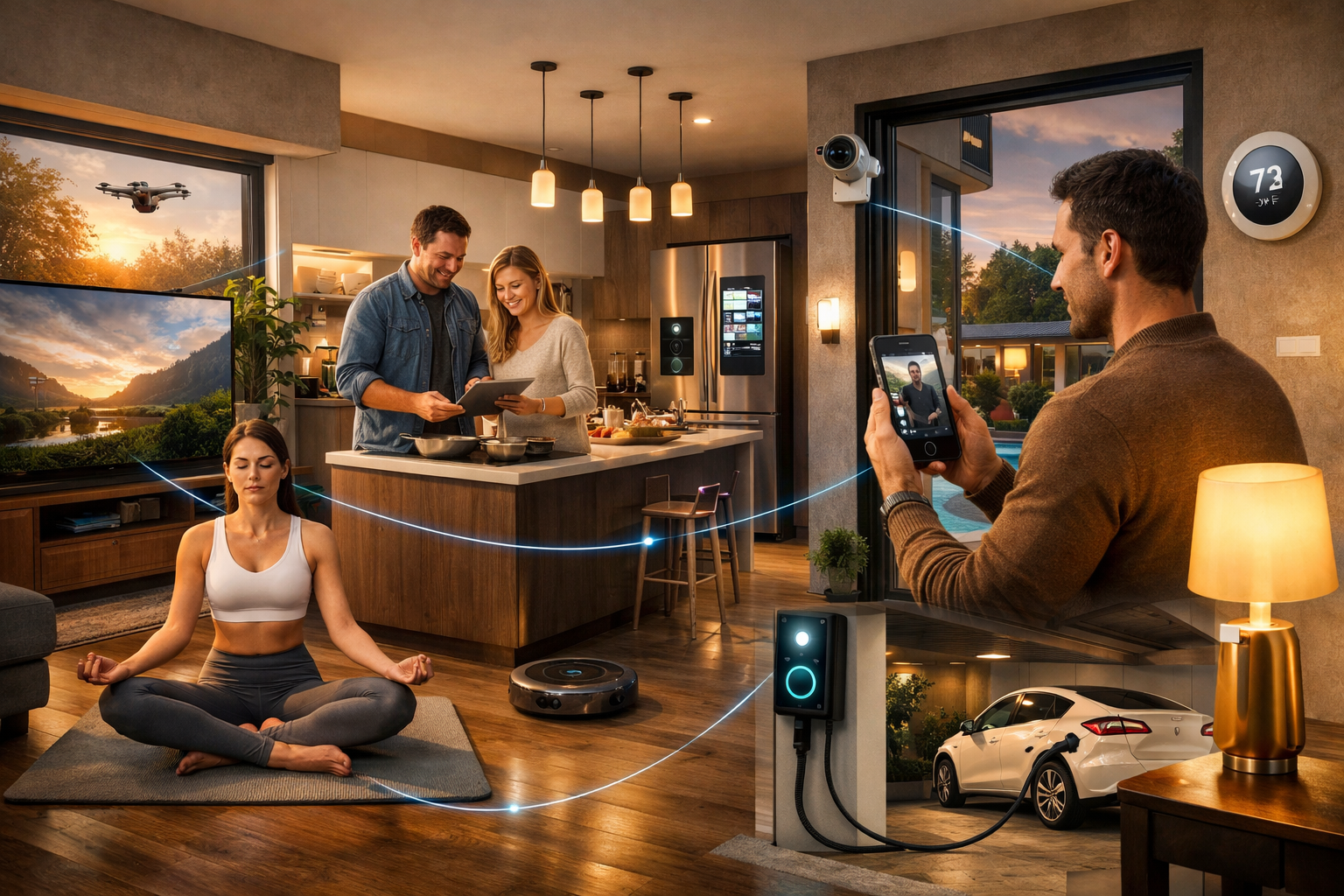
Smart thermostats reduce carbon emissions by minimizing unnecessary heating and cooling cycles. Automated blinds can adjust according to sunlight exposure, lowering dependence on artificial lighting and climate control systems.
Energy monitoring tools encourage responsible consumption habits. When homeowners see measurable data, behavioral change becomes more likely. This data-driven awareness supports environmentally responsible decisions.
The environmental Benefits of smart living align with global sustainability goals. Reduced energy consumption at scale contributes to lower overall carbon footprints in residential communities.
Personalized Living Experiences
Smart homes adapt to individual preferences. Lighting color temperatures, music playlists, and room temperatures can be customized for different family members. This personalization enhances comfort and satisfaction.
Machine learning algorithms can analyze usage patterns and refine automation over time. For example, a thermostat may learn when occupants typically sleep or return home and adjust settings automatically. This reduces the need for manual intervention.
Health-focused devices also integrate into smart ecosystems. Air quality monitors, smart purifiers, and humidity sensors maintain optimal indoor conditions. Improved air quality supports respiratory health and overall well-being.
Personalization is one of the most compelling Benefits of smart living because it transforms static living spaces into adaptive environments. The home evolves with its occupants rather than remaining fixed.
Centralized Control and System Integration
Another key advantage is centralized control. Through a single application, homeowners can manage lighting, security, entertainment, and climate systems. This unified interface simplifies complex home management.
Integration between devices enhances functionality. For example, security cameras can trigger exterior lighting when motion is detected. Thermostats can adjust automatically when windows are opened.
Interoperability between brands has improved significantly. Many platforms now support broad device compatibility, making it easier to expand systems over time. This flexibility ensures that smart living is scalable rather than restrictive.
Centralized control reduces operational complexity. The Benefits of smart living include both technological sophistication and simplified management.
Conclusion
The Benefits of smart living extend far beyond convenience. They include measurable energy savings, enhanced security, increased property value, environmental sustainability, and personalized comfort. As technology continues to evolve, smart home integration becomes a strategic investment rather than a luxury feature. Modern homes equipped with intelligent systems offer efficiency, safety, and adaptability that traditional properties cannot match.
FAQ
Q: What are the main Benefits of smart living for homeowners? A: The main benefits include energy efficiency, improved security, automation convenience, increased property value, and enhanced comfort.
Q: Does smart living significantly reduce energy bills? A: Yes, smart thermostats, lighting systems, and energy monitors optimize usage and can lead to measurable reductions in monthly utility costs.
Q: Is smart home technology secure from cyber threats? A: Most reputable systems use encryption and regular updates, but security depends on proper network protection and strong password management.
Q: Do smart homes require professional installation? A: Some advanced systems benefit from professional installation, but many devices are designed for simple, user-friendly setup.
Q: Can smart living increase property resale value? A: Homes with integrated smart systems often attract more buyers and may command higher prices in competitive real estate markets.
