
The Future of Smart Living: Top Technology Trends to Know
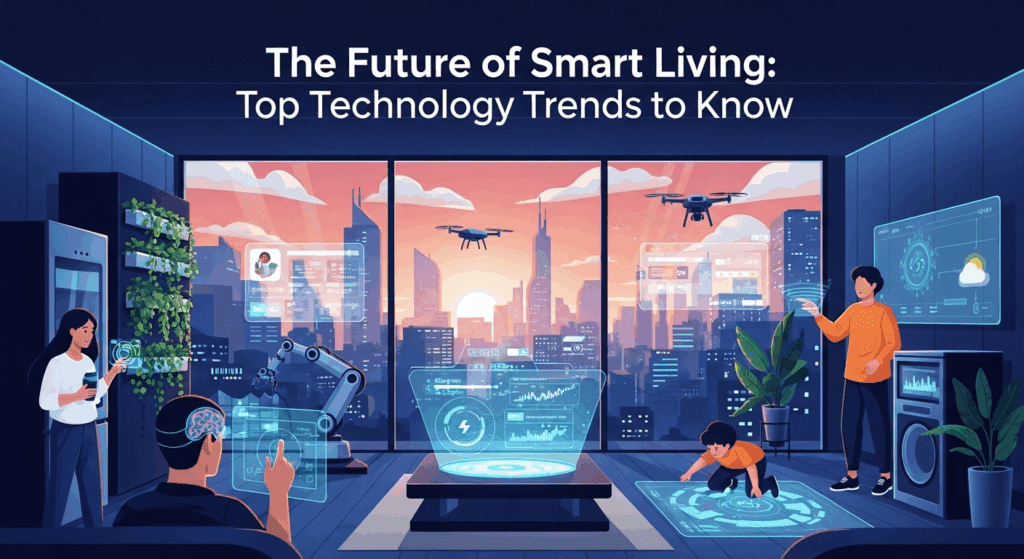
The way we interact with our homes is undergoing a monumental shift. Gone are the days when a "smart home" simply meant a voice-activated speaker that could play a song or a thermostat you could control from your phone. We are now standing on the cusp of a new era, one defined by intelligence, proactivity, and seamless integration. The home of the future isn't just smart; it's a living, breathing ecosystem that anticipates our needs, enhances our well-being, and operates with unprecedented efficiency. Exploring the future of smart living technology trends reveals a world where technology fades into the background, working silently to create environments that are perfectly tailored to us. This evolution from a collection of connected devices to a truly intelligent and ambient ecosystem is powered by groundbreaking advancements in artificial intelligence, connectivity, and sensor technology.
The Rise of Ambient Computing and Hyper-Personalization
The next frontier in smart living is the move away from direct commands towards ambient computing. This concept envisions a world where technology is so deeply embedded in our environment that it becomes virtually invisible. Instead of actively engaging with dozens of different apps and devices, the environment itself responds to our presence and context. Your home will know who you are, where you are, and what you might need, without you ever having to ask. This isn't science fiction; it's the logical endpoint of the hyper-personalization trend we see today, powered by sophisticated AI and machine learning algorithms.
These intelligent systems will learn your daily rhythms, habits, and even your emotional state through a network of unobtrusive sensors. Imagine a home that gradually brightens the lights and starts the coffee maker ten minutes before your alarm because it knows you had a restless night. Or a living room that detects a stressful tone in your voice and subtly adjusts the lighting to a calming hue and plays gentle, ambient music. This is the essence of a truly personalized living experience—a home that doesn't just serve you, but actively cares for you.
The ultimate goal of ambient computing is to reduce cognitive load and friction in our daily lives. The constant need to manage and command our technology will disappear. Your environment will be a symphony of automated actions orchestrated with a deep understanding of your personal preferences. This seamless integration will transform our homes from passive structures into active partners in our lives, making daily routines more efficient, enjoyable, and supportive of our overall well-being.
Proactive Home Management
Proactive management is the practical application of ambient intelligence. Instead of you telling your home what to do, your home will anticipate your needs and take action. This goes far beyond simple schedules. AI algorithms will synthesize data from your calendar, your biometrics, your grocery inventory, and even real-time traffic to make intelligent decisions on your behalf. For example, your home’s AI could automatically pre-heat the oven for dinner because it knows you’re on your way home from work, and it has already cross-referenced your calendar and a pre-planned meal.
This extends to every facet of home life. Your pantry's smart shelves will detect you're low on milk and automatically add it to your weekly grocery delivery. Your home's lighting system will perfectly sync with your circadian rhythm, promoting alertness during the day with cool, bright light and encouraging sleep at night with warm, dim light. The entire system works in concert, making decisions that optimize your comfort, health, and efficiency without requiring constant input. It's the difference between having a tool and having an assistant.
Context-Aware Environments
A key component of hyper-personalization is creating context-aware environments. The home will differentiate between individuals and their activities. Using a combination of voice biometrics, gait recognition from floor sensors, and data from personal wearables, the home can tailor the environment to the specific person in a room. When you walk into the study, your preferred playlist might begin, the temperature will adjust to your liking, and your work-related notifications might appear on a smart display. If your child enters, the system would instantly switch to a kid-friendly mode, perhaps disabling access to certain devices and displaying educational content.
This level of awareness also applies to activities. If the system detects multiple people in the living room and an increase in conversation volume, it might interpret this as a social gathering and adjust the lighting and music to a more "energetic" scene. Conversely, if it detects one person sitting quietly on the sofa and a TV show like The Queen's Gambit starting, it might dim the lights for a cinematic experience. This granular, context-driven automation is what will make future smart homes feel truly intuitive and alive.
Advanced Connectivity: The Role of 5G, 6G, and Edge Computing
The intelligent, data-heavy services of future smart homes cannot run on today's often-congested Wi-Fi networks. The sheer volume of data from countless sensors, cameras, and appliances communicating in real-time requires a far more robust and responsive network infrastructure. This is where the trifecta of 5G, 6G, and edge computing becomes the critical backbone for the future of smart living. 5G technology offers a massive leap in bandwidth and, more importantly, a drastic reduction in latency—the delay between a command and its execution.
While 5G provides the high-speed wireless pipeline, edge computing changes where the data processing happens. Instead of sending every piece of data to a distant cloud server for analysis, edge computing allows for processing to occur locally, either on a powerful home hub or on the device itself. This is crucial for both speed and privacy. For instance, a security camera using edge computing can analyze video feeds in real-time to identify a threat and trigger an alarm instantly, without the delay of a round trip to the cloud. It also means sensitive personal data can stay within the secure perimeter of your home.
Looking even further ahead, 6G promises to take this a step further. While still in the conceptual phase, 6G is envisioned to enable near-instantaneous, "zero-latency" communication. This could power a true "Internet of Senses," where digital experiences become indistinguishable from reality. It could enable real-time holographic communication with family members, or the creation of a complete "digital twin" of your home for advanced diagnostics and simulations, all forming the nervous system of the truly intelligent home.
The Impact of Ultra-Low Latency
Ultra-low latency is a game-changer for real-time applications within the home. For home security, it means the difference between recording a break-in and preventing one. A system with near-zero latency can identify an unauthorized person, lock all doors, activate deterrents, and notify authorities in a fraction of a second. This responsiveness is also critical for advanced domestic robotics. A robot assisting an elderly person needs to react instantly to prevent a fall, a feat only possible with ultra-low latency communication between its sensors and processors.
This responsiveness also unlocks new entertainment and interaction possibilities. Augmented Reality (AR) overlays on walls could provide information or decoration that changes in real-time as you move through a room. A smart kitchen surface could display a recipe video that responds instantly to your voice commands or hand gestures. These fluid, seamless interactions are impossible with the network delays we often experience today and are foundational to the next generation of smart living experiences.
Beyond 5G: A Glimpse into 6G
While 5G is the immediate future, researchers are already defining the goals for 6G. Expected to roll out in the 2030s, 6G aims for speeds up to 1 terabit per second and latency measured in microseconds. This quantum leap in performance would enable what technologists call “cyber-physical fusion.” In the context of a smart home, this could mean creating a perfect, real-time digital replica of your home—a digital twin. You could use this twin to simulate the effects of a renovation, test new automation routines, or allow a technician to diagnose an appliance’s problem remotely by inspecting its digital counterpart.
Furthermore, 6G's ability to precisely sense the environment could lead to device-free sensing, where the wireless signals themselves are used to detect movement, posture, and even breathing patterns without a dedicated sensor. This would be the ultimate realization of ambient computing, where the network itself is the sensor. It could enable holographic calls that feel lifelike or immersive AR/VR experiences that are completely integrated into our physical space, further blurring the lines between the digital and physical worlds.
The Integration of Health and Wellness into the Home
One of the most profound shifts in smart living will be the transformation of the home into a hub for proactive health and wellness. Moving beyond fitness trackers and smart scales, the home of the future will be equipped with non-invasive sensors that continuously and passively monitor your health. This trend, accelerated by a growing global focus on preventative care, will empower individuals to take control of their well-being in an unprecedented way. The home will become an active participant in maintaining your health, not just a passive observer.
This integration involves embedding health-monitoring technology into everyday objects. Your mattress will track sleep quality, heart rate variability, and respiratory rate. Your toilet will analyze waste for early signs of disease or nutritional deficiencies, a field known as digital olfaction. Your bathroom mirror might be equipped with multispectral cameras to scan your skin for abnormalities or measure vital signs like blood pressure and oxygen saturation just by analyzing your face.
The data gathered by these devices won't just be presented in an app; it will be used by the home's AI to create a dynamic wellness environment. If your sleep tracker detects poor sleep, the home might suggest a change in evening lighting or temperature. If the smart toilet detects dehydration, the smart water dispenser might remind you to drink more and even infuse your water with electrolytes. This creates a feedback loop where your home is constantly working to optimize your health.
Non-Invasive Health Monitoring
The key to this trend is its non-invasive nature. People won’t need to wear special devices or perform manual tests. Health monitoring will become a background process, seamlessly integrated into daily routines. For example, smart flooring could analyze gait and balance over time to detect an increased risk of falling, especially for elderly residents. This early warning system could trigger an alert for caregivers or family members, allowing for preventative intervention.
The data collected is not meant to replace doctors but to augment their care. Continuous, long-term data from a home environment provides a much richer picture of a person's health than a single check-up every year. This information, with user consent, can be securely shared with healthcare providers to enable more accurate diagnoses, personalized treatment plans, and a fundamental shift from reactive "sick care" to proactive "health care."
Dynamic Wellness Environments
A dynamic wellness environment is one that actively adjusts to support your physical and mental health. This goes beyond just monitoring. For example, an advanced air purification system could use real-time local pollen and pollution data to scrub the air of specific allergens, providing relief for allergy sufferers before symptoms even start. The home’s ventilation system could increase fresh air circulation when it detects elevated CO2 levels, improving cognitive function and reducing lethargy.
This dynamism also applies to mental well-being. Using a combination of voice analysis, posture recognition, and biometric data, the home could detect signs of stress or anxiety. In response, it could initiate a "calm" scene: dimming the lights, playing a soothing soundscape, diffusing a calming aromatherapy scent through the HVAC system, or even guiding you through a short meditation exercise on a nearby screen. The home becomes a sanctuary designed to actively restore and rejuvenate.
Sustainability and Energy Efficiency as a Core Principle
The smart home of the future will not just be convenient; it will be inherently sustainable. As concerns about climate change and resource scarcity grow, smart living technology is pivoting to become a powerful tool for conservation. The next generation of smart homes will have energy and resource management baked into their core operating systems, driven by AI to optimize consumption, reduce waste, and even contribute positively to the energy grid.
This trend moves beyond simple smart thermostats. It involves a holistic energy management system that intelligently orchestrates power usage across the entire home. This system will integrate with rooftop solar panels, home battery storage (like a Tesla Powerwall), and the electric vehicle (EV) charger. The AI will make sophisticated decisions based on weather forecasts, time-of-day electricity pricing, and your family's usage patterns. It will know to charge the EV overnight when rates are low, power the home from the battery during peak price hours, and sell excess solar energy back to the grid for a profit.
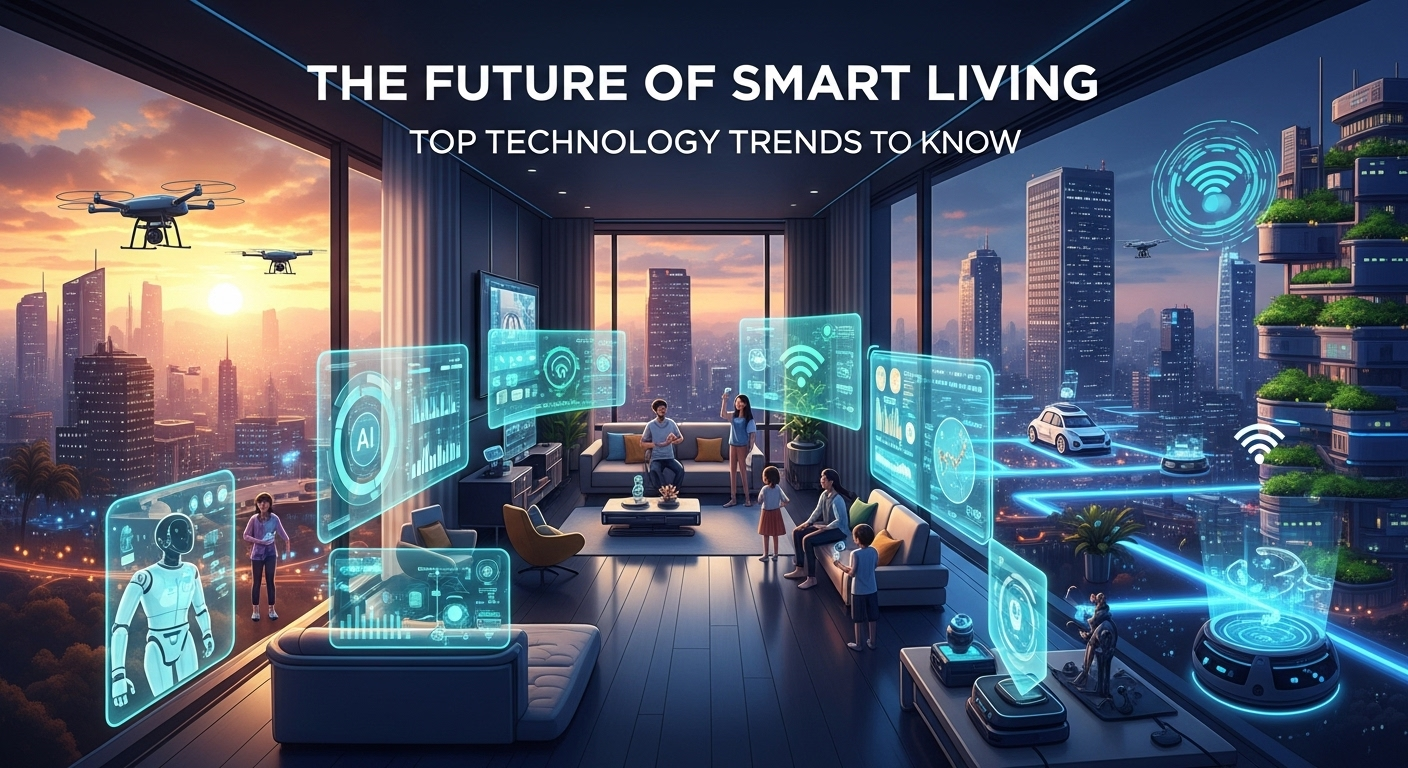
This principle extends to water conservation and waste management. Smart irrigation systems will use soil moisture sensors and weather data to water lawns and gardens only when absolutely necessary, drastically reducing water usage. Inside the home, smart fixtures will detect and alert you to tiny leaks that would otherwise go unnoticed. Smart waste and composting bins will help households more effectively sort materials, reducing their landfill footprint and simplifying the recycling process.
| Feature Area | Connected Home (Present) | Intelligent Home (Future) |
|---|---|---|
| Control | Manual control via apps, voice commands (Reactive) | Automated, context-aware, predictive (Proactive) |
| Personalization | Basic schedules and preferences | Hyper-personalized based on biometrics, behavior, and mood |
| Energy Management | Smart thermostat scheduling, basic monitoring | AI-driven optimization, grid integration, battery/solar management |
| Health & Wellness | External wearables (Fitbit), manual data entry | Passive, non-invasive sensors in the environment, dynamic wellness feedback loops |
| Security | Video recording and alerts | Predictive threat analysis, autonomous response (drones, smart locks) |
AI-Driven Energy Optimization
AI-driven energy optimization represents a huge leap forward. Traditional smart thermostats might save 10-15% on energy bills, but a fully integrated AI system can achieve savings of 30-40% or more. This AI acts as a central energy broker for the home. It continuously analyzes a multitude of data points: the sun’s position for optimizing solar generation, the weather forecast to pre-cool or pre-heat the house efficiently, and fluctuating energy prices from the utility provider.
For instance, on a hot, sunny day, the AI will prioritize running the air conditioner using free solar power. It will simultaneously close smart blinds on the sun-facing side of the house to reduce solar heat gain. If it knows you'll be gone for several hours, it will allow the temperature to drift up slightly, saving energy, and then cool the house back down just before you're scheduled to return. This constant, micro-level optimization is something no human could manage, and it results in maximum efficiency and cost savings.
Smart Water and Waste Management
Water is a precious resource, and future smart homes will manage it with precision. Beyond smart sprinklers, we will see comprehensive greywater recycling systems become standard. These systems will capture gently used water from showers and sinks, filter it, and reuse it for toilet flushing and irrigation, significantly reducing a household’s freshwater consumption. Smart leak detectors will not only alert you to a leak but can also automatically shut off the main water valve to prevent catastrophic damage.
Waste management will also get a smart upgrade. Smart bins will use internal cameras and sensors to automatically sort recyclables from trash, reducing contamination and improving recycling rates. They can also track food waste, providing data that can help families buy groceries more efficiently. Some systems will even integrate small-scale, automated composting units that turn food scraps into nutrient-rich fertilizer for the garden, creating a closed-loop system within the home.
The Evolution of Home Security and Robotics
The concept of home security is evolving from a passive system of cameras and alarms to an active, predictive, and autonomous defense network. Simultaneously, home robotics is moving beyond single-task novelties like vacuum cleaners and becoming a category of capable, multi-functional assistants that integrate with the home's security infrastructure. This fusion of intelligent security and advanced robotics promises a safer, more helpful, and more responsive home environment.
Future security systems will use AI to analyze data from a wide array of sensors—not just cameras, but also microphones, Wi-Fi signal disturbances, and even pressure sensors in the yard—to identify potential threats before they escalate. The system will learn the "normal" patterns of your home and its surroundings. It can differentiate between a delivery driver, a neighbor's pet, and a suspicious individual loitering near your property. Instead of just sending you an alert, it will provide a context-rich assessment, such as "Unfamiliar vehicle has been parked on the street for 30 minutes."
This is where robotics comes in. In response to a potential threat, the system could deploy an autonomous security drone. This drone could fly to the location of the disturbance, use its high-resolution cameras to get a clear view, and even use a speaker to challenge the intruder. This provides immediate verification and deterrence without putting the homeowner in harm's way. Inside the home, robots will take on more complex chores, from cooking and cleaning to providing companionship and assistance for the elderly.
Predictive and Autonomous Security Systems
A predictive security system works by understanding patterns. It learns the typical times your mail is delivered, when your kids get home from school, and the sound of your car. Any deviation from this baseline can trigger a heightened state of alert. For example, if a window is opened at 3 AM when everyone is asleep, the system won’t just sound an alarm. It can take a series of autonomous actions: instantly lock all interior doors to create safe rooms, turn on all the lights and play the sound of a barking dog, and stream live video from multiple angles directly to the homeowner’s phone and a professional monitoring service.
This autonomy is key. The system doesn't wait for human intervention to act. It can make split-second decisions to protect the property and its inhabitants. This could even extend to non-malicious events. For instance, an AI-powered system could cross-reference a severe weather alert with its sensors to detect the sound of hail, and then automatically close storm shutters or move a robotic lawnmower back to its charging station to prevent damage.
Advanced Domestic Robotics
The Roomba was just the beginning. The next wave of domestic robots will be far more capable, powered by advancements in AI, computer vision, and physical dexterity. We are beginning to see the emergence of humanoid or semi-humanoid robots designed as general-purpose assistants. These robots will be able to learn new tasks, navigate complex home environments, and interact with objects safely. Imagine a robot that can unload the dishwasher, fold your laundry, or even follow a recipe to prepare a simple meal.
For aging populations, these robots will be transformative. They can serve as companions, remind them to take medication, help them stand up or move around the house, and instantly connect them with family or emergency services in case of a fall. While the challenge of creating robots with human-level dexterity is immense, progress in soft robotics and AI-driven learning is accelerating. In the coming decade, we will see domestic robots evolve from single-task tools into indispensable members of the smart home ecosystem.
Conclusion
The future of smart living is not about collecting more gadgets. It's about a fundamental reimagining of our relationship with our environment. The trends of ambient computing, integrated health and wellness, core sustainability, advanced connectivity, and autonomous security are converging to create homes that are more than just smart—they are intelligent, empathetic, and truly alive. They will function as seamless ecosystems that work in the background to make our lives safer, healthier, more efficient, and more enjoyable.
While challenges around cybersecurity, data privacy, and interoperability must be carefully navigated, the trajectory is clear. We are moving from a reactive model of commanding our devices to a proactive model where our homes anticipate our needs. The result will be a new standard of living where technology disappears from view, leaving behind an environment that is perfectly and quietly orchestrated for the humans within it. This is the ultimate promise of smart living technology: to free up our time and mental energy, allowing us to focus on what truly matters.
***
Frequently Asked Questions (FAQ)
Q1: What is the biggest challenge for the future of smart homes?
A1: The two biggest challenges are interoperability and cybersecurity/privacy. Interoperability refers to the ability of devices from different manufacturers to communicate and work together seamlessly. Without a common standard, creating a truly integrated ecosystem is difficult. Cybersecurity and privacy are paramount; as more personal data is collected by the home, ensuring that data is secure from hackers and used ethically by companies is a critical hurdle that must be overcome to build user trust.
Q2: Will these future smart homes be affordable for the average person?
A2: Initially, many of the most advanced technologies, such as domestic robots and comprehensive non-invasive health monitoring systems, will be expensive and found only in luxury homes. However, like all technology, prices are expected to drop significantly over time due to economies of scale, competition, and innovation. Just as smartphones and smart speakers went from premium items to ubiquitous devices, the core components of the future intelligent home will become progressively more accessible to the average consumer.
Q3: How will AI really change my daily routine in a future smart home?
A3: The biggest change will be the shift from you managing your home to your home managing itself for you. Instead of telling your lights to turn on, your thermostat to adjust, or your speaker to play music, the AI will learn your patterns and do these things proactively. It will anticipate that you're about to start cooking and bring up a recipe, know that you're stressed and create a calming ambiance, and manage your home's energy use in the background without you ever thinking about it. It aims to eliminate the friction and mental load of managing a household.
Q4: What exactly is "ambient computing"?
A4: Ambient computing is the idea that technology becomes so deeply integrated into our environment and our lives that it effectively disappears. Instead of consciously interacting with a computer, phone, or smart device, the "computing" happens in the background, in the very fabric of the room. The environment itself becomes the interface, sensing your presence and context to respond to your needs automatically and intuitively, without requiring direct commands.
***
Summary
The article, "The Future of Smart Living: Top Technology Trends to Know," explores the evolution of the smart home from a collection of command-based devices into a proactive, intelligent ecosystem. The central theme is a shift towards ambient computing and hyper-personalization, where technology becomes invisible and the home environment automatically adapts to the inhabitants' needs, habits, and even moods based on AI and advanced sensor data.
Key trends driving this future are detailed across several sections. Advanced connectivity through 5G, 6G, and edge computing will provide the high-speed, low-latency backbone necessary for real-time data processing and a truly responsive home. Another major trend is the integration of health and wellness, with non-invasive sensors embedded in everyday objects to passively monitor vitals and create a dynamic environment that actively supports physical and mental well-being.
Furthermore, sustainability and energy efficiency are identified as core principles, with AI-driven systems optimizing energy consumption from solar, batteries, and the grid, alongside smart water and waste management. The article also covers the evolution of home security and robotics, moving from passive alerts to predictive, autonomous systems that can deploy drones and integrate with multi-functional domestic robots for both safety and assistance. Finally, the article acknowledges the critical challenges of cybersecurity and data privacy that must be addressed to realize this future. The overarching conclusion is that smart living is moving toward a seamless, intuitive, and supportive environment that enhances human life by automating complexity.
