
Sudan war: Why Hemedti’s legitimacy push in Uganda falters amid RSF atrocities
Sudan War: Why Hemedti’s Legitimacy Push in Uganda Falters Amid RSF Atrocities
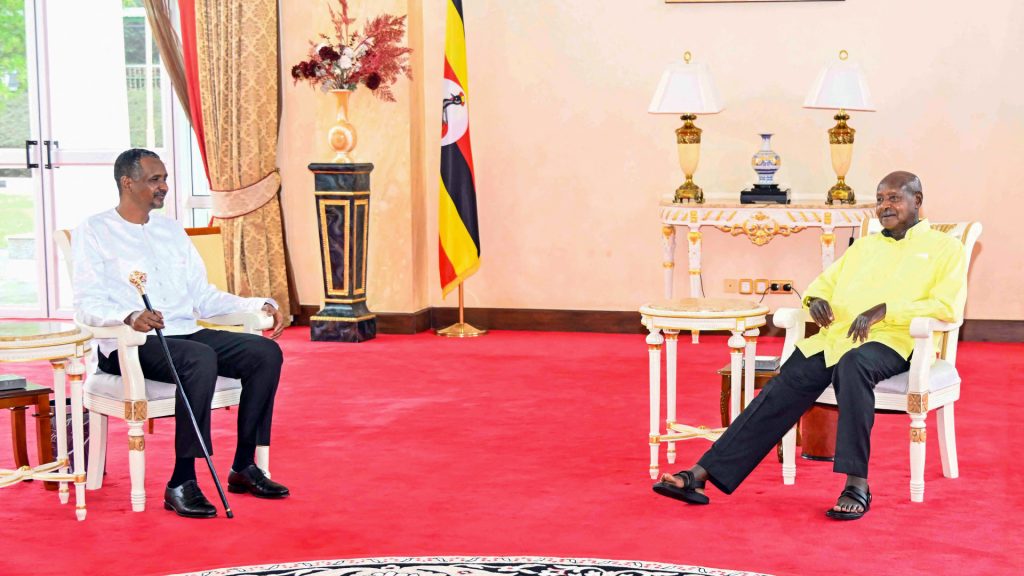
On 20 February, Mohamed Hamdan Dagalo, the commander of Sudan’s Rapid Support Forces (RSF) and commonly known as Hemedti, arrived in Kampala, Uganda, where he held meetings with President Yoweri Museveni. This marked his most prominent international diplomatic move in recent months.
The visit occurred just a day after a UN investigation uncovered allegations of genocide by the RSF in Darfur. It also followed the imposition of US sanctions on three RSF officials for their roles in atrocities in el-Fasher.
International criticism of the RSF’s actions had intensified throughout 2024, with the US designating RSF operations in Darfur as ethnic cleansing in a December 2023 ruling. The UN Security Council had also issued statements and resolutions highlighting the group’s abuses.
Parallel Political Structures and Tasis
Hemedti was accompanied by individuals linked to the Tasis initiative, a political framework he helped establish in Nairobi. This project aimed to portray RSF-controlled regions as alternative administrative zones backed by civilians.
Despite its intentions, Tasis struggled to gain widespread acceptance from Sudanese political factions and was largely dismissed by governments, regional coalitions, and international organizations, including the UN.
Sudan’s government criticized Uganda for hosting Hemedti, calling the gesture an affront to the Sudanese people and global humanity. This signals that Kampala is more than a routine meeting—it’s a strategic attempt to reposition the RSF as a credible political force.
RSF’s Administrative Ambitions
The RSF currently maintains governance in areas under its control, supporting the development of parallel political systems. This trend raises questions about Sudan’s potential fragmentation into autonomous regions.
The timing of the visit reflects a calculated shift in strategy. Hemedti is no longer solely focused on military campaigns or domestic influence; he is now seeking regional support to redefine his role and strengthen his political narrative.
During his address in Kampala, Hemedti highlighted national cohesion, opposition to territorial division, and his readiness to engage in dialogue. He framed the conflict as a battle against entrenched Islamist groups, positioning himself as a proponent of a civilian-led political process.
His remarks included claims of military strength, stating that RSF forces now exceed 500,000 and are prepared to assume broader responsibilities in Sudan’s future. This assertion was likely intended to bolster domestic credibility and reassure allies.
The speech served dual purposes: reinforcing internal authority and enhancing the RSF’s international standing. Yet, the effort to promote democratic ideals while operating a parallel political structure presents a key inconsistency.
“The RSF’s bid to transition from a military entity to a political actor without relinquishing control reveals a deeper tension in Sudan’s evolving conflict landscape,” noted analysts at the International Crisis Group.
The visit aligns with broader mediation efforts involving the African Union and the Intergovernmental Authority on Development (Igad). However, Museveni’s engagement with Hemedti places Uganda in a precarious position, balancing recognition of the RSF with its own diplomatic neutrality.
By welcoming Hemedti, Uganda elevates its status as a mediator without aligning with any single Sudanese faction. The country’s neutral stance in regional diplomacy, coupled with its reputation as a reliable partner, makes it an ideal platform for the RSF’s legitimacy campaign.
