
Palestine is now the conscience of the world. No deal will change that
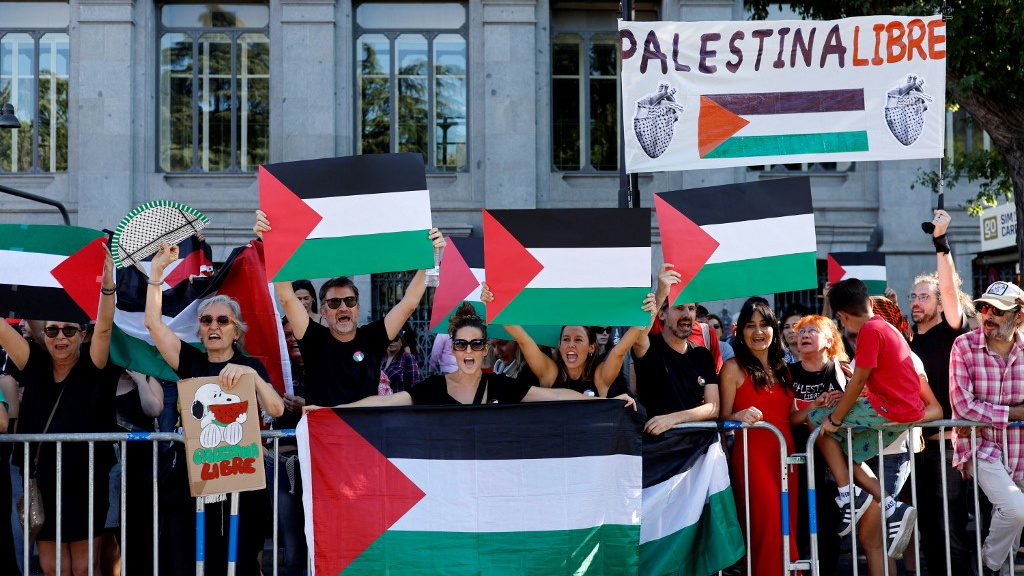
Palestine is now the conscience of the world. No deal will change that
This week, US President Donald Trump unveiled a peace plan that amounts to little more than a mockery of diplomacy. The so-called breakthrough was brokered between an American ally and an Israeli aggressor, with Palestinians conspicuously absent from the process. Their absence isn’t accidental; it’s a deliberate erasure, leaving no room for their voices or agency.
Trump’s public display of solidarity with Israeli Prime Minister Benjamin Netanyahu was steeped in self-congratulation. He praised the agreement as a triumph, while Palestinians remained unseen. No Hamas representatives, no Palestinian Authority delegates—only a hollow facade designed to give the illusion of progress.
A Colonial Blueprint
The deal mirrors the colonial mindset that underpinned the Abraham Accords. It prioritizes expediency over justice, treating Palestinian sovereignty as a secondary concern. Peace is celebrated, but occupation, blockades, and ethnic cleansing are ignored. The language of reconciliation is repeated, yet it serves to sideline the very people whose rights are at stake.
“Who could believe it?” Netanyahu exclaimed, expressing disbelief that Muslim regimes would endorse Israel’s imposed resolution. This is not peace—it is a political spectacle, crafted to mask the subjugation of Palestine.
Netanyahu’s strategy has always been clear: remove opponents, then declare victory. From assassinating Hamas leader Ismail Haniyeh to targeting negotiators in Doha, his actions have consistently aimed to eliminate resistance. Trump’s deal is the latest tool in this campaign, offering a diplomatic veneer to what is essentially a victory by proxy.
A Hollow Framework
At its core, the agreement is a mere token: the return of hostages. All other elements are symbolic gestures, lacking concrete commitment. Israeli forces remain stationed in occupied territories, with no assurances of withdrawal. This is not negotiation—it is a unilateral imposition, cloaked in the rhetoric of statesmanship.
Israel’s military campaigns have faltered. Gaza was not subdued by force, nor were hostages secured through war. The Palestinian spirit endured. Trump’s plan seeks to transform this reality into a narrative of triumph, using diplomacy to reframe defeat as success.
Yet the deal’s true purpose is to quell global momentum. The international tide of support for Palestine is growing, fueled by public sentiment in Europe and the US. Younger generations are leading this shift, and the United Nations witnessed 77 delegations walk out, leaving Netanyahu to address empty seats. This isolation underscores the deal’s ineffectiveness.
A Legacy of Imperial Control
History offers a grim parallel. The Balfour Declaration of 1917 set the stage for Palestinian land to be ceded without their consent. Today, the same colonial logic resurfaces, recasting mandates and protectorates as modern peace mechanisms. Muslim leaders who endorse the agreement—like the Emiratis who engaged with Netanyahu at the UN—become unwitting collaborators in this subjugation.
As Egypt’s former UN delegate Motaz Khalil noted, this is a “surrender plan.” It silences Palestinians, strips them of representation, and hands Netanyahu the complete victory he once promised but failed to secure. The deal is not just a political move—it is the institutionalization of a colonial diktat, a system designed to control Palestine from the outside.
Global solidarity with Palestine is not a fleeting trend. It is a deepening awareness, one that threatens to upend the status quo. Trump and Netanyahu’s arrangement, however, aims to stifle this consciousness, replacing Palestinian agency with a predetermined framework of control. The future of Gaza, once a battleground, is now a puppet show led by a “Board of Peace” dominated by figures like Tony Blair.
