
Pakistan walks a tightrope over Iran war
Pakistan walks a tightrope over Iran war
As the US and Israel escalate their campaign against Iran, unrest is spreading across the Gulf and Lebanon, prompting growing domestic pressure on Pakistan to declare allegiance to one side.
Pakistan has historically been a contested space for geopolitical maneuvering, particularly between Saudi Arabia and Iran. In recent years, Islamabad played a role in mediating China’s efforts to bridge the divide between the two nations, but this balanced approach is now being challenged.
Compounding the situation, Pakistan faces multiple fronts: an ongoing struggle with the Taliban along the Afghan border, insurgencies in Balochistan and Khyber Pakhtunkhwa, and heightened tensions with India. These challenges leave little room for further instability, yet Pakistan’s Gulf allies are considering retaliation after Iranian missile and drone strikes, forcing Islamabad into urgent diplomatic action.
The assassination of Iranian Supreme Leader Ayatollah Ali Khamenei during the initial phase of the US-Israeli assault on Iran has led Pakistan to issue a vague statement expressing “concern,” rather than direct criticism. However, the country has swiftly condemned Iranian strikes on Gulf nations, signaling a nuanced stance.
A significant reason for Pakistan’s hesitancy to fully oppose the US lies in Trump’s recent reliance on Islamabad as a trusted advisor. Army chief Asim Munir has become Trump’s preferred military strategist, with the president claiming Pakistan possesses an in-depth understanding of Iran’s capabilities.
Pakistan’s military also played a key role in Trump’s Gaza initiative, while the US has publicly backed Islamabad amid its war in Afghanistan. Despite this, domestic unrest is mounting, fueled by criticism of the nation’s involvement in the Gaza “Board of Peace” and its decision to honor Trump with a peace award.
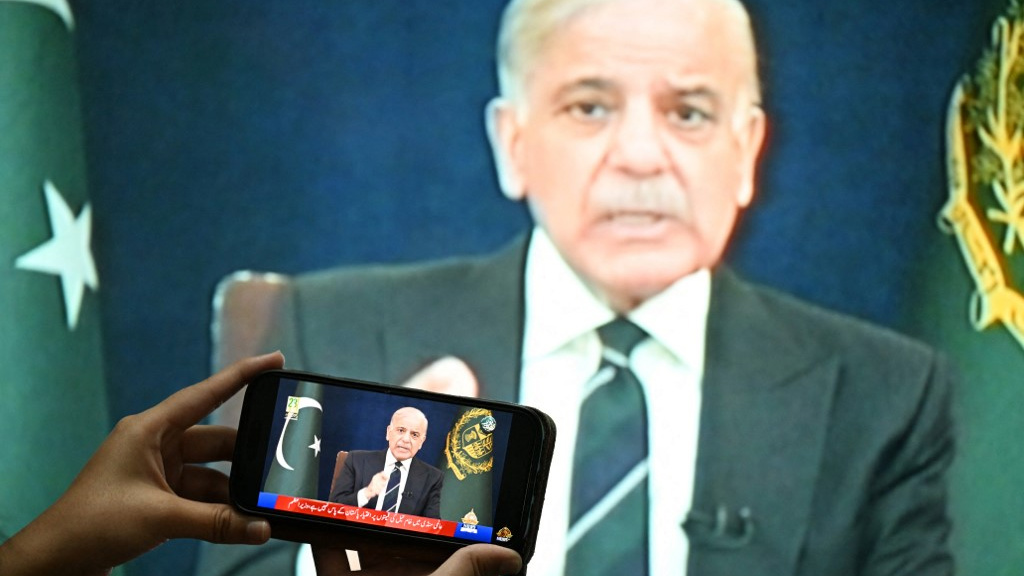
One prominent Pakistani analyst, a former US ambassador, argued the country should remain neutral in the Gaza conflict. Intellectuals and other influential figures have criticized the military and civilian leaders for appearing to compromise, with Prime Minister Shehbaz Sharif’s statements often reduced to recycled phrases of “concern” or “solidarity.”
Following Iran’s attack on Saudi Arabia, Pakistan’s foreign minister warned of the risk of the country being dragged into the conflict due to its defense pact with Riyadh. Meanwhile, Islamabad has sought to calm regional tensions, but analysts accuse it of failing to act decisively, risking “irreparable reputational damage” in the process.
Public anger has also been directed at the US, particularly after marines opened fire on protesters at the consulate in Karachi. In response, officials blocked roads in Islamabad and Lahore to prevent demonstrations near other American embassies.
With a temporary curfew imposed in Shia-majority areas, there is growing fear of internal conflict driven by the US-Israeli strike on Iran. The recent visit by Indian Prime Minister Narendra Modi to Israel has further complicated Pakistan’s regional positioning, as the defense minister warned of being surrounded by threats. Yet, Islamabad has struggled to commit, caught between Iran and Saudi Arabia amid rising domestic frustration.
At a time when conflicts with India and Afghanistan have already strained the nation, the Iran war could push Pakistan to a breaking point if it continues to remain indecisive. A clear strategic direction is urgently needed to avoid further turmoil.
The views expressed in this article belong to the author and do not necessarily reflect the editorial policy of Middle East Eye.
