
The US-Israeli war on Iran is founded on two huge mistakes
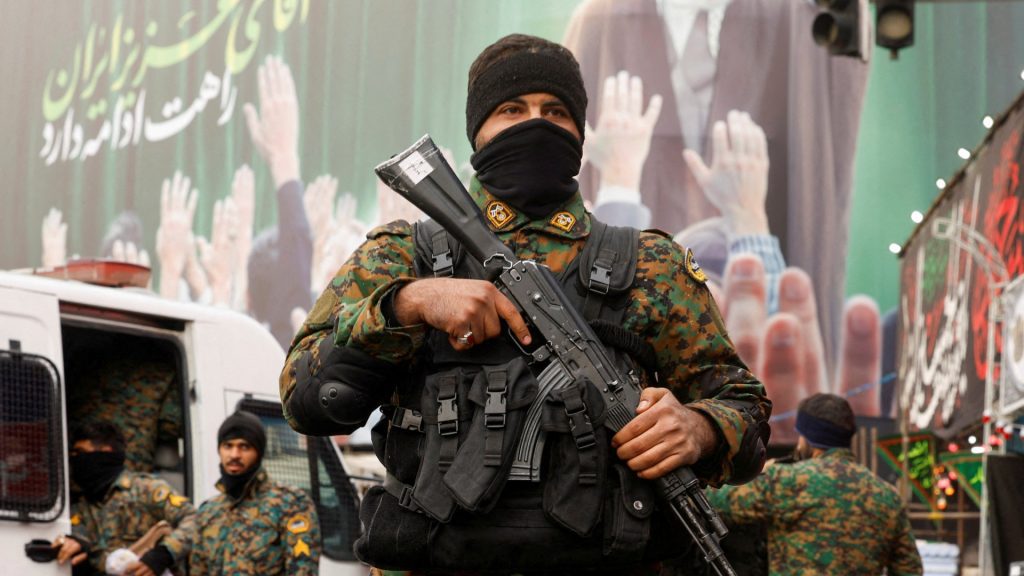
More than two weeks sinceIsraeland theUSattackedIran, inflicting "death and destruction from the sky all day long" as US Secretary of War Pete Hegsethsaid, it seems that the decision to go to war was founded on two major miscalculations.
One is almost entirely an American one regarding the possibility of toppling the Iranian ruling establishment, and the other is an Israeli misreading of Hezbollah and its potential response.
"If we had not acted immediately, within a few months Iran’s industries of death would have become immune to any strike," Israeli Prime Minister Benjamin Netanyahusaidon Thursday in his first televised speech since the war began.
Israel and the US want "to prevent Iran from developing ballistic missiles that threaten Israel, the United States, and the entire world. That is our objective," Netanayu said,addingthat the Israeli-American attack will facilitate conditions for the Iranian people to rise up and topple the Islamic Republic.
US President Donald Trump has even claimed that his attacks have averted a nuclear war,telling reporters: "If we didn't do it, they were going to attack first."
Despite Trump and Netanyahu's remarks, it's hard to think that the aim of the Israeli-US war on Iran was anything other than an attempt at regime change.
Even if we accept the view that Iran is posing a grave danger to Israel through its nuclear and ballistic missiles programmes and its allies in Lebanon, Yemen and Iraq, Israel itself claimed in June 2025, after its 12-day war on Iran, that the Islamic Republic's capabilities to strike it were greatly reduced.
Back then, Netanyahusaidthat Israel "achieved a historic victory, which will stand for generations", adding that it "removed two existential threats: the threat of annihilation by nuclear weapons and the threat of annihilation by 20,000 ballistic missiles".
Now, it's clear that Iran's nuclear and ballistic missile programmes did not suffer a terminal blow in that war, despite Israel and the US inflicting heavy losses on Iran and diminishing some of its powers.
So, what has changed since that "historic" Israeli-presumed victory some eight months ago?
The motives changed. Iran is a lifelong obsession of Netanyahu, and toppling the Iranian establishment is a dream of the Israeli prime minister. However, Israel could not have achieved that alone. It needed its closest ally.
Israel and the US have gone to war under the assumption that toppling the Iranian government is possible.
It probably stemmed from the apparent weakening of Iran and its closest allies since October 2023.
Hamas in the Gaza Strip and Hezbollah in Lebanon suffered heavy losses from Israel's brutal war machine, while the government of Syria's Bashar al-Assad fell and was replaced by an anti-Iranian administration.
In addition, the results of the 12-day war and the recent demonstrations in Iran and subsequent violent crackdown led Israel and the US to believe that there was a golden opportunity to topple the Iranian government.
As of now, it seems that that assumption was wrong.
According to US intelligence sources, the Iranian government is not close tocollapsedespite the heavy bombardment of the Israeli and American armies.
In the streets of Tehran and other cities, demonstrations calling for an end to the Islamic Republic have not been seen so far, as Israel and the US expected.
Iran was also able toreplaceits slain supreme leader, Ayatollah Ali Khamenei, with his son Mojtaba Khamenei, which indicates that the system still functions to some degree.
In addition, Iran, since it was attacked, has been carrying out successful attacks on its neighbours in the Gulf and on Israel, causing heavy damage and killing US troops. The extent of the hits may also cause destabilisation in the Gulf.
It's hard to believe that Netanyahu or Trump, whoever decided to go to war on Iran, considered that Iran could inflict such damage to American assets in the Middle East and close the Strait of Hormuz, spiralling the world into what some describe as the worst energy crisis since the 1970s.
Therefore, Iran's response is challenging American hegemony in the Middle East, and the world.
If the Iranian government can stand the Israeli-American attacks without falling, it will be a colossal defeat for US hegemony in the region, as it will fail to accomplish its goals, despite using the full might of two of the strongest militaries in the world.
Not toppling the Iranian government can be seen as an American failure which Russia and China can use.
It can also lead states like Saudi Arabia, Qatar, Oman, the UAE and Kuwait to ask themselves whether the US bases scattered all over their territories really benefit them or provide them security, as they suffer casualties and heavy damage because of an Israeli war that is not in their interests.
If the Iranian government can stand the Israeli-American attacks without falling, it will be a colossal defeat for US hegemony in the Middle East
A lack of basic freedom and rights in Iran and the undemocratic system there are the last things that the Gulf Arab states are interested in.
The United States won’t be the only country to suffer if the war does not end with regime change. Israel can suffer too.
Nowadays, Israel is almost inseparable from Trump's United States, as it's fighting with great coordination alongside the US military.
This Israeli-US alliance will appear weak if the goal of the war is not achieved. In addition, Israel's image in American public opinion could be hurt. Netanyahu and Israel are already seen by many Democrats, Republicans and independents as responsible for dragging the US into war in the Middle East.
Polls in the US indicate that the current war is the least popular in modern American history.
An Israeli-American failure could also boost Iran's status around the world, with a reputation as a country that successfully stood alone against colonialist-imperialist powers.
It's not the first time Israel joined a colonial-imperialist war. In 1956, Israel attacked Egypt alongside the UK and France, with the aim of toppling Gamal Abdel Nasser's government after he nationalised the Suez Canal.
Israel, the UK and France won militarily but lost politically. They had to withdraw, and Abdel Nasser went on to become the leader of the Arab world and one of the most significant Third World figures until the 1967 Middle East war.
History can repeat itself if Iran is seen to stand up against the full might of Israel and the US.
"I promised you victory, and we will achieve victory," Netanyahusaidin November 2024, just before his government approved a ceasefire agreement with Hezbollah.
After a year of war on Israel's northern front, which culminated in the killing of most of Hezbollah’s leadership, Netanyahu claimed the Lebanese armed movement was not the same as before. "We have pushed them decades back," he said.
When Israel attacked Iran on 28 February, it seemed to act under the wrong assumption that Hezbollah was effectively a finished organisation that could not pose a threat.
The assassination of Hezbollah's top brass, including its leader Hassan Nasrallah, the heavy blows Israel inflicted on the organisation, the fact that since the 2024 ceasefire agreement it had not responded to incessant Israeli attacks, and a political climate critical Hezbollah in Lebanon all led Israel to think that the movement could not pose any threat. This is what the Israeli public was led to believe.
Yet two weeks into the war, it seems that this assumption was wrong.
So far, Hezbollah has shown military capabilities, firing long-range missiles and hitting critical infrastructure in central Israel. This has been done alongside firing hundreds of rockets into northern Israel, effectively paralysing the region. Two Israeli soldiers were killed and the military has tried to take new positions in southern Lebanon.
The renewed full-fledged war on Israel's northern front, together with the global implications of the closing of the Strait of Hormuz, can have detrimental political effects on Netanyahu.
Since October 2023, Netanyahu has been promising Israelis he will change the Middle East. The previous war with Hezbollah was used by the prime minister to claim that he achieved this goal, and the Israeli public bought this narrative.
While there is a consensus in the Israeli public that Hamas was not defeated and the views regarding Israel's success in Iran vary, there was a consensus that Hezbollah was vanquished.
By attacking Israel, Hezbollah is proving that Netanyahu and the Israeli public were wrong.
Israel finds itself fighting on two fronts. This not only stretches its war efforts, but it may also have political implications.
As Israelis are rushing to shelters across the country, either because of Hezbollah missiles or Iranian ones, more of them may begin to question the purpose of the war, which was strongly supported by the vast majority of Israelis in its first days. They may question what Israel wants to accomplish in the war and how long it will take.
It may resemble the war on Gaza after Hamas's attack in October 2023. That war was strongly supported by most Israeli Jews, despite the genocide committed by the Israeli army.
The combined attacks of Iran and Hezbollah may put pressure on Israel's home front and that could lead Israelis to start asking questions
Yet, as the war went on and its goals were not clear, this support started to crack. This crack was one of the reasons that led Israel to sign the ceasefire agreement with Hamas in October 2025. Netanyahu wanted to go on, but he had to stop.
The combined attacks of Iran and Hezbollah may put pressure on Israel's home front and that could lead Israelis to start asking questions.
Netanyahu isboastingthat Israel has become "a global power" and the military achievements of the current war with Iran have made Israel "stronger than ever".
If the Iranian government falls – or at least agrees to bow to American dictates – Netanyahu may be proved right.
But if Iran holds fast and Trump imposes a ceasefire on Israel for his own reasons, the miscalculations at the foundations of this war may end up putting Israel, and its American ally, in a worse position in the Middle East than before.
