
Why you should never wear black socks on a plane
Why you should never wear black socks on a plane
From packing a tennis ball in your carry-on to sipping from the drinks trolley, there are countless rules to follow during flights. Now, a former British Airways cabin crew member has introduced an unexpected addition to the list of flight etiquette guidelines.
Expert Insight
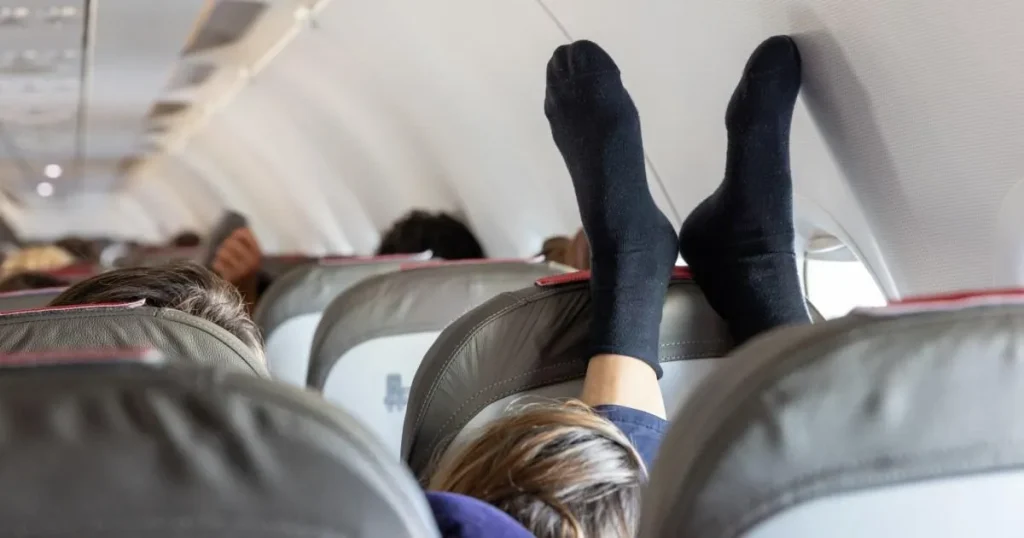
Kris Major, who spent over 17 years serving passengers with the airline, warns that black socks should be avoided on board. For those who habitually remove their footwear, this advice is particularly relevant.
“Black socks are a nuisance and a risk,” Major explains. “During night flights, the cabin lighting is dim, and dark socks merge with the shadows. The problem arises when passengers stretch out and let their feet slip into the aisle. Crew might not notice them until the final moment.”
Such oversight could lead to crew members tripping over passengers, causing disruptions and waking up sleeping travelers. Additionally, there’s a chance of injury from the food and drinks trolley, which might accidentally collide with your feet.
DVT Awareness
While black socks are a concern, another type of sock is gaining popularity among flyers. Compression socks, which apply pressure to the lower legs, are now being worn by many to mitigate the risk of deep vein thrombosis (DVT) during long journeys.
Recent data shows a 140% surge in searches for “compression socks for flying” in the last month. A TikTok video featuring a woman in such socks amassed five million views and 444,000 likes, while another reached 4.1 million views and 430,000 likes.
Experts at the American Society of Haematology highlight that DVT can develop due to prolonged immobility, especially in cramped seating. Flights lasting eight to ten hours or more significantly elevate this risk. Other factors, like taking hormonal contraceptives or having conditions such as cancer or varicose veins, also increase vulnerability.
The NHS notes that travel-related DVT was first documented in 1954, linked to a 54-year-old doctor who developed a clot after a 14-hour flight. This condition, termed “economy class syndrome,” is associated with long-haul travel in confined spaces. Studies suggest that wearing compression socks for flights exceeding four hours can notably reduce the chances of DVT and leg swelling.
Travel Tips
Alongside compression socks, the NHS recommends walking regularly, elevating your legs when seated, and avoiding extended trips for at least two weeks after starting blood-thinner treatment. These measures can help prevent complications from prolonged sitting.
Your exclusive seven-day guide to traveling with confidence from Metro’s resident travel expert, Alice Murphy. This site is protected by reCAPTCHA, and the Google Privacy Policy and Terms of Service apply. Your information will be used in line with our Privacy Policy.
