
Fact check: How can a country actually withdraw from NATO?
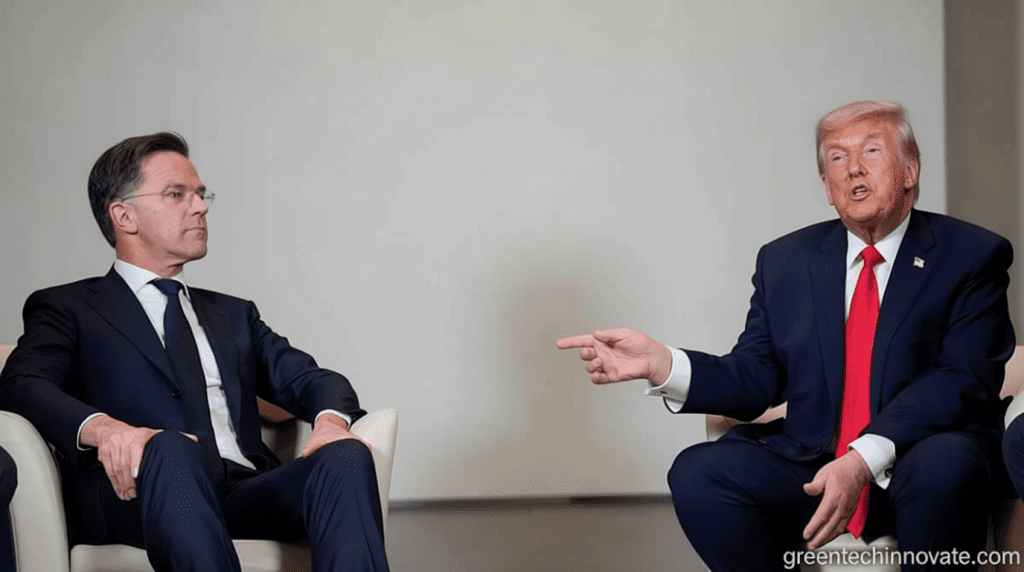
Fact Check: How Can a Country Actually Withdraw from NATO?
Recent weeks have seen US President Donald Trump intensify his criticisms of NATO, particularly as tensions rise in the Middle East. His remarks have included veiled threats of abandoning the alliance, citing European allies’ reluctance to act decisively in support of reopening the Strait of Hormuz. This has sparked widespread debate over the legal mechanisms for exiting NATO, with some questioning whether a country can unilaterally leave the alliance.
The Withdrawal Procedure
According to Article 13 of the 1949 North Atlantic Treaty, a country wishing to leave the alliance must issue a formal notice to the US. After a one-year period, the withdrawal becomes official. While this process seems clear for European nations and Canada, the US presents a different scenario due to its unique role in the treaty structure.
“I would say [it’s] beyond reconsideration,” Trump stated in an interview with The Telegraph. “I was never swayed by NATO. I always knew they were a paper tiger, and Putin knows that too, by the way.”
The US serves as both a member and the depositary of the alliance, meaning it oversees treaty management and handles notifications for withdrawals. However, its domestic legal framework complicates matters. In 2023, President Joe Biden signed an amendment to the National Defense Authorization Act for Fiscal Year 2024, which restricts a president from formally exiting NATO without Senate approval or congressional action.
Legal Hurdles in the US
This legislation prohibits the use of federal funds to support a withdrawal, making it formally challenging for a president to unilaterally leave. Rafael Loss, a policy fellow at the European Council on Foreign Relations, explained to Euronews’ fact-check team, “The law makes it formally very difficult for the president to take the US out of the treaty.” He noted that differing interpretations of legislative powers could allow a scenario like Trump’s to bypass these constraints.
“Trump can’t legally withdraw from NATO without Senate consent,” said Ian Bremmer, founder of Eurasia Group, in a post on X.
Experts suggest that such a decision might eventually reach the Supreme Court, with the administration arguing that the president holds the authority to terminate treaties. Meanwhile, other US statutes, including those on NATO budget contributions and personnel requirements, could also face scrutiny in the event of a withdrawal.
Implications of a Partial Exit
A critical concern is the possibility of the US remaining a nominal member but effectively withdrawing by significantly cutting its financial and military support. This could undermine NATO’s operational cohesion, especially since the alliance relies on collective defense commitments under Article 5. While formal withdrawal would deal a blow to the alliance, some argue that a non-committal stance might offer more transparency and warning to remaining members.
“We can’t exclude the possibility [that the US would] effectively leave the alliance by reducing its contributions,” Loss remarked. “Such a move could fundamentally damage NATO’s functionality, even if the US stays as a formal member.”
Ultimately, the path to withdrawal depends on both international agreements and domestic politics, highlighting the complexity of exiting a treaty that has shaped global security for decades.
