
Who might replace Iran’s supreme leader? There’s no clear successor
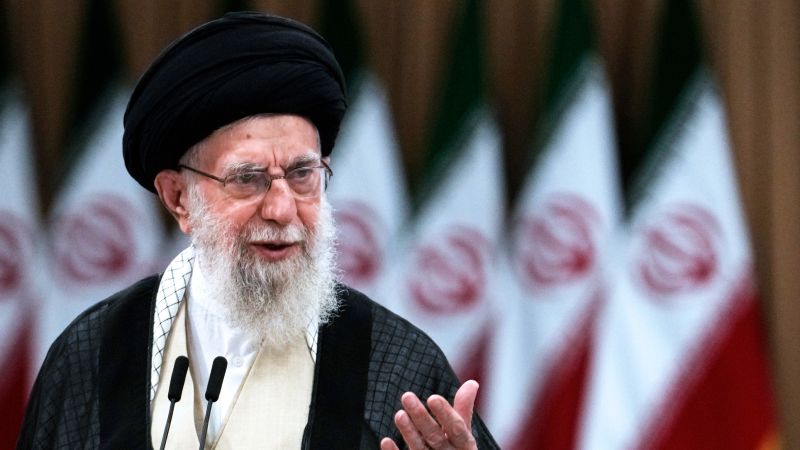
Uncertainty Surrounds Iran’s Next Supreme Leader
Following the assassination of Supreme Leader Ayatollah Ali Khamenei in a coordinated US-Israeli military operation, Iran’s clerical government now grapples with the task of selecting a new leader. The late leader, a long-serving figure who governed with firm authority for almost four decades, left no formally designated heir. Instead, the Assembly of Experts—a council of 88 senior clerics—will hold the responsibility of choosing his successor. This process, which has only occurred once since the Islamic Republic’s founding in 1979, will be critical in maintaining the regime’s stability. The assembly is expected to convene swiftly to evaluate potential candidates before finalizing Khamenei’s replacement.
However, the selection faces hurdles, especially with US President Donald Trump pledging to sustain the joint bombing campaign against Iran. The jurists must adhere to constitutional requirements, which stipulate that the new leader must be male, a cleric, and possess political acumen, moral standing, and allegiance to the Islamic Republic. Reformist clerics advocating for social liberalization and international engagement may be sidelined by the assembly’s interpretation of these criteria.
Potential Contenders for the Role
Mojtaba, Khamenei’s second son, is a key figure with strong connections to the Islamic Revolutionary Guard Corps (IRGC) and its Basij volunteer force. His influence, though indirect, positions him as a viable candidate. Yet, father-to-son transitions are often viewed skeptically within Iran’s clerical hierarchy, particularly in a nation that rose from the overthrow of a monarchy. Mojtaba’s lack of high-ranking clerical roles and prior US sanctions further complicate his prospects.
“Khamenei’s decision to place Mojtaba in strategic positions indicates a deep trust in his administrative capabilities,” noted Alex Vatanka of the Middle East Institute.
Arafi, a well-established cleric with experience in governmental institutions, has served as deputy chairman of the Assembly of Experts and was a confidant to Khamenei. He leads Iran’s seminary system and holds a prominent role in the Guardian Council, which evaluates electoral candidates and legislative proposals. Despite his qualifications, Arafi is not considered a major political figure and has limited ties to the security apparatus.
Mirbagheri, representing the most conservative faction of the clerical establishment, has previously defended the high casualties in Israel’s Gaza conflict, stating that even half of the world’s population dying would be “worth it” to advance divine goals. IranWire, an activist source, highlights his firm opposition to Western influence and his belief in an inevitable clash between believers and infidels. He currently oversees the Islamic Sciences Academy in Qom, a significant religious center.
Khomeini, the grandson of the Islamic Republic’s founder, Ayatollah Ruhollah Khomeini, inherits symbolic authority through his lineage. While he manages the mausoleum of the regime’s architect, he has not held public office and appears to wield limited power over the security elite. His relatively moderate stance compared to peers has also restricted his visibility in recent years.
Bushehri, a senior cleric deeply embedded in succession planning, serves as first deputy chairman of the Assembly of Experts. He was closely associated with Khamenei but remains a low-profile leader domestically. His ties to the IRGC are reportedly weaker than those of other contenders, which could affect his appeal among the regime’s hardline factions.
