
Huge venomous ‘flying’ spiders are beginning to swarm the US
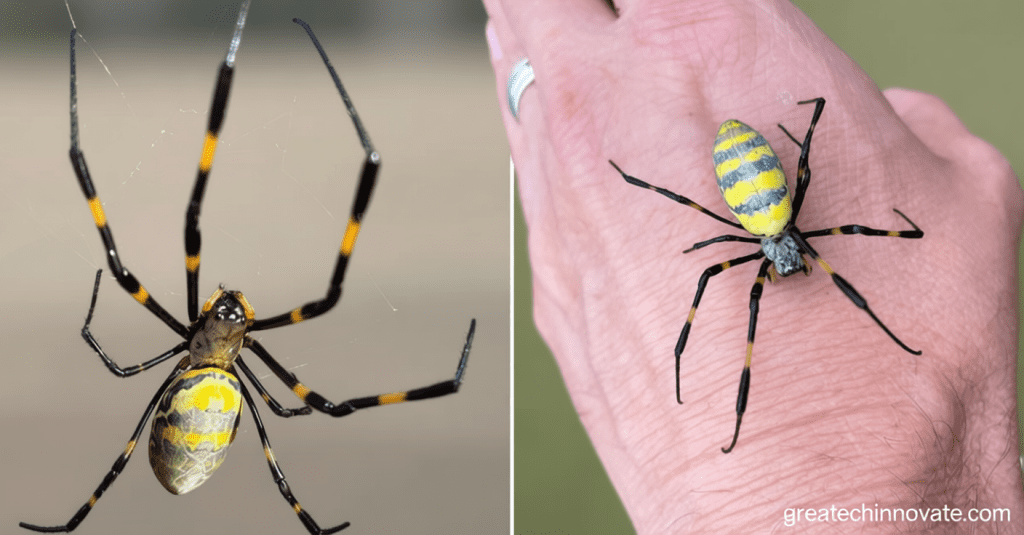
A New Invasion: Giant Venomous Spiders on the Rise in the U.S.
Those with a fear of spiders should take notice. A surge of large, bright yellow arachnids is becoming increasingly noticeable across the United States, marking the start of a new phase in their population growth.
Origins and Spread
The Joro spider, a species not native to North America, hails from regions in East Asia such as Japan, China, South Korea, and Taiwan. Experts suggest it first arrived in the U.S. over a decade ago, likely through shipping containers destined for Georgia.
Since its introduction, the Joro has steadily expanded its range. New reports continue to surface in previously untouched areas each year. With the upcoming breeding cycle, its presence is poised to reach even more states than before.
Female Joro spiders are particularly striking, featuring a vibrant yellow body adorned with blue stripes and red highlights. Males, in contrast, are smaller and more subdued in color, often going unnoticed. This visual contrast has made females the focus of most encounters.
Adaptation and Resilience
Their ability to thrive in unfamiliar environments is partly due to their unique method of dispersal. Known as ballooning, this process involves releasing silk threads into the air, allowing them to drift for several feet. While not true flight, it enables effortless travel across regions.
Researchers at the University of Georgia have studied how these spiders navigate human-dominated areas. Using tuning forks to simulate traffic vibrations, they found that Joros remain unfazed by such disturbances. This adaptability helps them colonize cities without hesitation.
Studies also reveal their hardiness in cold conditions. Over 75% of Joro spiders survive freezing temperatures in lab tests, suggesting they can endure harsh winters better than many other species. This resilience, paired with a high metabolic rate and quick heartbeats, fuels their rapid spread.
Though the Joro is venomous, it poses little threat to humans or domestic animals. Its bite is generally mild, with no recorded fatalities or significant medical cases. As José R. Ramírez-Garofalo, an ecologist on Staten Island, noted in an interview with Daily Mail: “There have been no documented fatalities, nor any notable medically significant bites.”
“Their reluctance to bite, combined with the evidence from scientific literature, means they’re not a danger to us or our pets,” he added. This calm demeanor sets them apart from other spider species, which are often more aggressive in their interactions.
As populations grow, their golden webs are becoming a common sight. These intricate structures can appear overnight and are highly effective at capturing prey. The spiders’ ability to hitch rides on wind or vehicles has accelerated their movement across the country, from Georgia to California.
With a breeding season typically peaking between August and October, the Joro is now established in multiple states, including Georgia, Tennessee, North and South Carolina, Virginia, Maryland, and Pennsylvania. Their presence continues to expand, raising questions about their long-term impact on local ecosystems.
