
The Greens’ Gorton and Denton by-election win was about inclusion — not sectarianism
The Greens’ Gorton and Denton by-election win was about inclusion — not sectarianism
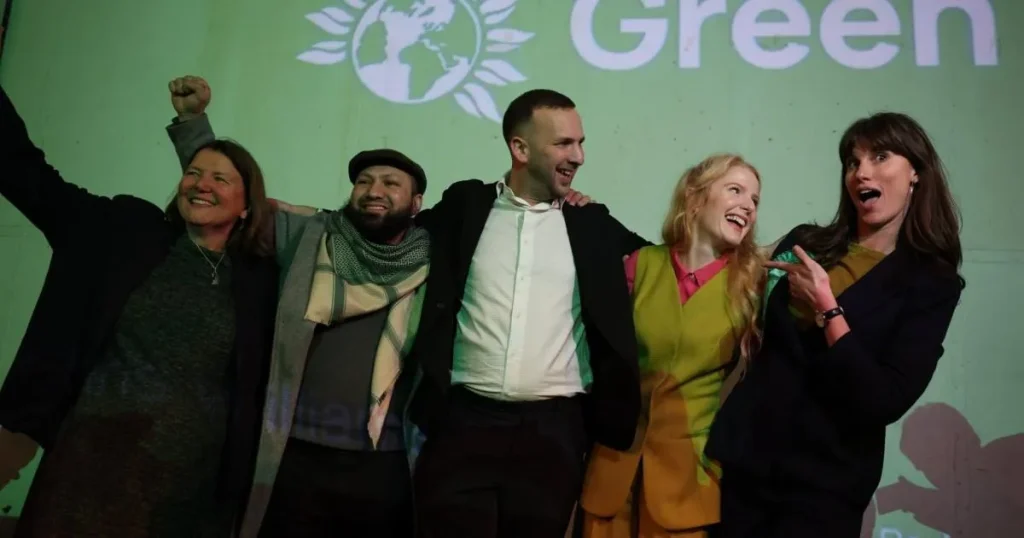
What a historic night! Not just because the Green Party secured its first-ever parliamentary by-election victory in Gorton and Denton, but because they dismantled a once-unshakable Labour majority of over 13,000 votes. For the first time, the North of England saw a Green MP elected, marking a turning point in local representation.
This triumph wasn’t merely a political shift—it was a declaration of a new kind of politics emerging in Britain. One that prioritizes optimism over division, connection over exclusion. By highlighting issues like rent, healthcare, and racial harmony, the Greens demonstrated that inclusivity can be a powerful campaign tool.
Their success hinged not only on strong policies or the dedication of candidate Hannah Spencer but on the way they engaged with voters. In communities where nearly 40% of residents are Muslim and many speak Urdu, Bangla, or Arabic at home, the Greens tailored their message to resonate in familiar tongues. A viral Urdu video became a symbol of this effort, not a gimmick.
“You can’t put a price on that—even as the sore losers in Labour and Reform try to dismiss our inclusive campaign as something sinister.”
Traditionally, UK politics has relied on a monolithic approach, speaking over people in a single language—English. Reform’s defeated candidate, Matt Goodwin, exemplified this, using a Westminster-centric dialect that felt alien to many. But in Gorton and Denton, that old style faltered.
Speaking in the language of the people—whether English, Punjabi, or Somali—became essential. It’s not just about translation; it’s about validation. When voters see their experiences reflected in the conversation, they’re more likely to trust the message. This strategy, rooted in respect, has driven a 26.5% shift toward the Greens.
Their victory isn’t just about representation in Parliament. It’s a testament to the power of inclusion in democracy. When people feel heard, their participation isn’t just tolerated—it’s celebrated. This campaign proved that language can be a bridge, not a barrier.
Some critics, like Matt Goodwin, argue that multilingual outreach divides rather than unites. But this overlooks the broader goal: to invite underrepresented voices into the political fold. As seen in New York, where Zohran Mamdani’s campaign used Arabic, Spanish, and Urdu to connect with diverse communities, this approach fosters belonging.
“Your voice counts. Your concerns matter.” This isn’t just a slogan—it’s a promise. The Greens’ efforts in Gorton and Denton show that politics can be a space for everyone, not just the privileged few. Their win is a step toward a more equitable future.
This site is protected by reCAPTCHA, and the Google Privacy Policy and Terms of Service apply. Your information will be used in line with our Privacy Policy.
