
Will Ukraine help Gulf states down Iranian drones?
Will Ukraine help Gulf states down Iranian drones?
Ukraine has made its readiness known to assist Middle Eastern nations in defending against Iranian drone attacks. However, the country’s military experts remain stationed domestically due to the ongoing war, which limits their ability to deploy abroad immediately. Kyiv is currently engaged in discussions with the United States, European nations, and Iran’s neighboring countries, according to President Volodymyr Zelenskyy, who shared this update on his Telegram channel.
Strategic Conditions for Support
Zelenskyy outlined a condition for Ukraine’s aid: Middle Eastern leaders should leverage their strong ties with Russia to request a one-month ceasefire. Once this pause is secured, the country would dispatch its most skilled drone defense operators to the region. “We can help Israel in the same way,” he added, emphasizing the potential for shared expertise.
“Leaders of the Middle East have great relations with Russians, they can ask Russia to implement a month-long ceasefire,” Zelenskyy told Bloomberg.
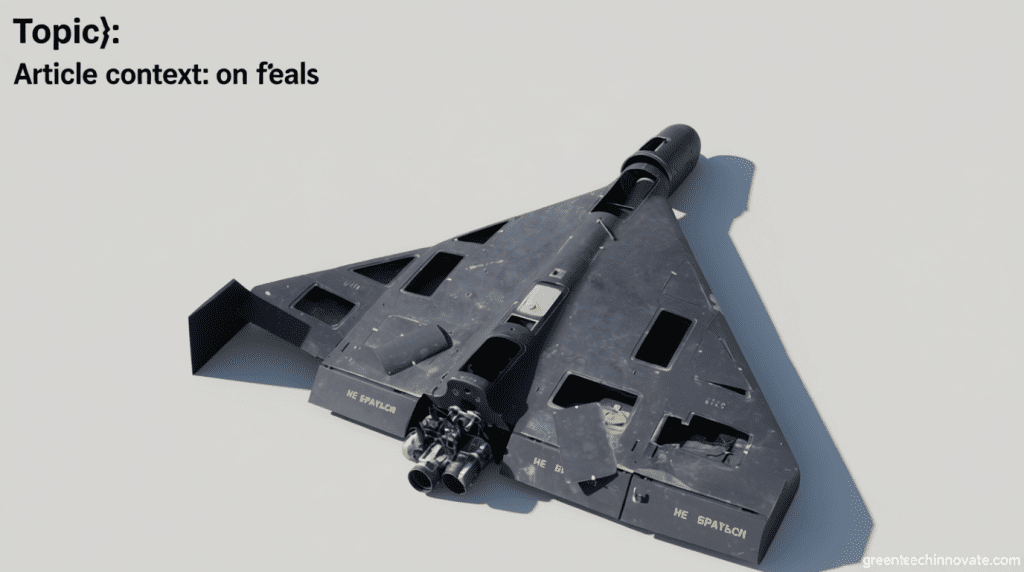
Ukrainian Foreign Minister Andrii Sybiha echoed this sentiment in a Reuters interview, stating that the armed forces could neutralize 90% of Iranian Shahed drones using domestically produced interceptor systems. Sybiha noted that while full deployment isn’t feasible, partial support is possible if Russia halts attacks on Ukraine.
Shifting Gulf Perceptions
Oleksandr Chara, a security analyst from the Center for Defense Strategies (CDS), highlighted how Gulf states initially overlooked Russia’s role in the conflict. He argued that their understanding evolved after Iranian drones, equipped with Russian components, began targeting the region. “Kyiv can offer expertise in downing Iranian drones as well as well-trained operational personnel,” Chara said.
Chara emphasized that Ukraine’s experience in intercepting hundreds of drones nightly provides a unique advantage. He proposed three collaboration models: deploying Ukrainian forces to protect Gulf facilities, training Arab drone operators, and investing Gulf capital in Ukraine’s defense industry to scale interceptor production.
Economic and Technological Exchange
According to Oleh Katkov, a military expert and editor-in-chief of Defense Express, Gulf nations possess ample financial resources but lack critical data and tested algorithms for effective drone defense. “The value lies solely in the fact that we can help build a suitable air defense system based on our own experience,” Katkov told DW.
“This is an extraordinary amount of [useful] information. Outside of Ukraine, no one has any data on how many mobile fire units are deployed, how much ammunition is required, and which equipment actually works and which does not,” Katkov said.
Zelenskyy aims to use Ukraine’s military experience to pressure Russia. He wants Gulf states that benefit from Ukrainian know-how to shift support away from Russia and instead push for an end to the conflict. On March 3, he revealed plans to transfer some aspects of interceptor drone production to Gulf partners, in exchange for American PAC-3 missiles for the Patriot system.
On March 5, the Financial Times reported that the Pentagon and at least one Gulf state were negotiating the purchase of Ukrainian-made interceptors, as noted by an unnamed industry representative. Katkov underscored that the Gulf’s financial power could accelerate drone defense capabilities, making it a logical investment given Iran’s growing threat.
