
EU weighs options as Israel threatens Lebanon offensive
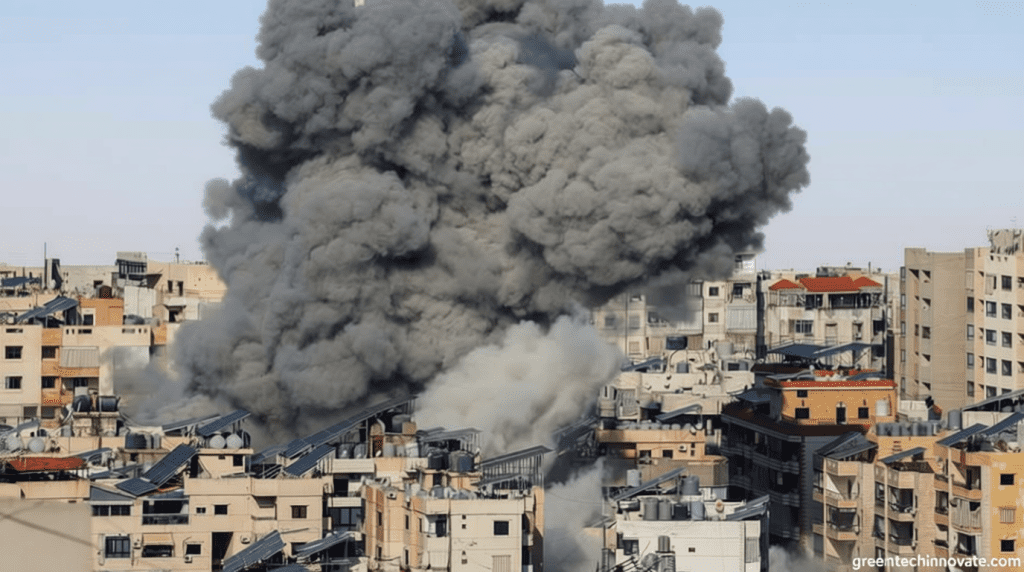
EU Weighs Options as Israel Threatens Lebanon Offensive
The European Union is closely monitoring the situation as Israel prepares to launch a potential ground operation in Lebanon. While EU officials have urged caution, questions remain about their ability to convince Hezbollah to disarm or halt Israeli military actions. Israel’s armed forces confirmed they were conducting “limited and targeted ground operations” in southern Lebanon, targeting the Iran-backed militia and political group. This move has sparked alarm among European leaders, who warned of dire consequences if the conflict escalates.
Humanitarian Concerns and Political Delays
Lebanon faces mounting anxiety over the potential for a larger invasion, with fears that small-scale strikes on Hezbollah positions might spiral into a full-scale war. The country’s parliament recently extended its term for another two years, delaying elections originally set for May. This decision was made amid concerns about organizing a national vote during ongoing hostilities and widespread displacement of civilians.
“A major Israeli ground invasion could lead to severe humanitarian impacts and risk dragging the region into a long-lasting conflict,” stated a joint EU declaration from France, Germany, Italy, the UK, and Canada.
Two weeks prior, Hezbollah retaliated against Israel after the latter bombed Iran, killing its supreme leader, Ayatollah Ali Khamenei. Despite Lebanon’s government urging restraint, the militia launched attacks on Israeli territory. European leaders now focus on persuading Hezbollah to disarm, while also fearing the broader implications of a new war. The ongoing economic turmoil in Lebanon adds to the urgency of their concerns.
Risk of Internal Tensions and Migration Crisis
Analysts highlight that European worries extend beyond regional instability. A larger Israeli offensive could intensify sectarian clashes within Lebanon, as displaced Shiite populations move into Sunni and Christian-dominated areas. This shift may heighten tensions, with some communities viewing Hezbollah supporters as a threat. Julien Barnes-Dacey, director of the Middle East and North Africa program at the European Council on Foreign Relations, noted that EU appeals to Israel have often been diplomatic rather than decisive.
“Europeans have repeatedly asked Israel to avoid escalation, whether in Lebanon, Gaza, or elsewhere. But these efforts rarely translate into strong action,” Barnes-Dacey explained to DW.
Furthermore, the presence of UN peacekeepers in southern Lebanon raises risks. The United Nations Interim Force in Lebanon (UNIFIL) has faced fire during clashes with Hezbollah, despite being stationed in areas vacated by civilians. In a statement dated March 6, UNIFIL condemned the targeting of peacekeepers, emphasizing their role in maintaining stability.
Economic Leverage and Strategic Considerations
Experts suggest that Europe’s primary tool for influencing Israel lies in economic ties. The EU–Israel Association Agreement, which has been a point of contention, could be partially suspended to pressure Israel into halting its military campaign. This strategy was previously considered during the 2025 Gaza conflict, but was not fully enacted. European leaders are now balancing their support for Israel with the fear of a worsening migration crisis, as displaced populations from Lebanon may seek refuge in Europe.
With Lebanon’s economy already struggling, the prospect of a new war adds to the complexity. European powers must decide whether to leverage economic sanctions or continue diplomatic outreach, as the stakes grow higher for both regional and global stability.
