
An Iranian to negotiate with: Who is Mohammad Ghalibaf?
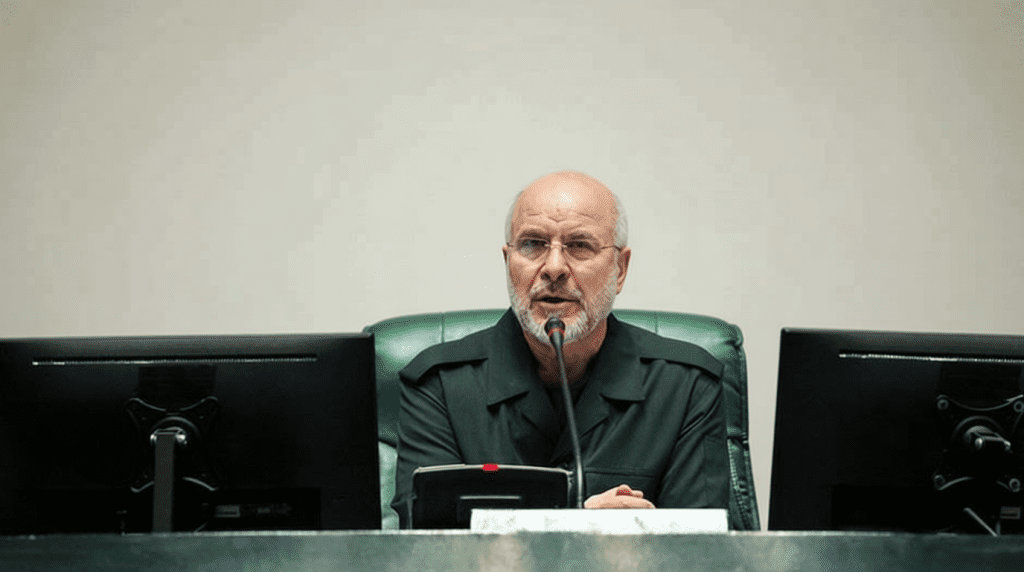
An Iranian to Negotiate With: Who is Mohammad Ghalibaf?
US President Donald Trump announced on Monday that negotiations with Iran were underway, generating optimism for a potential deal to conclude the ongoing conflict. According to Axios, Egypt, Pakistan, and Turkey facilitated discussions between the US and Iran on Sunday, aiming to schedule a call with Mohammad Bagher Ghalibaf, the parliament speaker, and his team for Monday. However, Tehran’s leadership dismissed these efforts, with Ghalibaf branding the reports as
“fake news” designed to manipulate financial and oil markets.
The Wall Street Journal reported that thousands of US Marines are set to deploy to the Middle East this Friday to safeguard the Strait of Hormuz. Meanwhile, Ghalibaf, a 64-year-old former commander of the Islamic Revolutionary Guard Corps (IRGC) and pilot, has built a reputation as a key political figure. His academic background includes a doctorate in political geography, with a dissertation examining the interplay between space, power, the state, and security policy.
From War to Leadership
Ghalibaf’s career began during the Iran-Iraq war, spanning 1980 to 1988, where he rose through the ranks of the IRGC. Post-war, he led the Khatam al-Anbiya, the IRGC’s engineering division, which focused on rebuilding infrastructure. Today, this organization serves as an economic arm, managing hundreds of subsidiaries and subcontractors. In 1997, Iran’s Supreme Leader, Ayatollah Ali Khamenei, appointed him as commander of the IRGC air force.
Hardline Stance and Controversies
Ghalibaf played a pivotal role in crushing the 1999 student protests, alongside military officer Qassem Soleimani. Together, they issued a letter to then-president Mohammad Khatami, warning against “tolerating” the demonstrations. In interviews, he claimed to have personally subdued protesters by striking them with sticks while riding a motorcycle through the streets. His political ambition led him to run for president three times, though he lost in 2005 to Mahmoud Ahmadinejad and again in 2013 to Hassan Rouhani.
Corruption Allegations
During his tenure as Tehran’s mayor, from 2005 to 2017, Iranian journalists noted that government-owned assets were sold for significantly less than their market value. Some properties were reportedly auctioned at half their actual price, with buyers including officials and members of Ghalibaf’s family. Additionally, he is accused of funneling funds from the city treasury to his wife’s foundation, which supports single mothers and female primary breadwinners. The foundation’s operations remain opaque, and investigations into his corruption have stalled due to his ties to Khamenei. Journalists who raised concerns were imprisoned.
Family in the Spotlight
Recent attention has also focused on Ghalibaf’s family. His son, Eshaq, sought permanent residency in Canada since 2019, even filing a lawsuit against immigration authorities over delays. This sparked public debate, as it seemed to contradict his father’s anti-Western policies. Eshaq’s application was ultimately denied. Meanwhile, his daughter and family’s trip to Turkey in 2022, during which they returned from Istanbul with “newborn baby kits,” drew sharp criticism amid Iran’s economic struggles and inflationary pressures.
Ghalibaf is regarded as a powerful figure within the IRGC. His survival of US and Israeli attacks has raised questions about his strategic importance. As the political landscape shifts, analysts speculate on his potential role in future negotiations or conflicts.
