
Climate Change Solutions in Daily Life: Easy Actions That Work
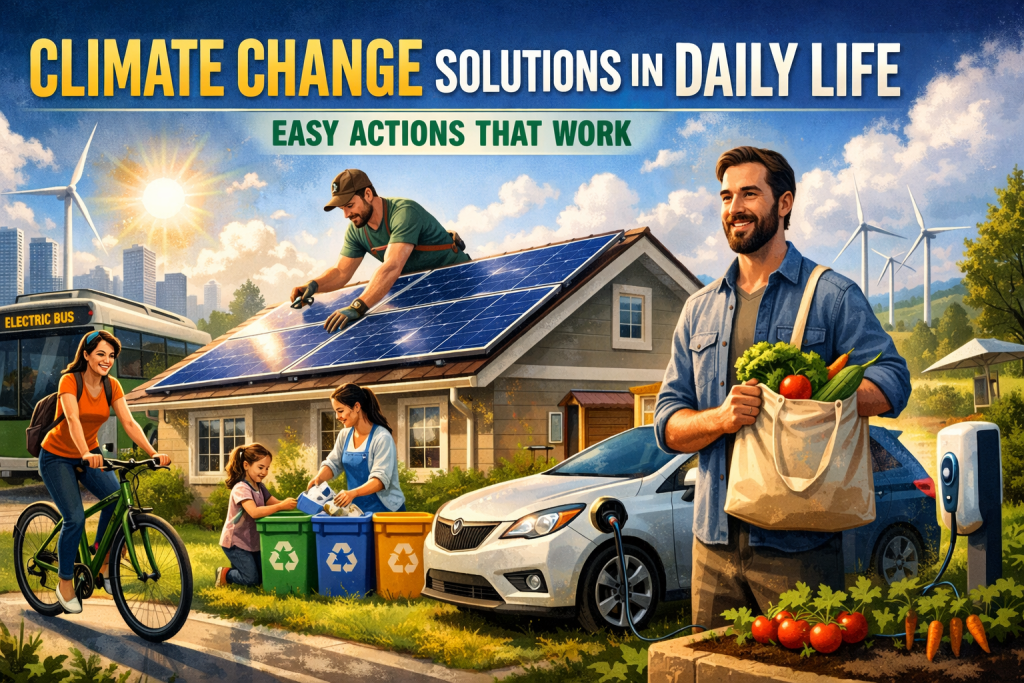
Climate change can feel like a problem too big for any one person to influence, but that belief is outdated. The reality is that a large portion of global emissions comes from everyday systems—electricity, transport, food, and consumption—where millions of small decisions add up into measurable change. Climate change solutions in daily life are not about perfection or lifestyle extremes. They are about consistently choosing actions that reduce emissions, cut waste, and shift demand toward cleaner options.
The most effective daily solutions share one trait: they reduce fossil fuel use directly or indirectly. That includes lowering household energy needs, driving less, eating with a lower carbon footprint, and buying fewer high-emission products. When practiced at scale, these actions reduce emissions now while also pushing markets and governments toward faster structural changes.
Start With Energy: The Fastest Household Emissions Cuts
For most people, home energy is one of the easiest places to reduce carbon without sacrificing comfort. Electricity and heating are often powered by fossil fuels, meaning every kilowatt-hour saved reduces emissions immediately. The key is to focus on actions that reduce total energy demand rather than only changing devices.
The simplest high-impact habit is managing heating and cooling. Setting your thermostat a few degrees lower in winter and a few degrees higher in summer can reduce energy use significantly. Using fans, sealing drafts, and closing curtains at the right time helps maintain temperature with less power. These are low-effort climate change solutions in daily life that work in almost every climate.
Next, focus on appliances and lighting. Switching to LED bulbs, unplugging idle chargers, and using power strips to reduce standby power are small steps that add up over time. Running laundry with cold water, air-drying when possible, and using eco modes on appliances also reduce energy use without changing your routine. These changes are reliable because they reduce energy demand rather than relying on offsets.
If you can make one upgrade, prioritize insulation and efficient heating or cooling. Better insulation reduces energy needs for decades, making it one of the most durable household actions. Even renters can improve efficiency with weatherstripping, thermal curtains, and draft stoppers. Efficiency is often the highest return-on-effort category for daily climate action.
Smarter Transportation: Cut Emissions Without “Giving Up Driving”
Transportation is one of the largest personal sources of greenhouse gas emissions, especially in car-dependent cities. The goal is not to eliminate driving overnight. The goal is to reduce the number of high-emission miles and make the remaining miles cleaner.
The most effective shift is replacing short car trips. Many emissions come from frequent short drives where engines run inefficiently. Walking, cycling, or taking public transit for errands reduces emissions more than people expect. Even switching just two or three weekly trips makes a meaningful difference across a year.
Carpooling and trip planning also matter. Combining errands into one route, avoiding peak congestion, and using navigation to reduce stop-and-go driving lowers fuel use. Keeping tires properly inflated and avoiding aggressive acceleration can improve efficiency without any lifestyle sacrifice. These are practical climate change solutions in daily life because they require no new purchases.
If you are choosing your next vehicle, consider the full emissions picture. Electric vehicles can reduce lifetime emissions substantially, especially in regions with cleaner electricity. However, the climate benefit is highest when paired with reduced driving and long vehicle lifetimes. Keeping a reliable car longer, maintaining it well, and avoiding unnecessary upgrades is often better than replacing it early.
For people who fly, aviation is a major emissions source. The most effective daily-life approach is to fly less, choose direct flights, and combine trips when possible. Offsets can help, but they should not be treated as a substitute for reducing flight frequency.
Food Choices That Reduce Carbon Without Extreme Diets
Food systems contribute a significant share of global emissions through livestock, fertilizer use, land conversion, and transportation. The good news is that food-related emissions can be reduced without adopting an extreme diet. The most impactful strategy is shifting the balance of your meals rather than aiming for perfect rules.
Reducing beef and lamb is one of the highest-impact food actions. These meats have much higher emissions due to methane and land use. Replacing a few beef meals per week with chicken, fish, eggs, legumes, or tofu can reduce your food footprint substantially. This is one of the clearest climate change solutions in daily life because it targets a high-emission category.
Food waste is another major opportunity. When food is thrown away, the emissions from production, packaging, and transport were created for nothing. Planning meals, storing food properly, and using leftovers reduces waste with no downside. Composting helps too, but the bigger win is preventing waste in the first place.
Buying seasonal and local can help, but it is not always the top priority. In many cases, production methods matter more than distance. For example, air-freighted foods and heavily heated greenhouses can carry high emissions even if the food is “local.” A simple rule is to prioritize whole foods, reduce red meat, and waste less.
If you want a practical routine, build a default low-carbon meal set. That could mean two or three plant-forward meals you genuinely enjoy and can repeat. Consistency beats novelty. Sustainable eating works when it becomes normal, not when it feels like punishment.
Buy Less, Buy Better: Consumption as a Climate Lever
Many emissions are “hidden” inside products: manufacturing, shipping, packaging, and disposal. Fast fashion, frequent electronics upgrades, and disposable household items create emissions long before you use them. The most effective solution is reducing unnecessary purchases and extending the life of what you already own.
The first step is slowing down buying decisions. Waiting 24–72 hours before purchasing non-essential items reduces impulse buying and prevents waste. This habit alone can lower emissions because it reduces demand for high-carbon manufacturing. It also saves money, which makes it a sustainable habit long-term.
Second, prioritize durability and repair. Buying one high-quality item that lasts five years is usually lower-carbon than buying five cheap items that break quickly. Repairing clothing, shoes, and appliances reduces emissions because manufacturing replacement products is often the biggest part of the footprint. This is a strong example of climate change solutions in daily life that also improves financial resilience.
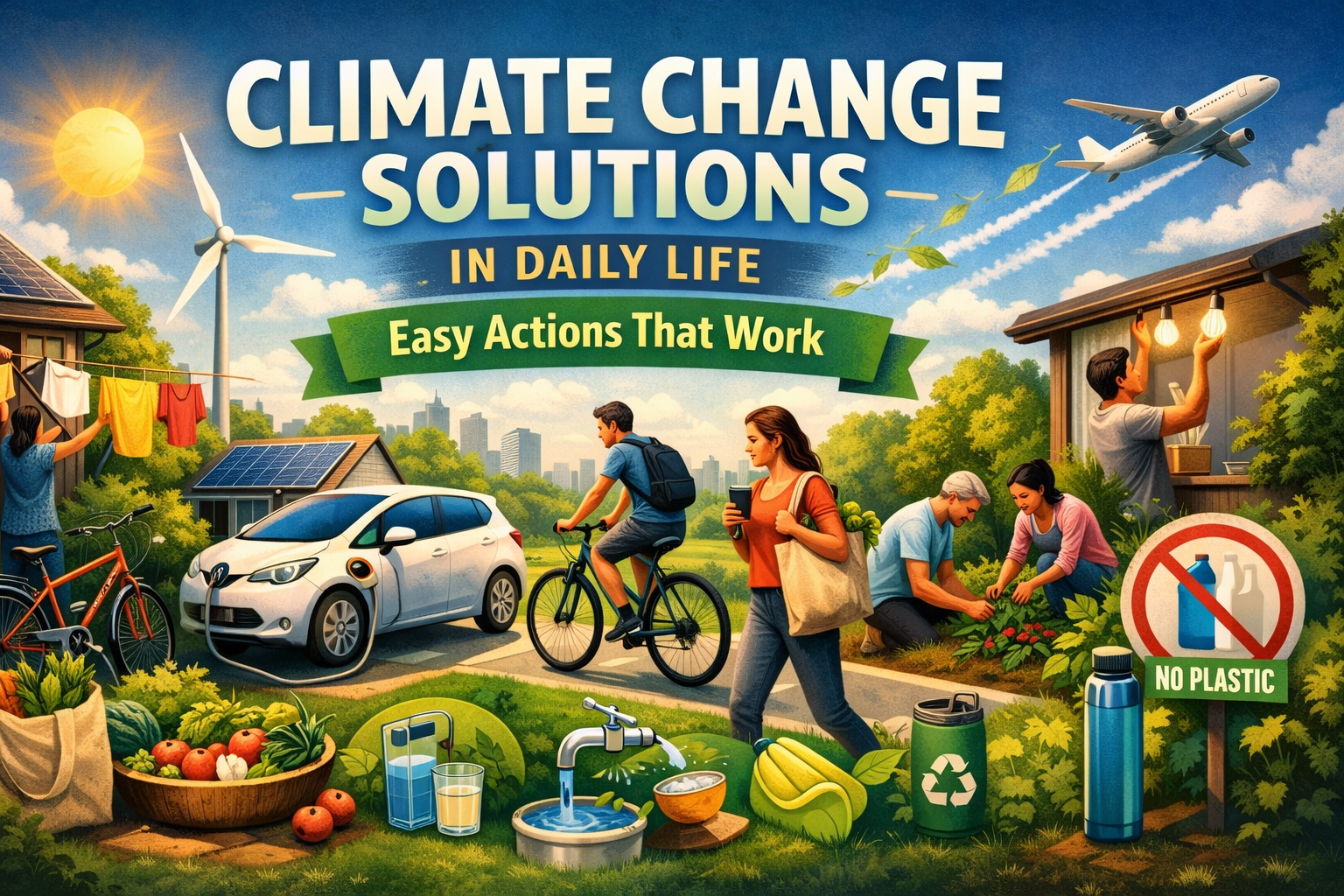
Third, rethink “new.” Secondhand items, refurbished electronics, and shared tools reduce emissions by maximizing the value of existing products. Many households buy equipment that is used only a few times per year. Borrowing, renting, or sharing tools is a low-friction solution that avoids unnecessary production.
Finally, reduce packaging waste. Using refillable containers, buying in bulk when practical, and choosing products with minimal packaging reduces both emissions and plastic pollution. Packaging is not the largest emissions category, but it is one of the easiest to improve daily.
Water, Waste, and Micro-Habits That Add Up
Not every climate action has the same impact, but smaller actions still matter when they support larger habits. Water and waste management are important because they connect to energy use, infrastructure, and long-term environmental health.
Hot water is a hidden energy source. Shorter showers, efficient showerheads, and washing clothes with cold water reduce energy use significantly. Fixing leaks matters too, especially in regions where water treatment and pumping require large amounts of electricity. These are daily actions that produce consistent savings over time.
Waste reduction also affects emissions. Recycling helps, but it is not a magic solution. The most effective approach is reducing waste at the source: using reusable bags, bottles, and containers, and choosing products designed for reuse. When waste is reduced, less energy is spent on manufacturing, transport, and disposal.
One of the best micro-habits is tracking your most common waste categories for a week. Most people discover they repeat the same waste patterns: takeout packaging, bottled drinks, disposable wipes, or frequent small purchases. Fixing one repeated pattern is more impactful than chasing dozens of tiny improvements.
Micro-habits are most useful when they reinforce identity and consistency. Climate change solutions in daily life work best when they become automatic and easy. The goal is to build routines that continue for years, not short bursts of effort.
Community and Money: The Two Daily Levers People Ignore
Many people focus only on personal habits, but the biggest changes happen when daily choices influence systems. Two of the strongest system levers are community behavior and money. Both can be applied without needing political power or public platforms.
Community influence is simple: normalize low-carbon choices. When people around you see that public transit, plant-forward meals, and repair are normal, those behaviors spread. You do not need to lecture anyone. The most effective social influence is visible routine.
Money is another powerful lever. Where you bank, what you invest in, and what companies you support affects emissions through capital flows. While personal investments are not available to everyone, basic choices still matter: supporting companies with credible sustainability practices, avoiding wasteful brands, and choosing services that reduce emissions. These are not perfect solutions, but they shift demand.
Even in daily life, voting with your wallet can accelerate change. When many consumers choose efficient appliances, lower-carbon foods, and durable products, markets respond. Over time, this shifts product availability and pricing. This is how daily action scales into structural change.
Conclusion
Climate change solutions in daily life are most effective when they focus on the biggest emission sources: home energy, transportation, food, and consumption. The goal is not to do everything, but to do the highest-impact actions consistently. When daily habits reduce fossil fuel use and waste, they lower emissions immediately while also pushing markets and communities toward cleaner systems.
FAQ
Q: What are the most effective climate change solutions in daily life? A: The highest-impact actions are reducing home energy use, driving less, eating less beef, and buying fewer new products.
Q: Do small daily actions really matter for climate change? A: Yes, because millions of people making consistent changes reduces emissions and shifts demand toward low-carbon options.
Q: Is recycling enough to help the climate? A: No, recycling helps but reducing consumption and waste is usually more impactful than recycling after the fact.
Q: Do I need to go fully vegan to reduce my carbon footprint? A: No, reducing beef and lamb and eating more plant-based meals a few times per week can make a major difference.
Q: What is the easiest change to start with today? A: Reducing heating and cooling energy, cutting short car trips, and preventing food waste are among the easiest high-impact starts.
