
You can now legally request revenge and deepfake porn to be taken down. Here’s how
Legal Framework for Removing Non-Consensual Intimate Content Now in Effect
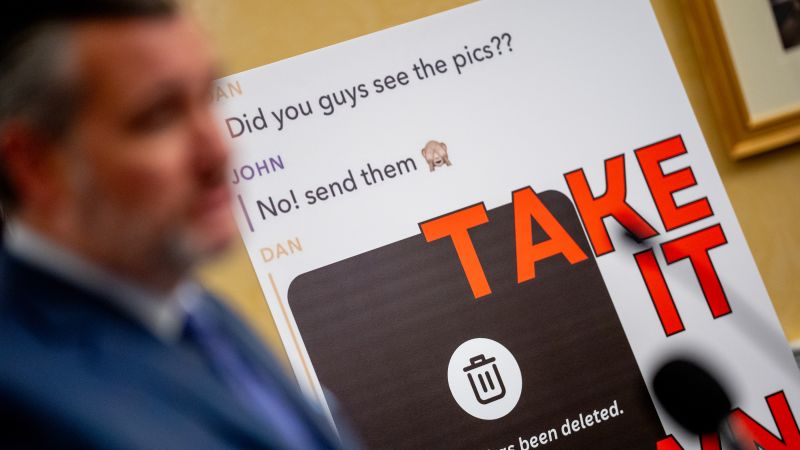
You can now legally request revenge – As of Tuesday, a significant shift in digital privacy law has taken place, mandating that online platforms swiftly remove non-consensual intimate images within 48 hours of user reports. This requirement is enforced by the Take It Down Act, a federal legislation signed into law by President Donald Trump last year. The act criminalizes the dissemination of intimate visual depictions—both real and artificially generated—without the subject’s consent. With its full implementation, the law aims to hold technology companies accountable for content that harms individuals through exposure or harassment.
Key Provisions and Enforcement
The Take It Down Act outlines clear responsibilities for platforms that host or distribute such content. For instance, any business that primarily serves as a user-generated content forum or regularly shares intimate material without consent must establish a streamlined process for removal. Failure to comply could result in civil penalties of $53,088 for each violation. This penalty structure underscores the law’s intent to penalize platforms that neglect to address these issues promptly.
The Federal Trade Commission (FTC), tasked with enforcing the law, has already initiated outreach to major platforms. Last week, the agency sent compliance alerts to companies like Meta, Snapchat, TikTok, and X, as well as gaming platforms and dating apps such as Bumble, Match Group, Reddit, Discord, Pinterest, and tech giants Amazon, Alphabet, and Microsoft. These entities are now expected to update their systems to ensure rapid action when users report content linked to non-consensual intimate imagery.
“Tech companies can no longer turn a blind eye to these horrifying abuses on social media,” said Democratic Senator Amy Klobuchar of Minnesota, who co-authored the bill with Republican Senator Ted Cruz of Texas. The law marks a pivotal moment in the fight against revenge porn and deepfake content, which have become increasingly prevalent in the digital age.
While the 48-hour removal requirement is newly active, another provision of the law has been in effect since its passage. This part targets individuals who post non-consensual intimate content, allowing them to face fines or up to two years of imprisonment. The dual approach—punishing both platforms and individuals—creates a comprehensive framework to address the issue from multiple angles.
How Users Can Submit Removal Requests
Victims of non-consensual intimate content now have more straightforward tools to request its removal. The FTC emphasizes that platforms must provide clear, accessible instructions for users to submit these reports. For example, Instagram users can report an image by tapping the three dots in the upper right corner and selecting the “Report” option. A notice at the bottom of the report page includes a link for detailed submissions. Similarly, TikTok users can use the arrow button on the lower right side of the screen to report posts under the “Sexual content” category, which directs them to a specialized form for non-consensual imagery.
Even Walmart has integrated reporting mechanisms for intimate content, as users can upload images featuring products sold on its platform. This expansion highlights the law’s broad reach, encompassing not just social media but also e-commerce and other digital spaces where such content might appear. The National Center for Missing & Exploited Children also offers a “one-step” service to help remove nude or sexually explicit content of minors, simplifying the process for families and advocates.
Deepfake Porn and Artificially Generated Content
A critical aspect of the Take It Down Act is its inclusion of deepfake porn—artificially generated intimate imagery that mimics real people. This provision ensures that both real and synthetic content fall under the same legal framework, preventing loopholes that might allow harmful material to persist. The law defines “nonconsensual intimate visual depictions” broadly, meaning that even AI-created videos or images that portray someone in a compromising situation without their permission are subject to removal.
For adults, the law also supports organizations like Stop Non-Consensual Intimate Imagery, which assists victims by providing a platform to submit images for analysis. Participating companies can then review these submissions and take action if the content violates the Take It Down Act. The process involves translating images into digital hashes, which function similarly to unique identifiers, enabling efficient matching and removal across platforms.
FTC Resources and Compliance Efforts
To aid enforcement, the FTC has launched TakeItDown.ftc.gov, a dedicated website for users to report platforms that fail to remove intimate content or hinder the reporting process. This resource empowers victims to take direct action against companies that do not meet the law’s standards. Additionally, the FTC has warned platforms about their obligations, ensuring they are prepared to handle the new compliance requirements.
The law’s effectiveness hinges on platforms’ ability to adapt quickly. For instance, the 48-hour window necessitates automated systems or dedicated teams to identify and delete reported content. While some platforms already have reporting features, the Take It Down Act standardizes these processes across the industry, reducing variability and ensuring consistency. This uniformity is crucial for victims who may not have the technical expertise to navigate complex reporting systems.
Before the act’s passage, victims often relied on fragmented state laws and copyright rules to request removals. These processes varied widely, sometimes leaving users without clear recourse. The Take It Down Act now centralizes these efforts under federal jurisdiction, providing a more reliable and accessible mechanism for accountability. This change is particularly vital as artificial intelligence advances, enabling the rapid creation of convincing deepfake content that can be shared globally within seconds.
Senator Ted Cruz highlighted the law’s importance in addressing the growing role of AI in generating intimate material. In a statement, he noted, “As AI advances, technology needs to be used responsibly and not as a tool for abuse, harassment, or exploitation.” The act ensures that platforms cannot simply ignore the potential for AI-generated content to harm individuals, reinforcing their responsibility to act swiftly and transparently.
The Take It Down Act is hailed as the first federal law to directly tackle non-consensual intimate imagery. It provides a clear legal pathway for victims to reclaim their privacy and dignity, while also imposing strict deadlines on tech companies. By standardizing the removal process and expanding its scope to include deepfakes, the law addresses a critical gap in digital rights protection. As the provisions take full effect, the hope is that online platforms will become more proactive in combating these harmful forms of content, ensuring a safer digital environment for all users.
For users unfamiliar with the reporting process, the law offers guidance through step-by-step instructions provided by platforms. These tools, while varying by service, aim to simplify the submission of removal requests. The integration of such features across major platforms like Instagram, TikTok, and Walmart demonstrates the law’s broad application and its potential to reduce the spread of non-consensual imagery. Additionally, the support from organizations like the National Center for Missing & Exploited Children and Stop Non-Consensual Intimate Imagery ensures that victims have access to resources tailored to their specific needs.
With the deadline for platforms to establish their removal processes now passed, the focus shifts to implementation. The FTC’s compliance alerts and the availability of TakeItDown.ftc.gov signal the beginning of a new era in digital content regulation. While challenges remain, the law sets a precedent for holding tech companies accountable and equipping victims with the tools to protect themselves from online abuse.
