
What we know about the latest Ebola outbreak after WHO declares global health emergency
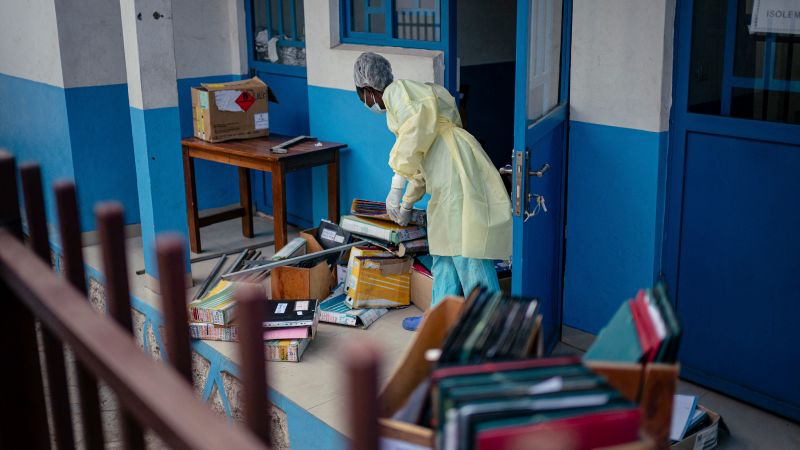
What We Know About the Latest Ebola Outbreak After WHO Declares Global Health Emergency
A Global Health Alert Triggered by the Bundibugyo Virus
What we know about the latest – The World Health Organization (WHO) has declared the ongoing Ebola outbreak in the Democratic Republic of Congo (DRC) and Uganda a “public health emergency of international concern,” signaling a heightened global response. This classification is based on the spread of the Bundibugyo virus, one of several Orthoebolaviruses capable of causing the deadly disease. While the situation has not yet reached the threshold of a “pandemic emergency,” the organization warns that the rapid increase in cases—along with limited containment efforts—has raised alarms.
The current epidemic is unfolding in the DRC’s remote northeastern Ituri province, a region bordering Uganda. As of Saturday, health authorities reported at least 80 suspected deaths, eight confirmed cases, and 246 suspected infections. However, the situation remains dynamic, with additional cases emerging in unexpected locations. In the capital, Kinshasa, a case was initially confirmed but later refuted after retesting revealed the individual was not infected with the Bundibugyo virus. This correction highlights the complexity of tracking the outbreak.
Meanwhile, in the eastern DRC city of Goma, a rebel group affiliated with the Rwanda-backed AFC/M23 coalition confirmed at least one Ebola case. The group seized control of the city in a swift military operation last year, and this new development suggests the virus is spreading beyond traditional hotspots. In Uganda, two confirmed cases have been identified in the capital, Kampala, with one resulting in a fatality. The patients, who had no direct connection to each other, both traveled from the DRC, underscoring the cross-border risk.
Understanding the Spread of the Bundibugyo Strain
Ebola, a severe and frequently fatal illness, spreads through direct contact with bodily fluids from an infected person or contaminated surfaces. Symptoms typically begin with fever, fatigue, and muscle aches, progressing to vomiting, diarrhea, and abdominal pain. In advanced stages, internal and external bleeding may occur, which can be life-threatening. The virus, however, is not airborne and requires close contact for transmission.
While six distinct Ebola virus species have been identified, only three—Ebola, Sudan, and Bundibugyo—have been responsible for the majority of large outbreaks. The Bundibugyo strain, first detected in the DRC in 2012 and later in Uganda between 2007 and 2008, is now driving the latest crisis. According to the WHO, this strain has a fatality rate estimated between 25% and 40%, lower than the average of 50% seen in other outbreaks. Despite this, the pace of new infections has been alarming, prompting urgent action.
“The number of cases and deaths we are witnessing in such a short time, combined with the virus spreading across multiple health zones and crossing into Uganda, is extremely concerning,” said Trish Newport, an emergency program manager at Doctors Without Borders (MSF). The organization has begun scaling up its response in Ituri province, where communities already face challenges accessing healthcare and enduring persistent insecurity. “Without swift intervention, the outbreak could escalate rapidly,” she added.
A Historical Context of DRC’s Ebola Outbreaks
This marks the 17th Ebola outbreak in the DRC since the first recorded case in 1976. The Bundibugyo virus has reemerged as a key player in this latest episode, making it the third instance of the strain being detected in the region. Previous outbreaks involving the Bundibugyo strain were contained, but the current situation has introduced new variables. Last year, an Ebola outbreak in Kasai province claimed 45 lives, according to the U.S. Centers for Disease Control and Prevention (CDC). The DRC has historically been the epicenter of such outbreaks, with the virus having a strong foothold in the region.
Health experts emphasize that while the Bundibugyo strain is less deadly than some others, it poses a significant threat due to its potential for rapid transmission. Laboratory studies on nonhuman primates indicate that even a single viral particle can lead to a fatal infection, highlighting the virus’s potency. The absence of an approved vaccine or treatment for this strain adds to the urgency of containing the outbreak. “We are seeing the virus spread faster than anticipated, which is a major concern,” said a spokesperson for the DRC’s health ministry.
Global Concerns and Regional Challenges
With the outbreak gaining momentum, global health officials are closely monitoring its trajectory. The WHO’s decision to classify the situation as an international emergency reflects the potential for the virus to spread beyond the DRC and Uganda. However, the organization has not ruled out the possibility of the outbreak escalating further, especially in areas with weak healthcare infrastructure and limited resources.
Uganda’s media office recently reported the return of a Congolese man’s body to the DRC after he died in Kampala. The individual, who had no known contact with other cases, is being treated in a hospital, according to local officials. While these developments provide some clarity, they also underscore the interconnectedness of the two nations’ health systems. “There is no cause for alarm,” the office posted on X, but added that vigilance is necessary to prevent the outbreak from gaining traction in new regions.
The spread of the Bundibugyo virus has raised questions about the effectiveness of current containment strategies. While the disease is not as contagious as the Zaire strain, which caused the 2014-2016 West African epidemic, its ability to transmit through bodily fluids and contaminated materials remains a critical risk. Health workers in Ituri province are on high alert, working to isolate cases and educate communities about the virus’s transmission. “Every new case is a reminder of how quickly this virus can spread,” said a WHO representative, emphasizing the need for coordinated efforts between the DRC and Uganda.
As the situation evolves, the WHO and local health authorities are prioritizing rapid response measures, including enhanced surveillance, public awareness campaigns, and the distribution of protective equipment. The lack of a specific vaccine for the Bundibugyo strain means that prevention and early detection will be key. “The challenge is not just controlling the virus, but also addressing the underlying factors that make communities vulnerable,” noted MSF, which continues to deploy medical teams to support affected regions.
With the outbreak now spanning two countries and showing signs of persistence, the global health community is closely watching. The WHO’s emergency declaration serves as a call to action, urging governments and organizations to strengthen their preparedness and response capabilities. The coming weeks will determine whether the outbreak can be contained or if it will evolve into a larger, more widespread crisis.
