
Severe storms with intense tornadoes expected to continue in Central US through Monday
Severe Storms and Tornado Threats Intensify Across Central US
Severe storms with intense tornadoes expected – May started with a subdued weather pattern, but recent atmospheric shifts are signaling a dramatic change. A series of intense thunderstorms, capable of producing significant tornadoes, is now set to sweep across the central United States, with activity expected to persist through Tuesday. This outbreak carries the potential for EF3 or stronger tornadoes, along with damaging hail, high winds, and heavy rainfall, all of which are typical features of the region’s most hazardous spring storms.
A Shift in Weather Patterns
The prolonged calm in early May was due to a jet stream configuration that inhibited widespread severe weather. However, this pattern is dissolving, allowing for a surge in storm activity. The transition from quiet to active conditions marks a critical phase in the spring season, where the central United States often experiences its most volatile weather. Forecasters anticipate that this week’s storms will match or exceed the intensity of previous outbreaks, making it a key period to monitor.
Sunday: Tornado Emergencies and Destructive Storms
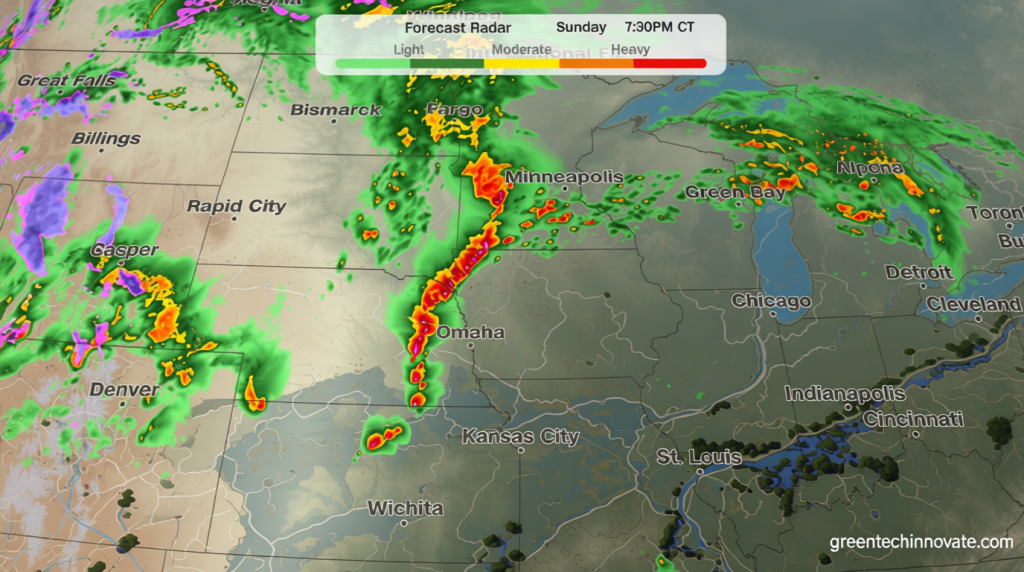
Sunday afternoon saw rapid development of severe thunderstorms across Nebraska and southeastern South Dakota, creating a high-risk environment. A Level 3 out of 5 threat for severe storms has been issued across much of the heartland, highlighting the potential for dangerous conditions. Four tornado watches have been activated, covering 3 million people in eastern Nebraska, southeast South Dakota, much of Kansas, and parts of Iowa and Minnesota. Cities like Omaha, Lincoln, and Sioux City are under particular alert.
“A tornado emergency — the most significant kind of tornado warning — was issued for a storm near Hebron, Nebraska, around 6:30 p.m. CT,” stated the National Weather Service. These alerts are reserved for situations where forecasters are certain a large, damaging tornado is imminent.
As the storms intensified, a confirmed tornado struck north of Grand Island, Nebraska, in the central part of the state. The morning’s weather conditions, including cloud cover, will influence the afternoon’s storm dynamics, determining where the highest tornado risk materializes. While the immediate threat is active, the focus will shift toward damaging winds by late evening.
Monday: Surge in Severe Storm Activity
Monday is poised to bring even more severe thunderstorms, driven by the interaction of a powerful jet stream surge with abundant moisture in the Plains. The Storm Prediction Center has issued a rare Level 4 of 5 risk for tornadoes in eastern Kansas and Nebraska, underscoring the severity of the situation. Supercells forming in the afternoon are likely to generate tornadoes rated EF2 or higher, along with very large hail that could reach baseball-sized proportions.
While the primary danger remains tornadoes, widespread damaging winds are expected to emerge by late evening. The system’s lingering effects will mean that some tornadoes may still occur into the overnight hours. Uncertainty persists about how morning storms and cloud formations will impact afternoon conditions, which could affect the distribution of tornado threats. Areas where Sunday night storms persist into the morning might see reduced energy for the subsequent storm developments.
Tuesday: Transition to New Threats
By Tuesday, the storm system will begin to move eastward, with ongoing thunderstorms expected across the central US. The risk of severe weather will be reduced to a Level 2 of 5, but the potential for strong to severe storms will increase again in the afternoon. As a cold front becomes the dominant trigger, the focus will shift from tornadoes to wind and hail, with gusts potentially exceeding 80 mph.
Meanwhile, the same weather system that brought tornadoes to the Central Plains is contributing to dry and windy conditions in the Southern High Plains. This has led to a Level 3 of 3 fire threat in regions from southwestern Kansas to the Texas Panhandle and northeastern New Mexico. The National Weather Service warns that sustained winds of 25–30 mph, combined with gusts up to 50 mph and low relative humidity (under 10%), will create ideal conditions for wildfires to spread rapidly.
Wildfire Risk in the Southwest
The weather pattern also raises concerns for the Southwest, where fire risk is climbing. Significant dryness and strong winds are expected from Arizona to southwest Kansas, creating a tinderbox environment. The fire threat is highest in the Southern High Plains, with a Level 2 of 3 critical threat covering much of New Mexico. This region, already experiencing prolonged drought, could see wildfires escalate quickly if any ignition occurs.
Experts suggest that the system’s dry air and gusty winds will exacerbate existing fire risks. Fuel sources, such as grasses and shrubs, are particularly vulnerable due to the low humidity. Any spark from lightning, human activity, or equipment failure could lead to rapid fire spread, endangering communities and natural habitats. The National Weather Service emphasizes that these conditions will make containment efforts challenging, especially in remote or rural areas.
Impact and Preparedness
Residents in the Central US are advised to stay informed and prepared for the storm’s impacts. Emergency managers are working to ensure that shelters are equipped and that communication channels remain open. CNN has contacted authorities for further details on potential damage from the tornadoes, which could include structural destruction, power outages, and disruption to transportation networks.
While the tornado threat is currently the main focus, the transition to wind and hail by Tuesday will require adjustments in safety measures. Farmers and ranchers, particularly in the Southern High Plains, are also preparing for the increased wildfire risk. The combination of dry fuels and strong winds could lead to blazes that are difficult to control, prompting heightened vigilance in affected areas.
Looking Ahead: Long-Term Implications
As this weather event unfolds, its long-term effects on the region’s climate and infrastructure will be worth monitoring. The intensity of the storms highlights the dynamic nature of spring weather in the Central US, where rapid changes can lead to extreme conditions. Historical data shows that May is often a peak month for tornado activity, and this outbreak could be a strong indicator of the season’s volatility.
Additionally, the interaction between the jet stream and moisture levels in the Plains provides insight into the broader atmospheric trends. Understanding these patterns is crucial for predicting future outbreaks and mitigating their impacts. Whether the storms will continue to intensify or ease by the end of the week remains a key question for meteorologists and communities alike.
