
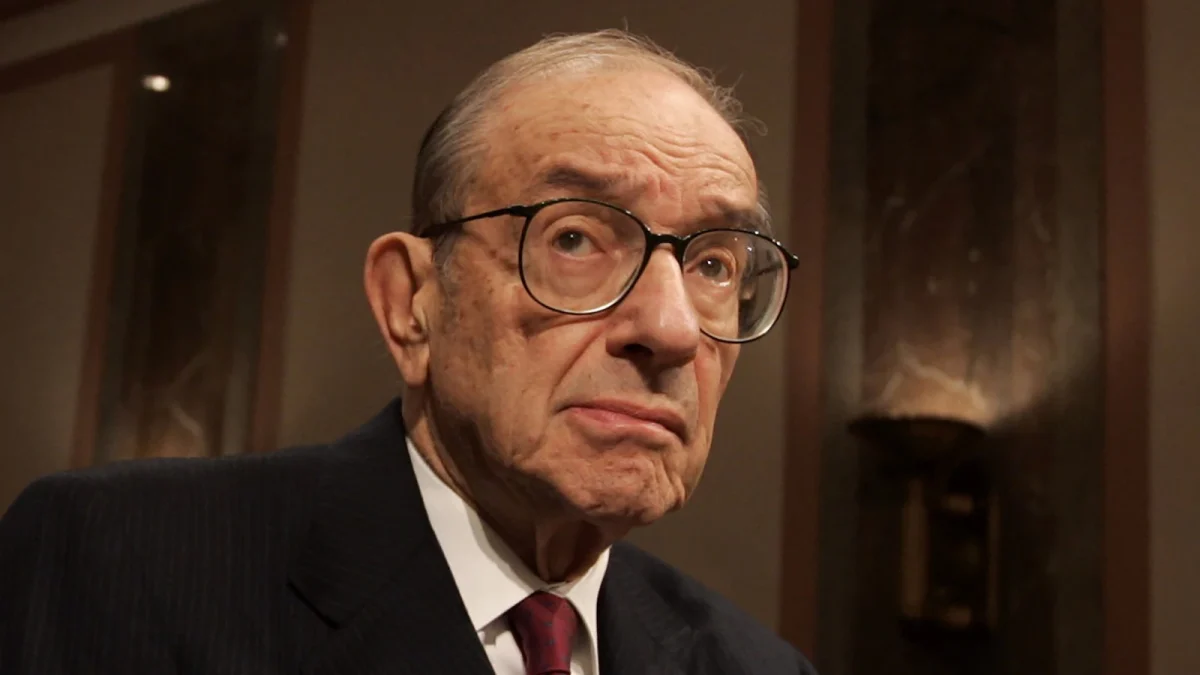
Alan Greenspan, Federal Reserve Chairman, Passes Away at 100
Alan Greenspan longtime chairman of the Federal – Alan Greenspan, the former chairman of the U.S. Federal Reserve, has died at the age of 100, as confirmed by his wife, Andrea Mitchell. In a statement released by NBC News, Mitchell shared that Greenspan succumbed to complications of Parkinson’s Disease at their home on Monday. His death marks the end of an era for American economic policy, as he was one of the most influential figures in shaping the nation’s financial landscape over several decades.
Legacy of Leadership and Controversy
Greenspan’s tenure at the Federal Reserve is widely regarded as a pivotal chapter in modern economic history. He is celebrated for steering the central bank through transformative periods of growth, including the robust expansion of the 1990s and the aftermath of the 2001 terrorist attacks. Yet, his decisions have also sparked debate. Critics argue that his approach to monetary policy, particularly the maintenance of low interest rates in the early 2000s, played a role in fueling the housing bubble that led to the 2008 financial crisis.
“I get the same kind of joy from solving a hard mathematical problem as I do from hearing a Haydn quartet,” Greenspan once told The New York Times Magazine. This reflection highlights his unique ability to blend analytical rigor with a deep appreciation for the arts, a trait that shaped his perspective on economic modeling.
His leadership during the 1987 stock market crash, known as Black Monday, showcased his crisis management skills. When the market plummeted on October 19, 1987, Greenspan was already in place as the 13th chairman of the Board of Governors. He swiftly implemented measures to restore confidence, ensuring the Fed could provide ample liquidity to stabilize financial markets. The rapid recovery of stock prices in the following weeks underscored his effectiveness in mitigating economic turmoil.
Early Life and Education
Greenspan was born on March 6, 1926, in New York City, to Herbert Greenspan, a stockbroker, and Rose Goldsmith Greenspan, a retail worker. His early life was marked by personal challenges; his parents divorced when he was just four years old, and he was primarily raised by his mother and grandparents. These formative years, combined with his natural curiosity, laid the groundwork for his future career.
Despite his early interest in music, Greenspan’s path to economics was not immediate. He briefly enrolled at Juilliard, pursuing a passion for the saxophone and clarinet, before shifting focus to academics. At New York University, he earned his bachelor’s, master’s, and doctoral degrees in economics. His academic journey was further enriched by advanced studies at Columbia University, where he studied under the renowned economist Arthur Burns. This mentorship, along with his musical background, influenced his approach to economic theory and policy.
Though his music career was short-lived, it left a lasting impression on his intellectual development. As noted by Greenspan biographer Justin Martin in his book “Greenspan: The Man Behind Money”, the organization of economic data into fiscal models reminded him of arranging musical notes into coherent compositions. This analogy reflects his belief in the harmony of economic systems, even as they faced disruptions and challenges.
Government and Private Sector Roles
Before his tenure at the Federal Reserve, Greenspan held numerous roles in both government and private sectors. President Richard Nixon nominated him to chair the President’s Council of Economic Advisers in 1974, a position that marked the beginning of his influential career in economic policy. Although Nixon resigned shortly after the nomination, Greenspan continued his work under President Gerald Ford, solidifying his reputation as a key economic thinker.
Throughout the 1980s and 1990s, Greenspan served as a trusted advisor to several presidents, including Reagan, George H. W. Bush, Bill Clinton, and George W. Bush. His leadership at the Fed coincided with significant political transitions, reflecting his bipartisan appeal and deep expertise. In the private sector, he worked as a corporate director for companies such as Alcoa, General Foods, and J.P. Morgan & Co., while also contributing to think tanks like the Brookings Panel on Economic Activity.
Greenspan’s professional achievements were recognized internationally. In 2002, Queen Elizabeth II awarded him an honorary knighthood in acknowledgment of his contributions to global economic stability. This honor, alongside his tenure at the Fed, cemented his status as a globally respected figure in finance.
Impact on U.S. Economic History
Under Greenspan’s guidance, the Federal Reserve experienced one of its most stable and expansive periods. The nation’s economic growth during his time is often cited as one of the longest in history, spanning nearly two decades before the 2008 crisis. However, this era of prosperity also brought about risks, as his policies of low interest rates were credited with fostering a sense of complacency in financial markets.
The 2008 crisis, which began before his final term as Fed chairman ended in January 2006, revealed the complexities of his legacy. While he was praised for his role in stabilizing the economy during the 1990s and post-9/11 recovery, the collapse of the housing market and subsequent financial turmoil led to renewed scrutiny of his decisions. Critics contend that his reluctance to acknowledge the risks of the housing bubble contributed to its rapid expansion.
Despite these criticisms, Greenspan remains a towering figure in economic history. His ability to navigate crises and implement policies that supported long-term growth earned him both admiration and controversy. From his early days as a professor at NYU to his eventual role as Fed chairman, Greenspan’s career was defined by a blend of analytical precision and a unique personal philosophy.
As the Federal Reserve continues its mission, the legacy of Greenspan’s leadership will be reflected in the policies and strategies that shape the future of American finance. His passing leaves a void in the economic community, yet his influence will endure through the frameworks he helped build and the debates he inspired. The story of Alan Greenspan is one of innovation, resilience, and the profound impact of individual vision on the global economy.