
The four astronauts NASA picked for the first crewed moon mission in 50 years
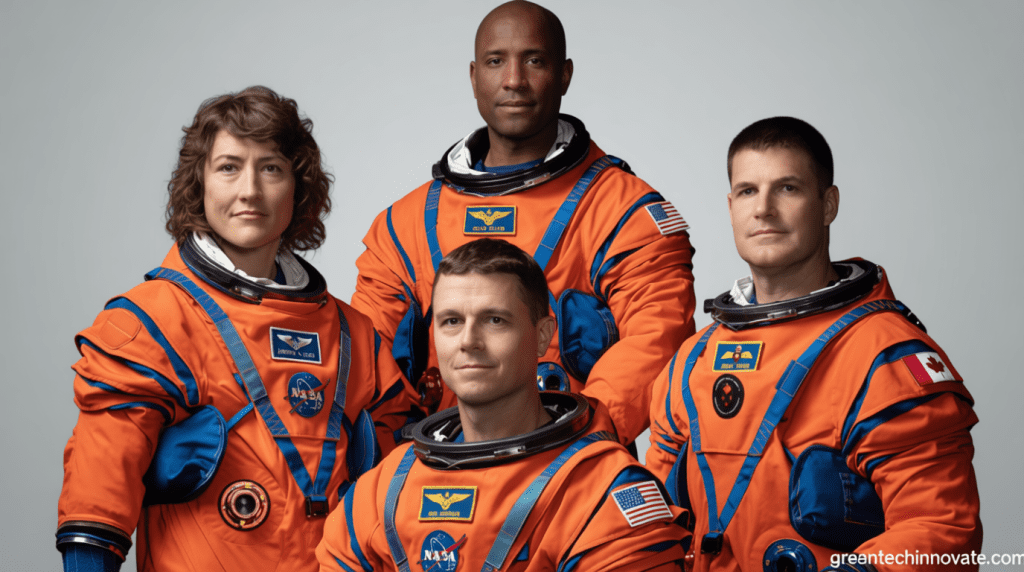
The four astronauts NASA picked for the first crewed moon mission in 50 years
NASA announced the astronauts for the first crewed lunar mission in half a century on Monday, setting them on a path to prepare for the historic Artemis II flyby. Scheduled to launch in November 2024, this mission marks a pivotal step in humanity’s return to the Moon, with the crew selected to operate aboard the Orion spacecraft. The team includes Reid Wiseman, Victor Glover, Christina Koch, and Jeremy Hansen of the Canadian Space Agency.
Crew Members and Their Backgrounds
Wiseman, a 47-year-old decorated naval aviator and test pilot, was first chosen as a NASA astronaut in 2009. A Baltimore native, he previously flew a 165-day mission to the International Space Station aboard a Russian Soyuz rocket in 2014. After serving as chief of the astronaut office until November 2022, he is now designated as commander of Artemis II.
Jeremy Hansen, 47, is a fighter pilot who joined the Canadian Space Agency’s astronaut program in 2009. Hailing from London, Ontario, he is one of four active Canadian astronauts and recently led training for a new NASA astronaut class. This mission will make him the first Canadian to venture into deep space.
“It’s so much more than the four names that have been announced,” Glover said during the Monday announcement at NASA Johnson Space Center in Houston. “We need to celebrate this moment in human history. … It is the next step in the journey that will get humanity to Mars.”
Victor Glover, a 46-year-old naval aviator, completed his first spaceflight in 2021. He piloted SpaceX’s Crew Dragon spacecraft on the second crewed mission, spending nearly six months on the International Space Station. Before joining NASA, he served in military squadrons across the U.S. and Japan in the 2000s and worked as a legislative fellow in the U.S. Senate.
Christina Koch, 44, is a veteran of six spacewalks, including the first all-female spacewalk in 2019. She holds the record for the longest single spaceflight by a woman, logging 328 days in orbit. An electrical engineer, she contributed to developing scientific instruments for various NASA missions. Koch also spent a year at the South Pole, an experience that could prepare her for the rigors of a lunar mission.
Mission Context and Future Plans
The Artemis II mission builds on Artemis I, an uncrewed test flight that successfully sent NASA’s Orion capsule on a 1.4 million-mile journey around the Moon. Data from that mission is still being analyzed, but NASA has confirmed its success. The upcoming crewed mission will launch from Florida’s Kennedy Space Center aboard the Space Launch System rocket, with a 10-day voyage expected to carry the crew beyond the Moon.
“The exact distance beyond the Moon will depend on the day of liftoff and the relative distance of the Moon from the Earth at the time of the mission,” said NASA spokesperson Kathryn Hambleton. The spacecraft will return to Earth via a Pacific Ocean splashdown after orbiting the Moon. This mission is a precursor to Artemis III, planned for later this decade, which aims to land the first woman and person of color on the lunar surface. However, key technologies such as moonwalking suits and a lunar lander remain under development.
