
Climate Policy in 2025: Key Changes and Global Implications

Climate Policy in 2025: Key Changes and Global Implications
In 2025, climate policy has taken a transformative shift, reflecting the urgency of addressing the climate crisis. Governments and international bodies have introduced bold strategies that aim to mitigate environmental damage while ensuring economic growth. These policy changes are designed to tackle the pressing issues of global warming, carbon emissions, and biodiversity loss. This article examines the significant changes in climate policy in 2025 and their broader global implications.
The Rise of Green Energy Initiatives
One of the most profound changes in climate policy in 2025 is the accelerated shift towards renewable energy. With the climate crisis becoming increasingly urgent, governments worldwide have committed to phasing out fossil fuels and heavily investing in green energy solutions such as wind, solar, and hydrogen power. This shift is not just a trend but a necessity to meet the Paris Agreement’s target of limiting global temperature rise to well below 2°C.
In 2025, green energy is now seen as a cornerstone of economic development. Countries like the United States, China, and European Union members are implementing massive subsidies and incentives to support renewable energy projects. These initiatives are expected to drive innovation, lower the cost of renewable technologies, and create millions of green jobs.
Moreover, the integration of smart grids and energy storage systems is a key feature of these policies, ensuring that renewable energy can be efficiently distributed and stored for future use. By 2025, a significant portion of the global energy grid is expected to rely on renewable sources, reducing the world’s dependence on fossil fuels.
Carbon Pricing and Emission Reduction Targets
Another critical element of climate policy in 2025 is the adoption of carbon pricing mechanisms. Governments have increasingly embraced carbon taxes and cap-and-trade systems as tools to curb greenhouse gas emissions. These pricing models are designed to incentivize businesses to reduce their carbon footprint by imposing financial penalties on carbon emissions.
In 2025, carbon pricing systems have become more refined and widespread. More than 50 countries have now implemented some form of carbon pricing, including the European Union’s Emissions Trading System (EU ETS) and China’s national carbon market. These systems have proven effective in lowering emissions by making pollution costly for industries that rely on carbon-intensive processes.
Emission reduction targets are becoming more ambitious. Many nations have pledged to achieve net-zero emissions by 2050, with intermediate milestones for 2030 and 2040. These targets are forcing companies to rethink their supply chains, invest in sustainable technologies, and innovate new ways to reduce their environmental impact.
The Role of Technology and Innovation
Technology plays a pivotal role in climate policy in 2025. Innovations in carbon capture and storage (CCS), sustainable agriculture, and electric vehicles (EVs) have gained significant traction. In 2025, the development of carbon-neutral technologies is being fast-tracked, supported by public-private partnerships and international research collaborations.
Carbon capture and storage, in particular, is seen as a necessary technology to counterbalance hard-to-decarbonize sectors like heavy industry and aviation. Countries with large industrial sectors are investing heavily in CCS to capture carbon dioxide emissions before they reach the atmosphere.
Electric vehicles, supported by stricter regulations on combustion engine vehicles and increasing investments in EV infrastructure, are also expected to become a dominant force in the transportation sector. By 2025, global sales of electric vehicles are forecasted to surpass traditional car sales, driven by both government policies and consumer demand for cleaner transportation options.
International Collaboration and Climate Finance
Climate policy in 2025 emphasizes the importance of international cooperation and climate finance. As climate change is a global problem, no country can tackle it alone. Multilateral agreements, such as the Paris Agreement, remain central to global climate efforts, and new partnerships are emerging to address climate challenges collectively.
In 2025, developed nations have committed to increasing their financial support for developing countries to help them mitigate and adapt to climate change. The concept of climate justice is gaining momentum, with the acknowledgment that poorer nations are disproportionately affected by the impacts of climate change, despite contributing the least to global emissions.
The Green Climate Fund (GCF) and other climate finance mechanisms are expanding to provide grants, loans, and technical support to developing countries. These funds are helping build renewable energy infrastructure, improve disaster resilience, and implement climate adaptation strategies.
The Implications for Global Trade and Economy
The economic implications of climate policy in 2025 are far-reaching. As nations move toward a green economy, sectors like fossil fuels, automotive, and agriculture will face disruptions. The shift to green energy will require significant investments in renewable technologies, but also presents new opportunities in clean tech and sustainable industries.
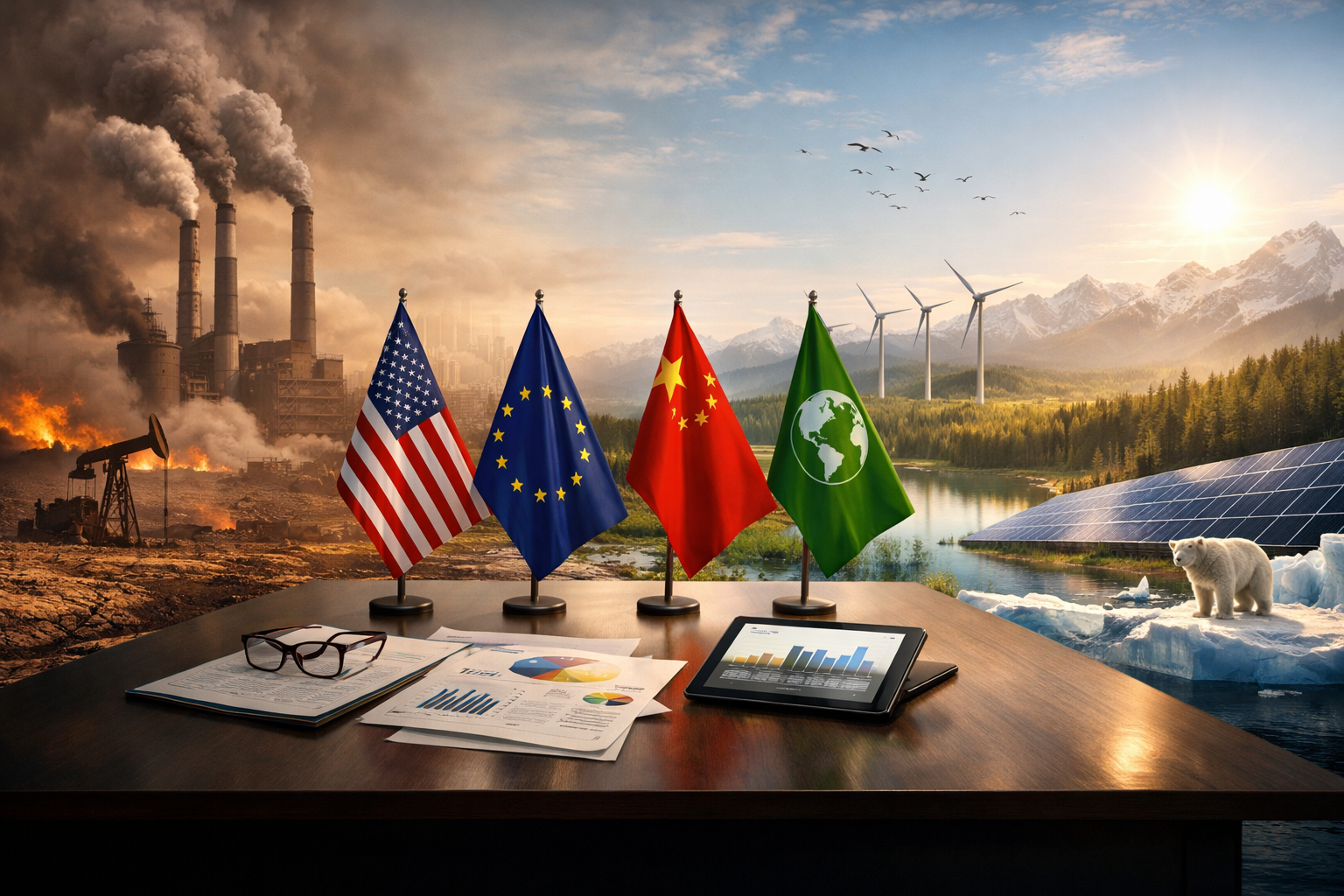
Global trade policies are evolving to reflect these changes. For instance, countries that fail to meet climate commitments may face carbon tariffs when trading with nations that have stringent environmental standards. The European Union’s Carbon Border Adjustment Mechanism (CBAM) is one such example, and similar policies are likely to spread globally.
The green transition also presents an opportunity to create new industries and jobs, particularly in renewable energy, sustainable agriculture, and green construction. However, the transition will also require re-skilling the workforce to meet the demands of new green industries.
Conclusion
Climate policy in 2025 marks a critical juncture in the fight against climate change. The key changes in energy, carbon pricing, technology, international collaboration, and the global economy reflect the urgency and scope of the climate crisis. As nations adopt more aggressive and comprehensive climate strategies, the global community is taking significant steps toward a sustainable future. The transition to a green economy will not be without challenges, but the progress made in 2025 demonstrates a collective determination to secure a livable planet for future generations.
FAQ
Q: What are the main goals of climate policy in 2025?
A: The main goals of climate policy in 2025 include reducing greenhouse gas emissions, transitioning to renewable energy, achieving net-zero emissions by 2050, and enhancing international cooperation on climate finance and adaptation.
Q: How does carbon pricing work in 2025?
A: Carbon pricing in 2025 involves imposing taxes or creating trading systems to make carbon emissions costly for industries, encouraging them to reduce their carbon footprint.
Q: What technologies are driving climate policy in 2025?
A: Technologies like carbon capture and storage (CCS), electric vehicles, and renewable energy sources such as solar and wind are key drivers of climate policy in 2025.
Q: How are developing countries affected by climate policy in 2025?
A: Developing countries are receiving financial support through climate finance mechanisms to help mitigate and adapt to climate change, addressing the disproportionate impacts they face despite contributing less to global emissions.
Q: What economic changes are expected due to climate policy in 2025?
A: The transition to a green economy is expected to disrupt traditional industries but create new opportunities in renewable energy, clean technologies, and sustainable industries, while global trade policies will adapt to support these changes.
