
Why a delayed Xi-Trump summit could give China a stronger hand
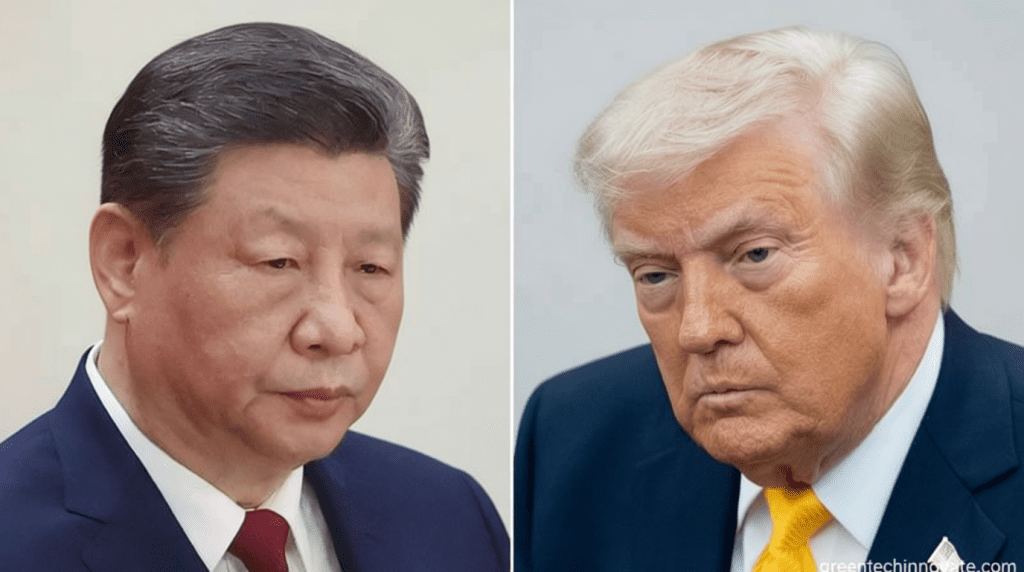
Why a Delayed Xi-Trump Summit Could Give China a Stronger Hand
US President Donald Trump’s decision to push back a major meeting with Chinese President Xi Jinping has sparked speculation that Beijing might gain an advantage, according to insiders close to the negotiations. The postponement could allow both sides to avoid immediate pressure from the ongoing conflict with Iran, a country China considers its vital strategic ally in the Middle East. Experts suggest that if Trump’s actions in the region fail to achieve quick resolution, it may weaken his position during discussions with China.
Beijing’s Ambiguous Response
Beijing has not officially confirmed the planned summit, which was initially set for March 31 to April 2. While the US has stated the delay would be “5-to-6 weeks,” Chinese officials have remained vague, possibly to create flexibility. A spokesperson for the Chinese Foreign Ministry, Lin Jian, emphasized the importance of leader-level meetings, calling them “irreplaceable” for shaping US-China relations.
“Leaders’ summits play an irreplaceable role in guiding the bilateral relationship,” said Lin Jian, highlighting Beijing’s cautious optimism.
Behind the scenes, however, Chinese analysts note that the summit might not proceed as intended. Two unnamed sources suggest that either side could withdraw from talks, depending on how the Iran conflict unfolds. One insider warned that if the war leads to significant harm to Chinese citizens or assets, Trump might lose momentum, leaving Beijing in a stronger position.
Timing and Political Context
The meeting was framed as a crucial moment to redefine ties between the world’s two largest economic and military powers. During a press conference early in the Iran conflict, Chinese Foreign Minister Wang Yi described 2026 as a “pivotal year” for US-China relations, underscoring the importance of the summit amid global tensions.
“2026 is a pivotal one for China-US relations,” Wang Yi stated, addressing CNN’s inquiry about the war’s potential impact on the summit.
Chinese officials had been tracking developments in the region prior to the attack, expecting the US to conclude the conflict before the summit. The delay, they argue, reflects the Trump administration’s uncertainty about the war’s resolution. Wu Xinbo, a scholar at Fudan University, noted that prolonged hostilities could amplify Trump’s frustration and diminish his leverage in negotiations.
“The longer the war drags on, the greater Trump’s sense of frustration becomes… he would find himself in yet another disadvantageous position,” Wu Xinbo explained.
Some in Beijing believe Trump is already in a weakened state due to the US Supreme Court’s decision to overturn his emergency tariffs in February. The Iran war has also divided domestic opinion, and repeated assurances of a swift end may not be enough to retain public support. Wu added that the delay allows China to assess Trump’s remaining options before committing to talks.
Global Perceptions and China’s Gains
While the war may strain global markets, it has also positioned China as a more dependable leader in the eyes of many nations. Rana Mitter, a specialist in US-Asia relations at Harvard Kennedy School, pointed out that the conflict has shifted perceptions of China’s reliability compared to the US.
“Changes in the US have made people perceive China as a more reliable partner,” Mitter observed, noting the opportunity for Beijing to reinforce its image as a stable alternative.
For Chinese diplomats, the summit remains a chance to solidify this narrative. The delay, they argue, could be a strategic move to ensure they emerge as the preferred partner on the world stage, even as the US struggles with its own challenges in the region.
