
Polish president Nawrocki vetoes law unlocking €44bn in EU defence loans
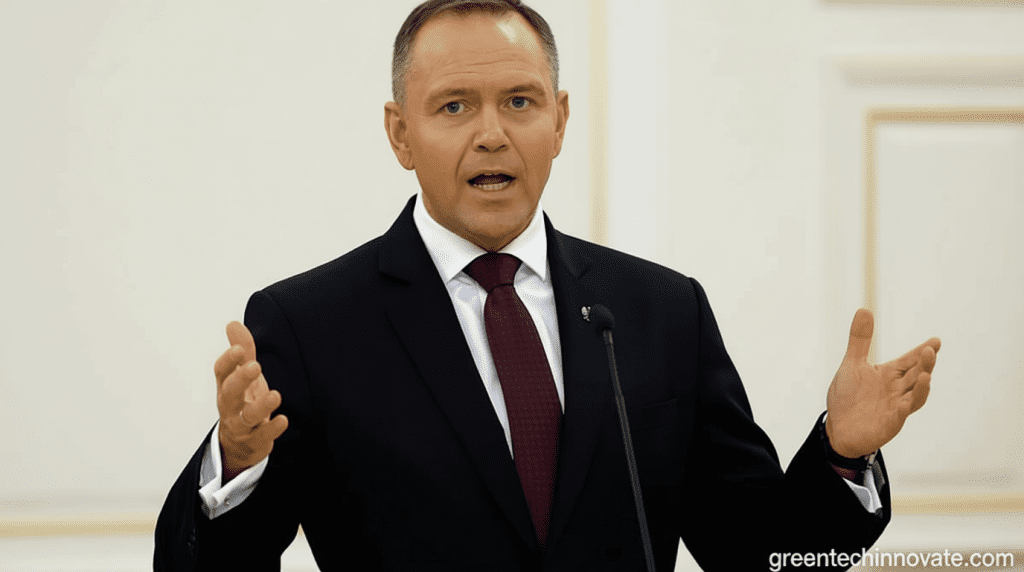
Polish President Blocks Legislation to Access EU Defence Loans
In a recent move, Polish President Karol Nawrocki has rejected a proposed law that would have allowed the country to tap into nearly €44 billion in European Union defence funding. This decision has intensified a political divide with Prime Minister Donald Tusk’s government, which had sought to secure the loans to bolster national security measures amid escalating tensions in Eastern Europe.
EU’s SAFE Program and Poland’s Role
The Security Action for Europe (SAFE) initiative, a €150 billion funding mechanism, is designed to strengthen defence industries and increase military spending across the continent. Poland was expected to be the top beneficiary, with an allocation of around €43.7 billion, enabling significant investments in border security and domestic weapon production.
Government’s Argument for EU Financing
Prime Minister Donald Tusk’s coalition had backed the legislation, emphasizing that the loans would offer efficient funding for military modernization. They argued that the financial support would be critical in addressing security threats, particularly in the wake of Russia’s invasion of Ukraine, and would help expand defence capabilities without straining the national budget.
President’s Concerns and Alternative Plan
President Nawrocki, aligned with the conservative opposition, opposed the law, citing fears of increased reliance on Brussels. He proposed using domestic resources, such as profits from central bank reserves, to finance military projects instead. The move has drawn sharp reactions from government officials, with Tusk calling the veto a missed opportunity to act as a patriot.
“The President lost his chance to act like a patriot,” Tusk wrote on X, criticizing the decision as a failure to leverage EU financing for defence needs.
Tusk also announced plans for a special cabinet meeting to outline alternative steps for approving the loan. Earlier, he hinted at a “plan B” that would still enable Poland to access SAFE funds. Meanwhile, Foreign Minister Radosław Sikorski warned on social media that blocking the EU mechanism could weaken Poland’s ability to enhance its military readiness.
Defence Minister’s Defense of the Proposal
Defence Minister Władysław Kosiniak-Kamysz defended the government’s strategy, stating that EU loans would provide a pathway to increase military spending without overburdening the national budget. The debate highlights the tension between domestic control and EU integration in Poland’s defence policy.
