
The Greens’ Gorton and Denton by-election win was about inclusion — not sectarianism
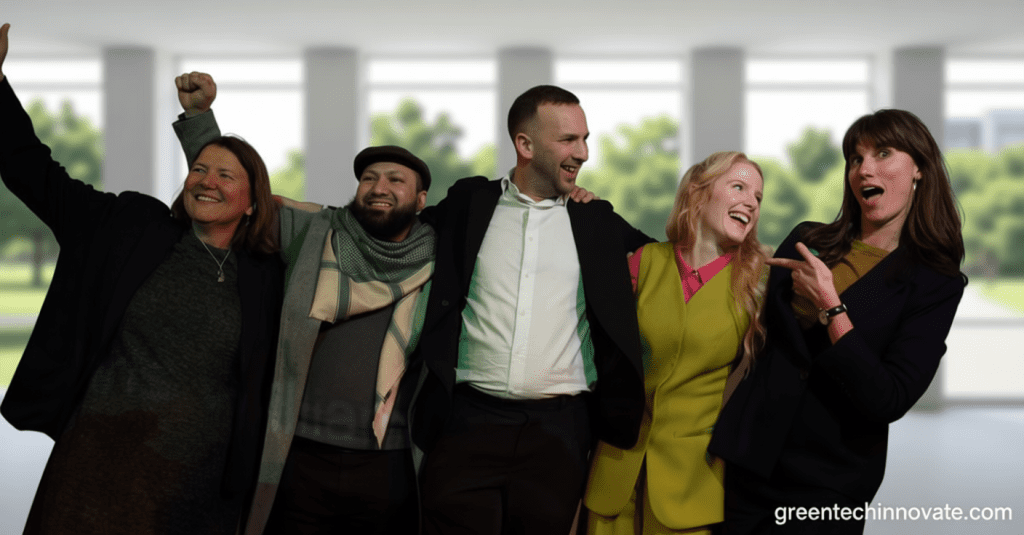
The Greens’ Gorton and Denton by-election win was about inclusion — not sectarianism
A landmark night for the Green Party unfolded as they claimed their first parliamentary by-election victory in Gorton and Denton. The result marked a significant shift, dismantling a Labour majority that had stood for over 13,000 votes. While the achievement is historic, it’s more than a political milestone—it’s a sign of broader change in how people engage with politics.
For the first time, the Greens have secured a representative in the North of England. Yet, this win transcends individual success. It signals a growing appetite for politics that prioritizes unity over division, and compassion over conflict. In a country often defined by polarizing rhetoric, the campaign offered an alternative vision: one where hope replaces hostility and inclusion supersedes exclusion.
Language as a bridge, not a wall
UK politics has long relied on a single, dominant voice—often from Westminster, shaped by southern English accents and traditional narratives. This approach, however, failed to resonate in Gorton and Denton, where nearly 40% of residents identify as Muslim and many speak languages like Urdu or Bangla at home. The Greens adapted by embracing the language of their audience, both literally and metaphorically.
While opponents clung to crisp Radio 4 English, the Greens’ campaign spoke in the tones and terms of everyday life. This wasn’t just a strategic move—it was a commitment to ensuring every voice, regardless of background, felt seen and valued. A viral Urdu video became a symbol of this effort, showcasing how multilingual outreach fosters connection, not division.
“When we talk about rent, bills, the NHS, racism, or peace, those issues matter to everyone. Whether they speak English at home or Punjabi, Urdu, Somali or any other language. Multilingual campaigning recognises that reality.”
Some critics, like Matt Goodwin, have labeled this approach as divisive. But their interpretation misses the mark. The Greens’ message wasn’t about separating communities—it was about inviting them into the political dialogue. As seen in New York with Zohran Mamdani’s campaign, speaking in the languages people know expands conversations, not isolates them.
That’s why the Greens’ focus on cultural and linguistic diversity resonated deeply. It proved that representation isn’t just about winning votes—it’s about making people feel they belong. The 26.5% swing toward the Greens reflects this shift, showing a rising tide of support for a politics that acknowledges lived experiences and respects every voice.
A victory for inclusivity
The campaign’s success in Gorton and Denton underscores a powerful truth: when communities feel represented, their engagement with democracy deepens. The Greens’ victory isn’t just about parliamentary seats—it’s about demonstrating that inclusion can be a unifying force. This approach has already begun to reshape the political landscape, and its impact will be felt far beyond this single election.
Language, after all, should never be a barrier to participation. It should be a tool for connection. The Greens’ message was clear: your identity matters, your concerns are valid, and your vote has weight. As the saying goes, “You belong here. Your voice counts.”
This site is protected by reCAPTCHA and the Google Privacy Policy and Terms of Service apply. Your information will be used in line with our Privacy Policy.
