
The Greens’ Gorton and Denton by-election win was about inclusion — not sectarianism
The Greens’ Gorton and Denton by-election win was about inclusion — not sectarianism
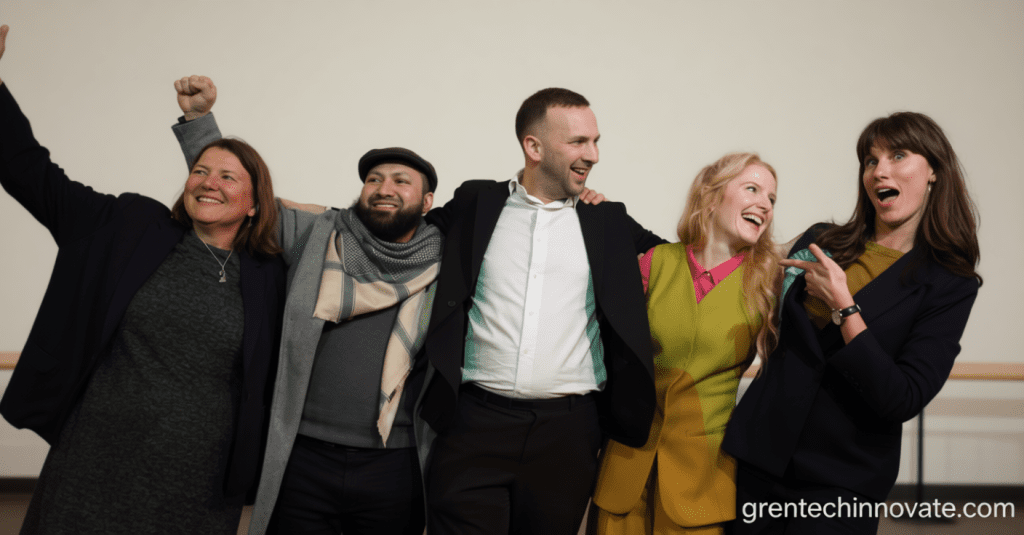
An unforgettable night unfolded as the Green Party secured its inaugural parliamentary by-election victory in Gorton and Denton, marking a historic shift in political representation. This triumph wasn’t merely about defeating a Labour stronghold with a once-unshakable majority of over 13,000 votes. It was a statement that transcended the mere numbers, symbolizing a broader movement toward unity and accessibility in governance.
For the first time, a Green MP has been elected in the North of England, but this outcome carries more significance than the headline alone. It represents a turning point, where the electorate embraced a vision of politics centered on connection rather than division. The campaign’s message resonated deeply, offering a pathway to hope and belonging for communities long overlooked.
Last night, we delivered a clear message: a new kind of politics is emerging—one that prioritizes compassion over hostility, and understanding over exclusion. This was more than a victory; it was a reaffirmation of the power of inclusive dialogue to reignite public trust in democratic processes.
“You belong here. Your voice counts. Your concerns matter.”
While the policies and candidate Hannah Spencer were vital, the real catalyst was the way we engaged with voters. By speaking their language, both literally and metaphorically, we bridged the gap between policy and people. In areas like Gorton and Denton, where nearly 40% of residents are Muslim and many speak Urdu, Bangla, or Arabic at home, traditional political rhetoric often falls short. Our approach ensured that every voice, regardless of linguistic background, felt heard.
Politics in the UK has frequently relied on a monolithic tone, using a narrow, Westminster-centric English that excludes diverse communities. Reform’s Matt Goodwin, who lost his bid for a seat, exemplified this style, speaking in a language that felt distant to many. Yet, in places where multilingualism is a lived reality, this method proved inadequate. By adapting our communication to reflect local voices, we turned the tide in favor of inclusion.
Consider the viral Urdu video that became a cornerstone of our campaign. It wasn’t just a tool for visibility—it was a pledge to reflect the realities of those communities. Multilingual outreach isn’t divisive; it’s an invitation to participate in the conversation that has long excluded them. This principle echoes successes abroad, such as Zohran Mamdani’s campaign in New York, where Arabic, Spanish, and Urdu materials expanded political discourse in underrepresented neighborhoods.
The 26.5% shift toward the Greens in this election underscores a growing demand for representation that mirrors the diversity of the people it serves. This victory isn’t just about increasing parliamentary seats; it’s about proving that inclusion can be the foundation of a more vibrant democracy. When voters see their experiences acknowledged and their language respected, they are empowered to engage—not as outsiders, but as equals.
This site is protected by reCAPTCHA and the Google Privacy Policy and Terms of Service apply. Your information will be used in line with our Privacy Policy.
